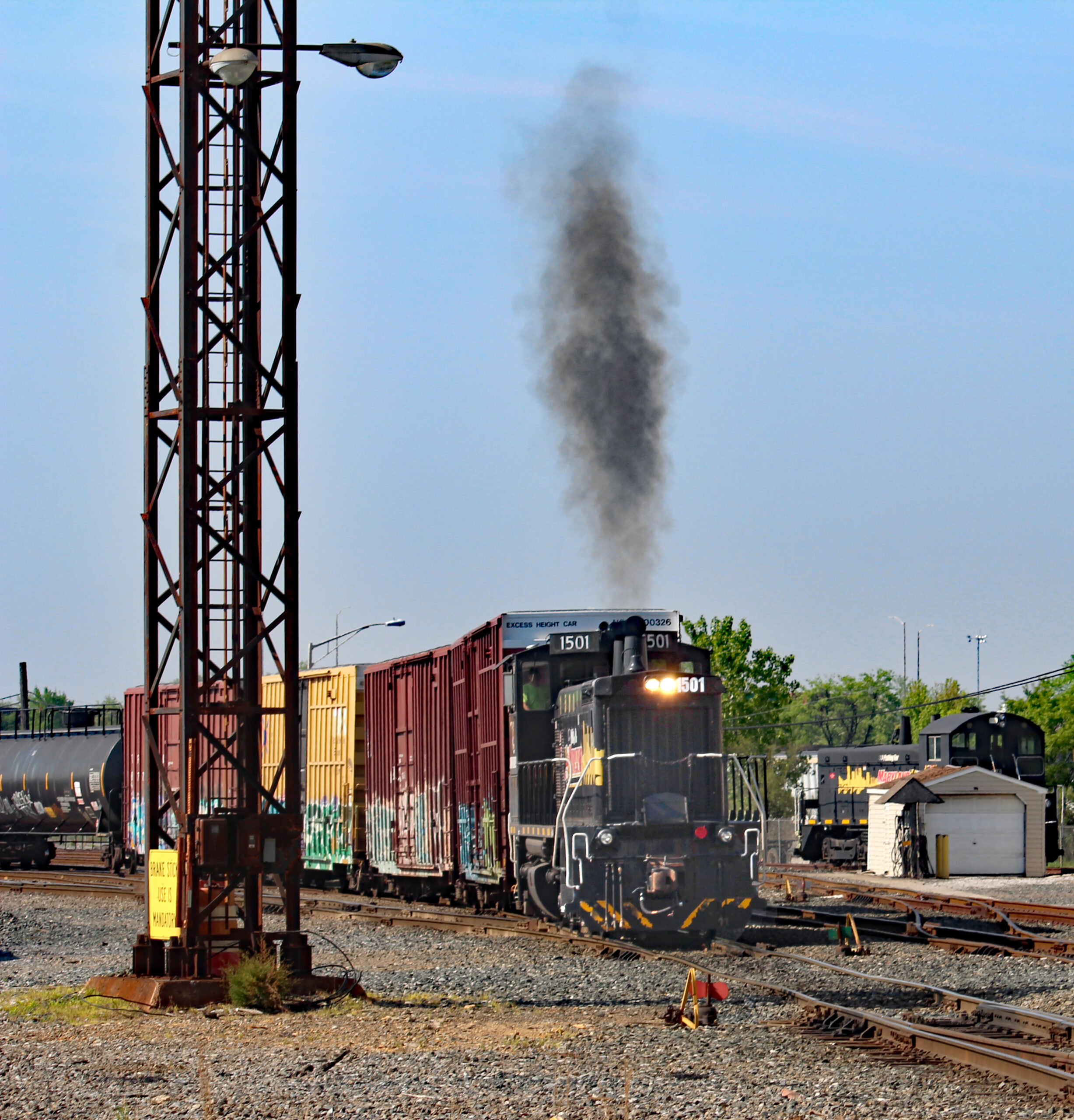
Railfanning can be a lot like storm chasing. Lot’s of whiffs, dry holes, and hours of getting nothing. Then, a window of opportunity opens up, often for just a few seconds, making the entire outing worth it. Canton SW1500 number 1501 blasts a column of exhaust skyward as it blocks recently pulled cars in Penn Mary Yard.
Nothing increases my enjoyment of modeling more than railfanning. Without it, I drift into feeling like I’m ‘pushing plastic’ across a tabletop. I forget about what I’m representing in miniature. It can be exhilarating, frustrating, and humbling. At times the railroads and/or the weather are wholely uncooperative. It can be addictive. You have those days where after hours of “nothing” you feel it’s been a complete waste of time. Then, without warning, the gods serve up a money shot for the ages…just to keep you coming back for more so they can dormant you again on a future date. I believe the technical term is “intermittent reinforcement”.
While you can’t control what the railroads will be doing on any given day, you can increase your chances of success by a) going on business days not weekends and b) having a sense for what time a specific railroad usually does their work. (In Baltimore they start early, i.e. 6am, and wrap up by early afternoon.)
That leaves the weather. A sunny day determines whether you’ll have high contrast brilliant colors or drab, low contrast, uninspiring junk. I was thinking about how I’d been planning my railfan outings and it dawned on me that I bring any weather-related misery entirely on myself. I’d look at my calendar, and pick a day. When that day arrived, come hell or high water, I’d go even if the weather totally sucked. That’s nuts, especially if plane tickets are involved.
I now take the totally opposite approach. I let weather drive my planning, not my calendar, sort of like storm chasers. I no longer make firm trip plans. I watch the weather and if the next day is going to be a perfect ten, then I go. I also pay attention to where I set up for shooting at any given time of day and location. You need the sun to your back. So, shots facing west are best taken in the morning, those facing east are best taken after lunch.
Off to Canton!
This past Wednesday, the news headlines were all about what spectacular weather we’d be having the next day. Seventy degrees and cloudless skies. Go Time. Canton Railroad. My primary goal was trying to catch them switching Terminal H, home of those massive Cryo reefers I love so much.
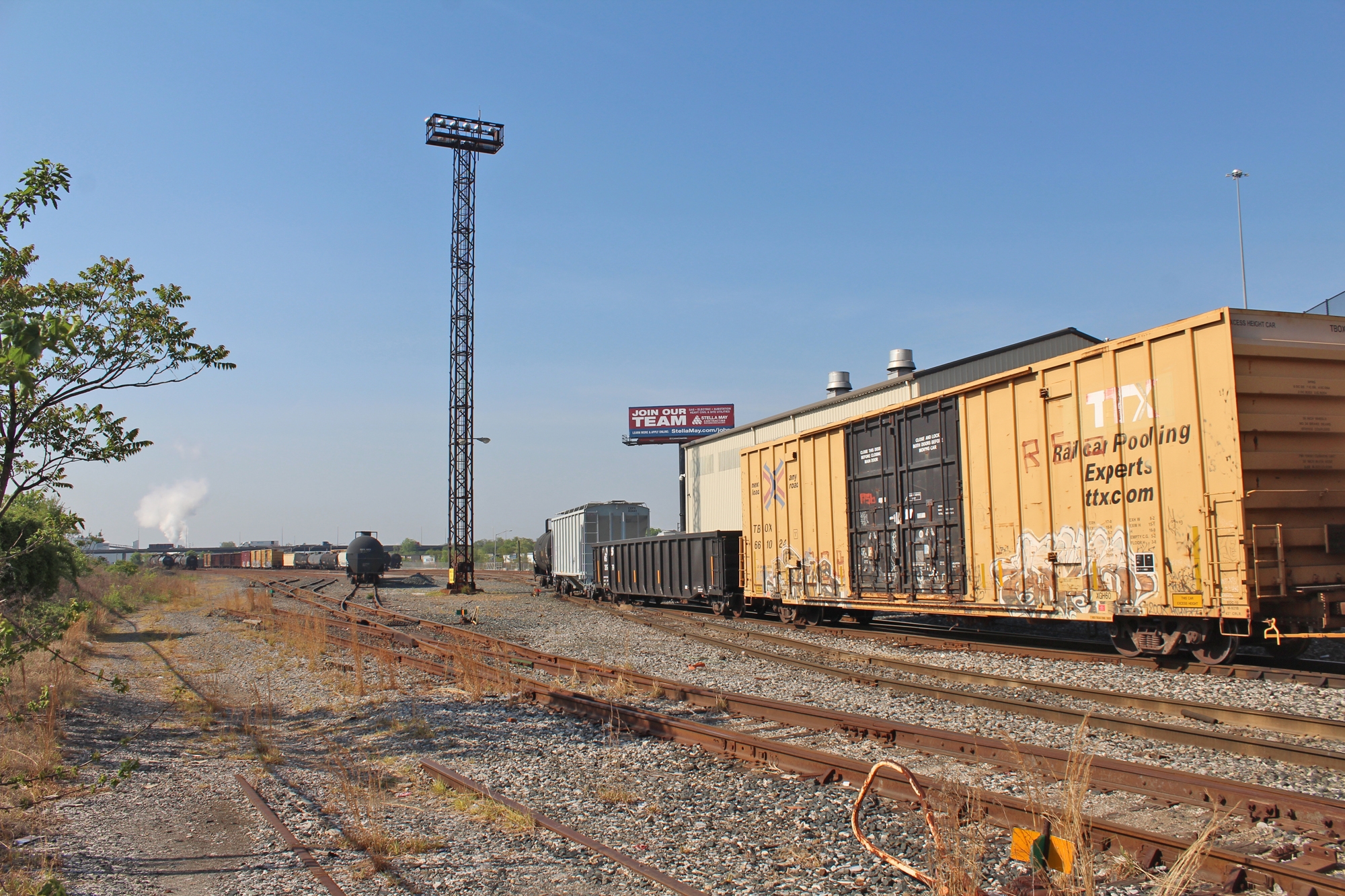
The day is NOT off to a good start. As usual, I got to Penn Mary Yard a little after 8am expecting to catch the switcher doing some blocking. Today? No switcher. That means he’s already gone out into the field to start working.
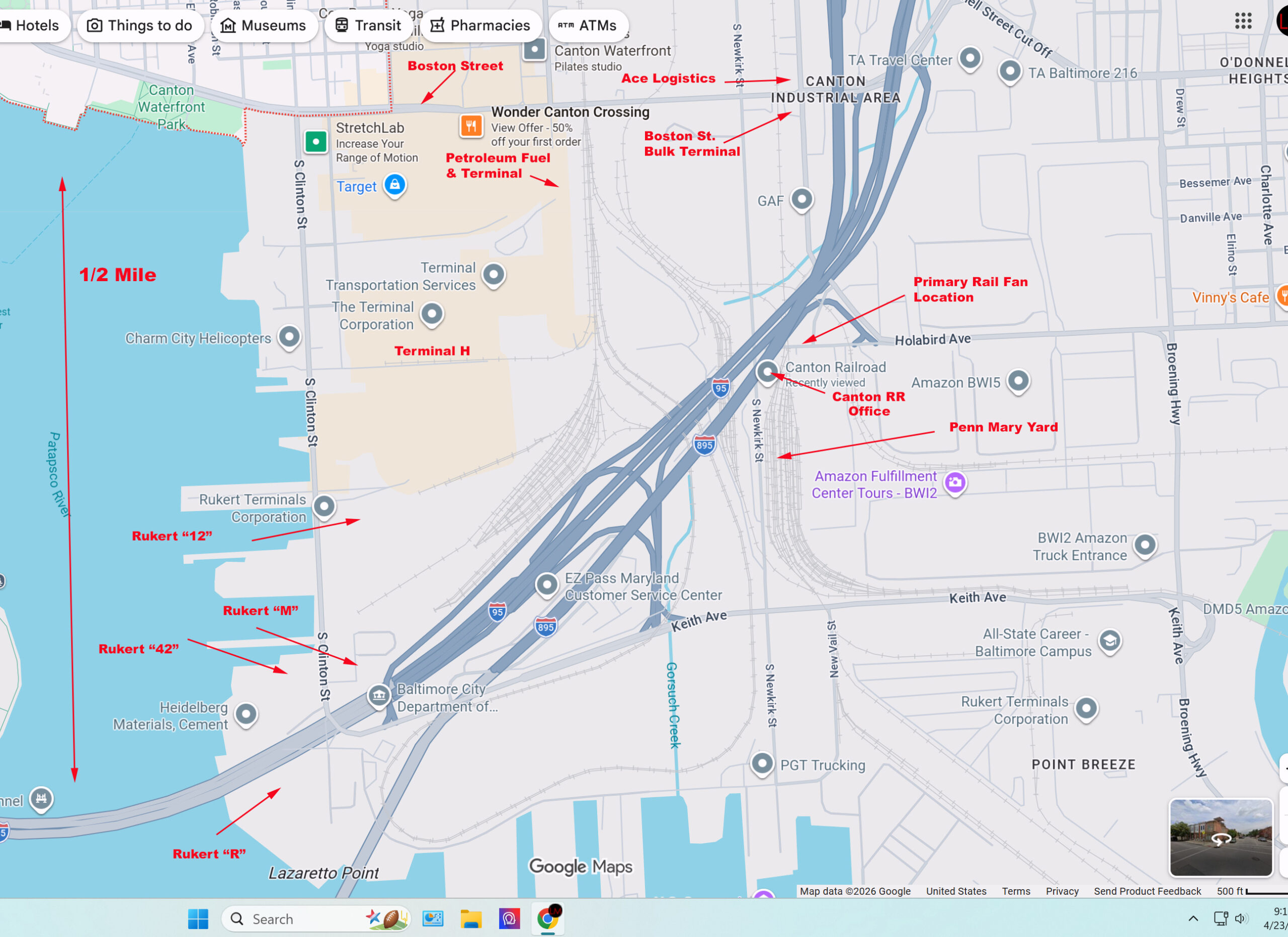
When railfanning The Canton Railroad, I always start at Penn Mary Yard. In the past when I got there around 8:15 or so, the local is making up it’s train so I set that as my arrival time. I arrived early. No switcher. Not good. I go into the office and ask if they’d be working terminal H today. “Nope.” Damn. The guy added, “Right now they’re switching Ruckert Terminals.” (Rukert is a a labyrinth of weathered warehouses on the bank of the Patapsco River about a half mile from Penn Mary).
Well, catching them switching Rukert could be just as good! Then he added, “They’ve been there all morning.” Back to “not good.” Rukert isn’t that big and if they’ve been there a while they’re either done or close to it. It’s not that far from the yard…as the crow flies but I can’t fly so getting over there in rush hour traffic took a good ten minutes. North up Newkirk, west down Boston, then left and south on S. Clinton. I’m scanning the horizon as I drive down Clinton towards Rukert. Nothing. No movement. They have to be here somewhere. Then I see a boxcar….then a conductor walking…..Damn, the unmistakable sound of a 1500 revving up. I knew I was screwed. He’d just finished and was heading back to the yard…the exact place I’d just come from! The law of the jungle. Railfanning can be frustrating and humbling.
From experience, I knew I’d missed my opportunity to see them switching in the field. He’d be blocking in the yard the rest of the morning so no rush to get back there. I decided to poke around the various terminals to see what had been spotted. The Rukert warehouses are all labeled. Today they worked R, M, 12 and 42.
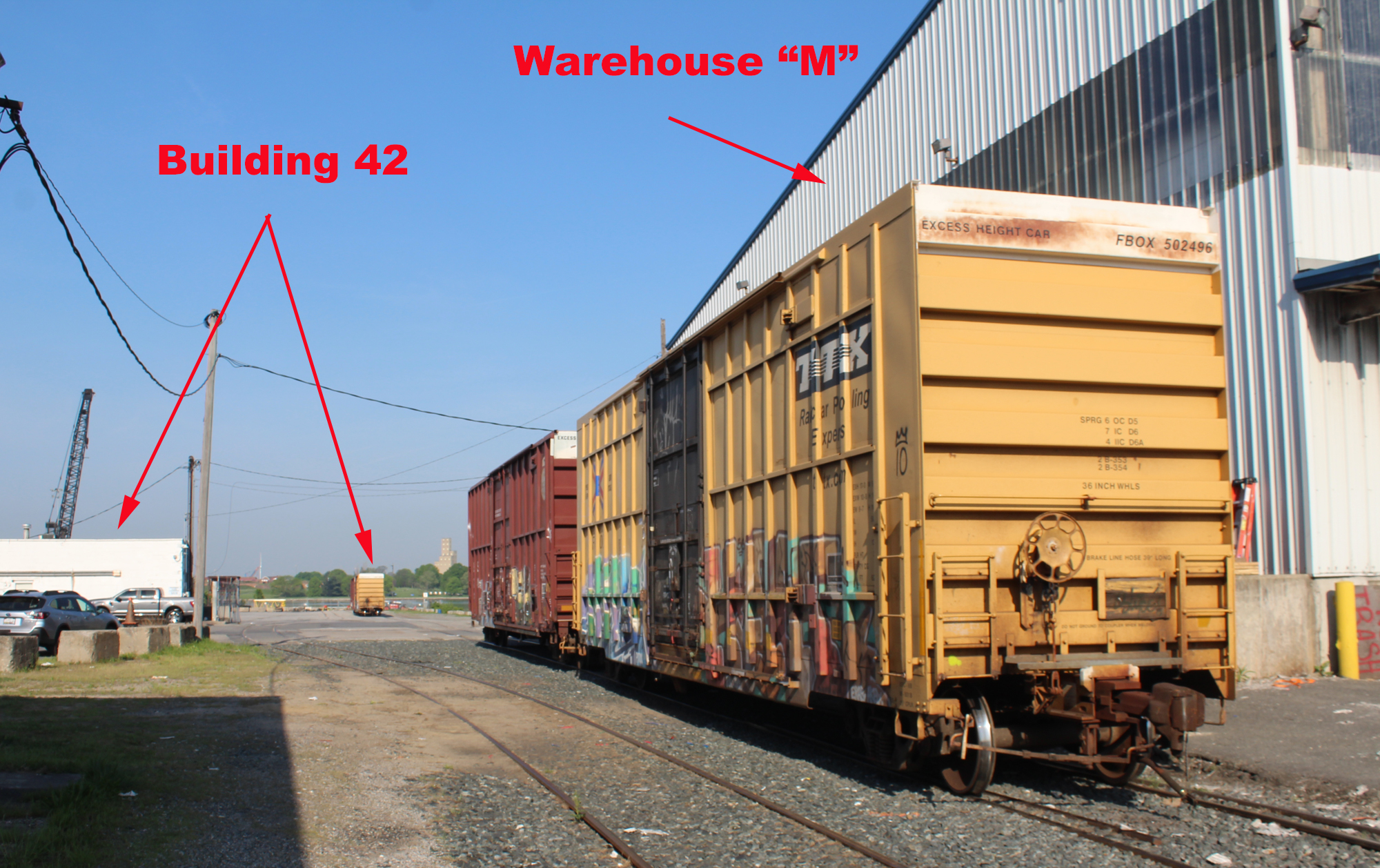
Looking west towards the Patapsco River. Building 42 is on a pier. Warehouse M is on the other side of Clinton Street.
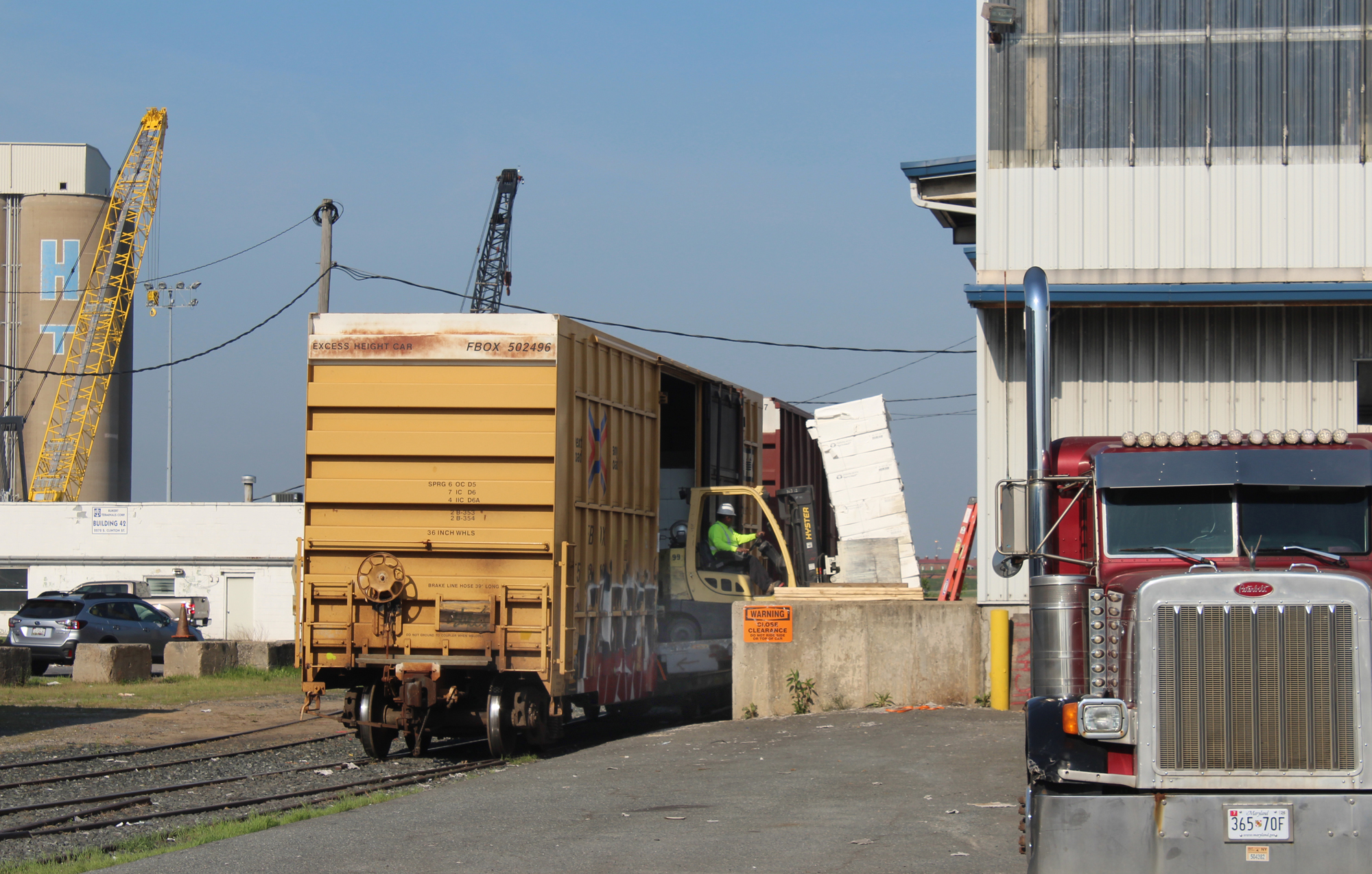
A rolling stone gathers no moss. These two cars had just been spotted at warehouse M less than an hour ago and they’ve already started loading them with outgoing product. Note the ramp between the loading dock and car.
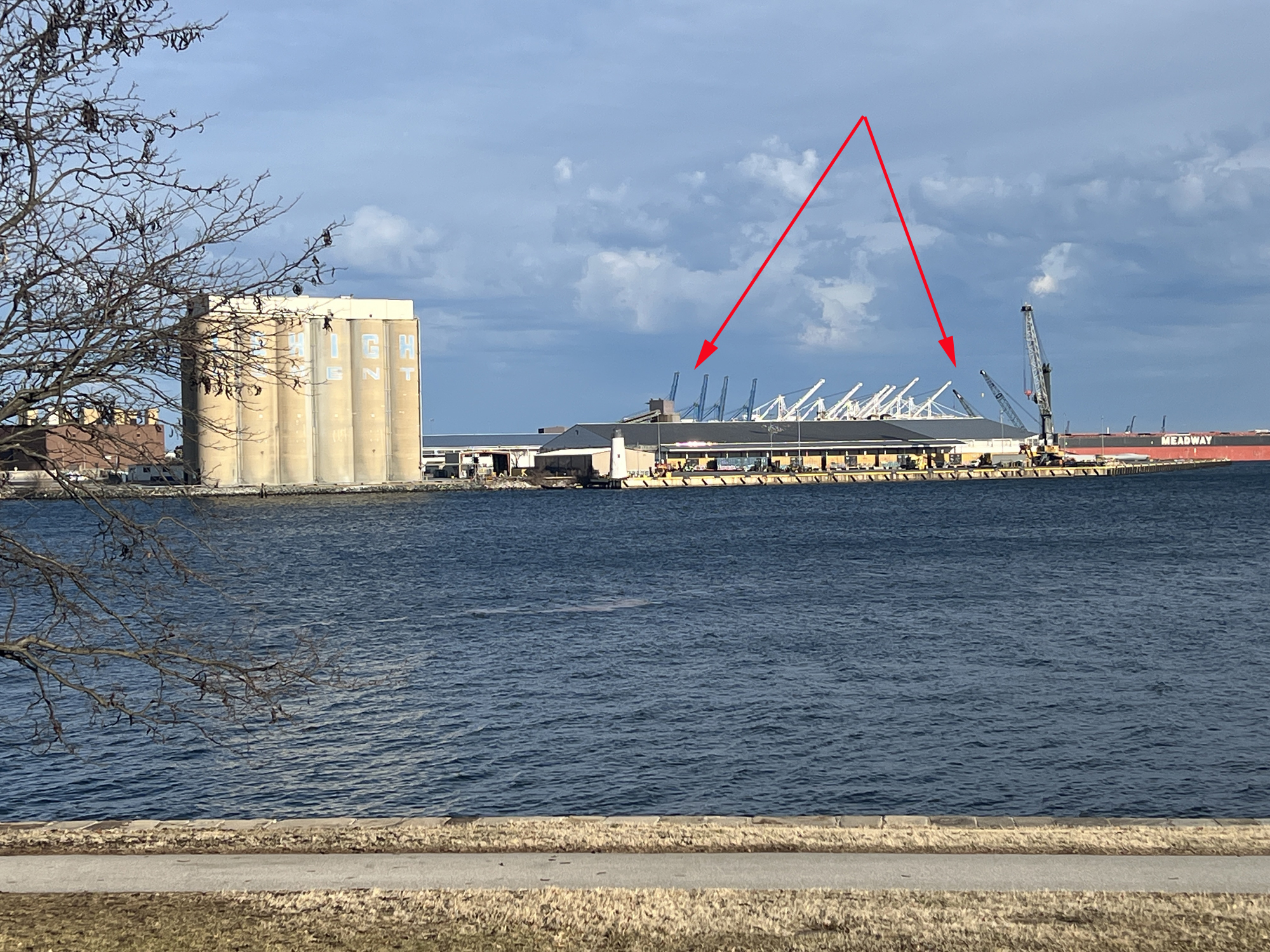
Building R is one of the more active locations and handles rail-to-ship. The way the fencing is laid out, it’s hard to see from Clinton Street. I took this shot last year from Fort McHenry, facing east across the river.
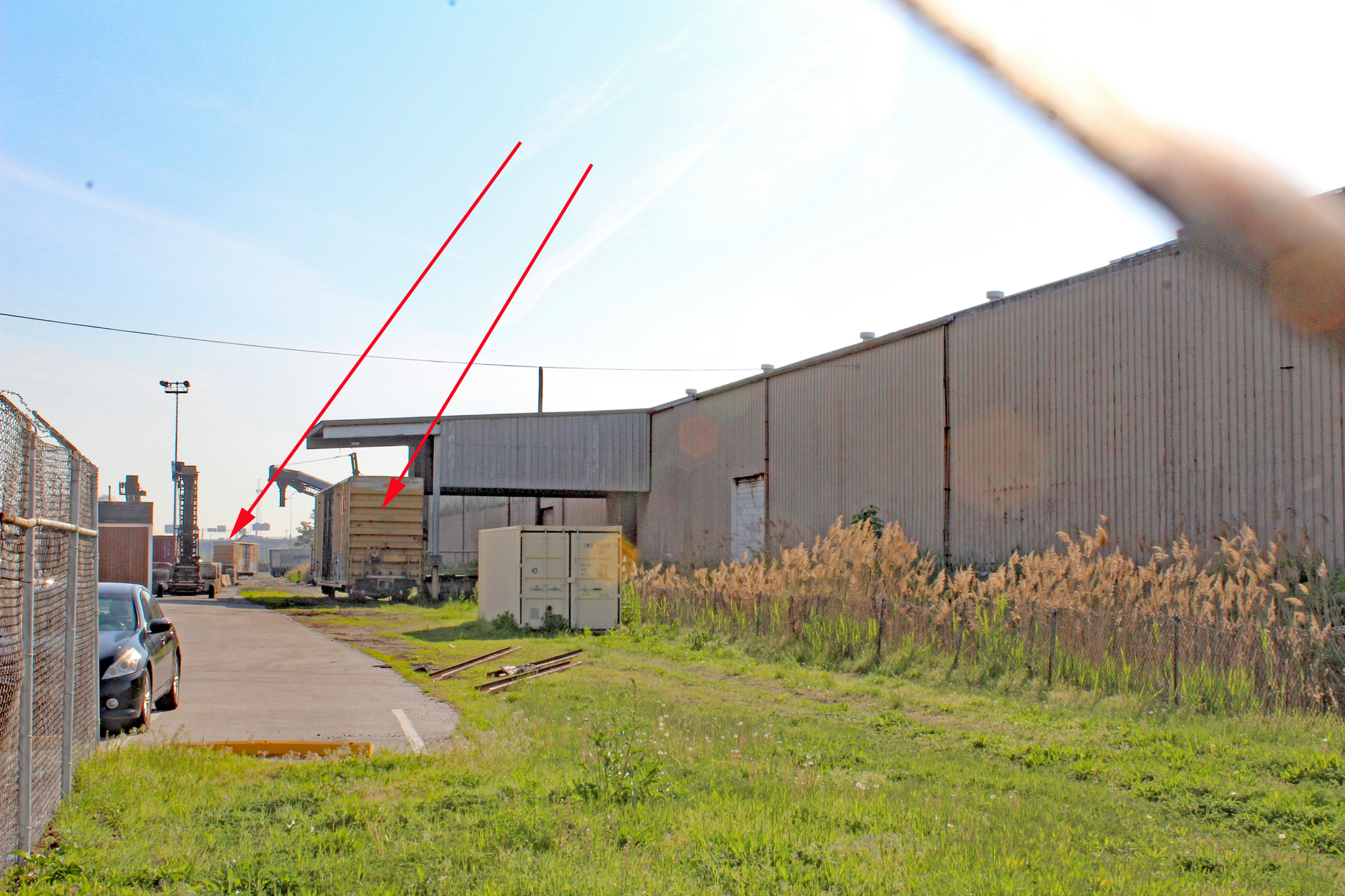
Rukert “Building 12”. I did a hard u-turn when I saw this. For as long as I can remember this spur had been engulfed in chest-high weeds. I was surprised to see that it’s now active. I’m not sure what the offspot car in the distance is.
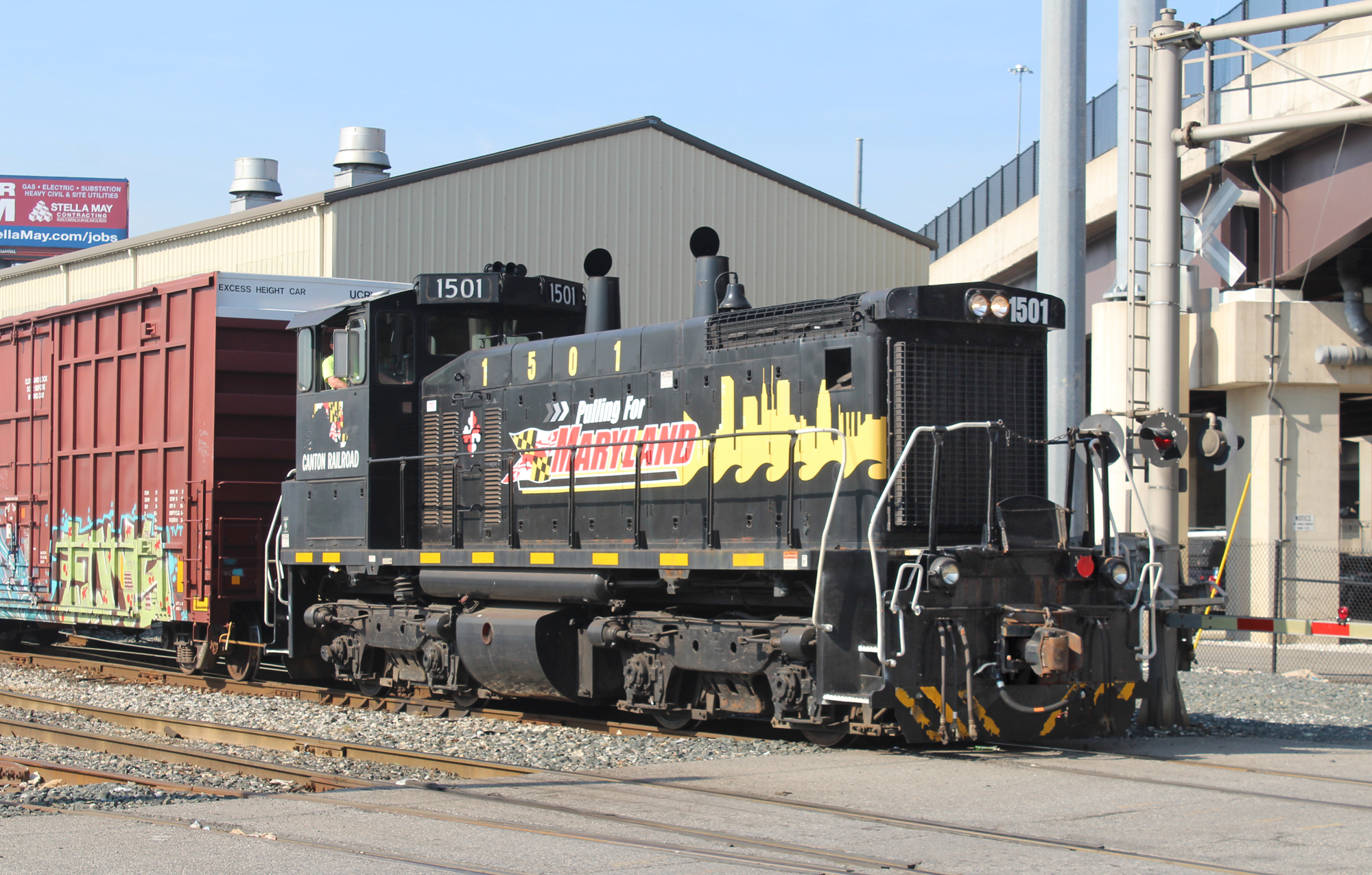
This is where the “storm chasing” approach finally paves off. Early morning sun to my back and blue skies. High contrast. Brilliant colors. Pay day! The yard throat crosses Holabird Avenue meaning that any motorists that are new to the area quickly learn they are going to be behind those crossing dates for….quite…some….time! You don’t just hear that 645 prime mover, you feel it. It’s like somebody is grabbing you by the shoulders and shaking you.
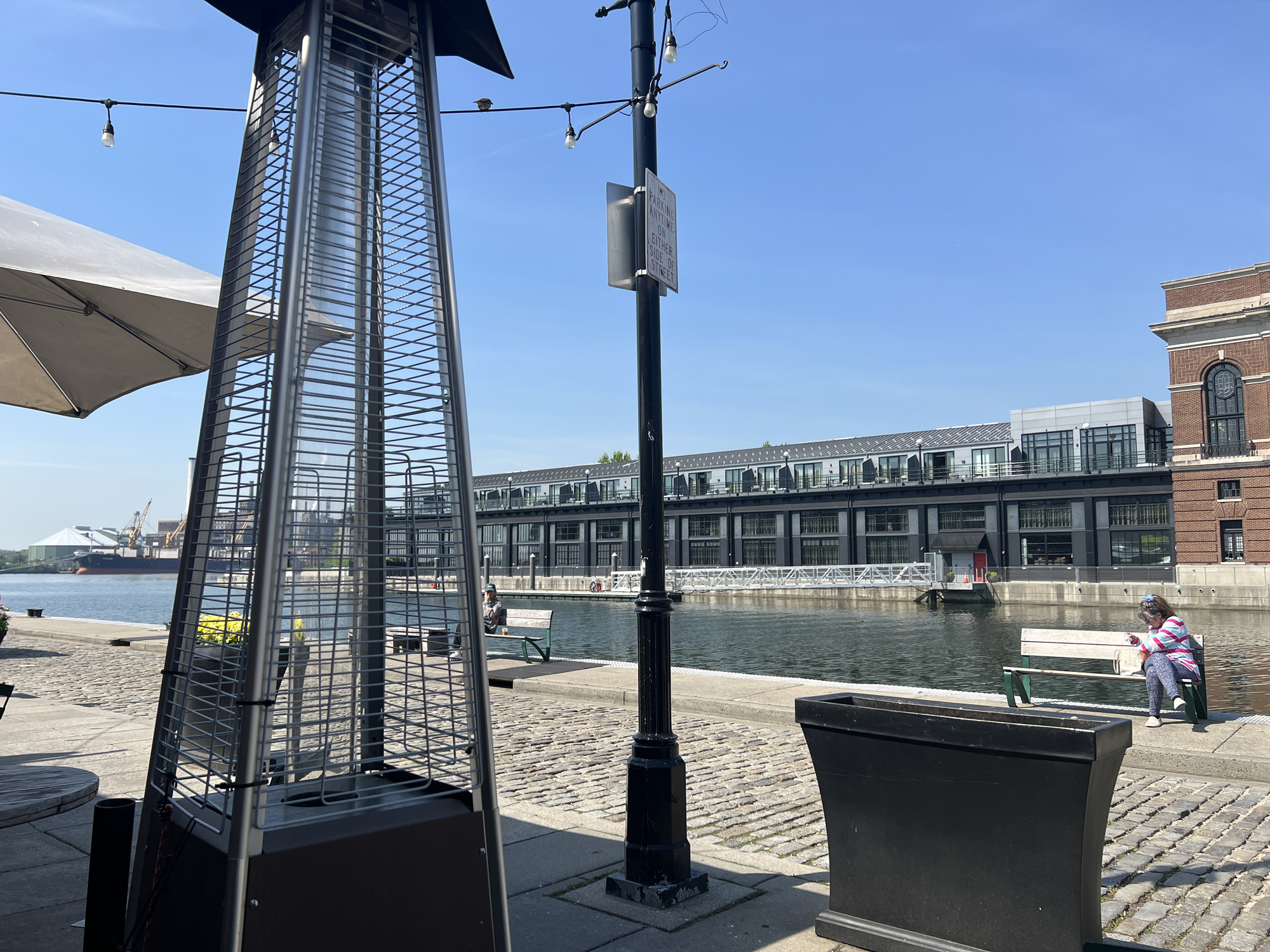
Ahhhh…..the difficult life of a railfan…so much stress! After a morning of photography I decided I’d earned coffee and a cranberry muffin at Pitango Bakery & Cafe on the Fells Point waterfront. The lesson learned from this trip? Next time, get up there an hour earlier.