By Tolga Erbora
Florida East Coast Railway Commerce Park Layout: The Real Deal
One of the reasons Miami continues to be a popular destination for tourists and travelers is its close proximity to Latin America and its even closer proximity to the Caribbean.
Now, who else would figure out and work with such a geographic advantage? Businesspeople, shippers, and logistics personnel.
As Miami International Airport grew as a premier travel destination following the post-World War II boom, global trade has too. One of the results of this? Industrial development west of the airport, in the form of Cargo City and Commerce Park.
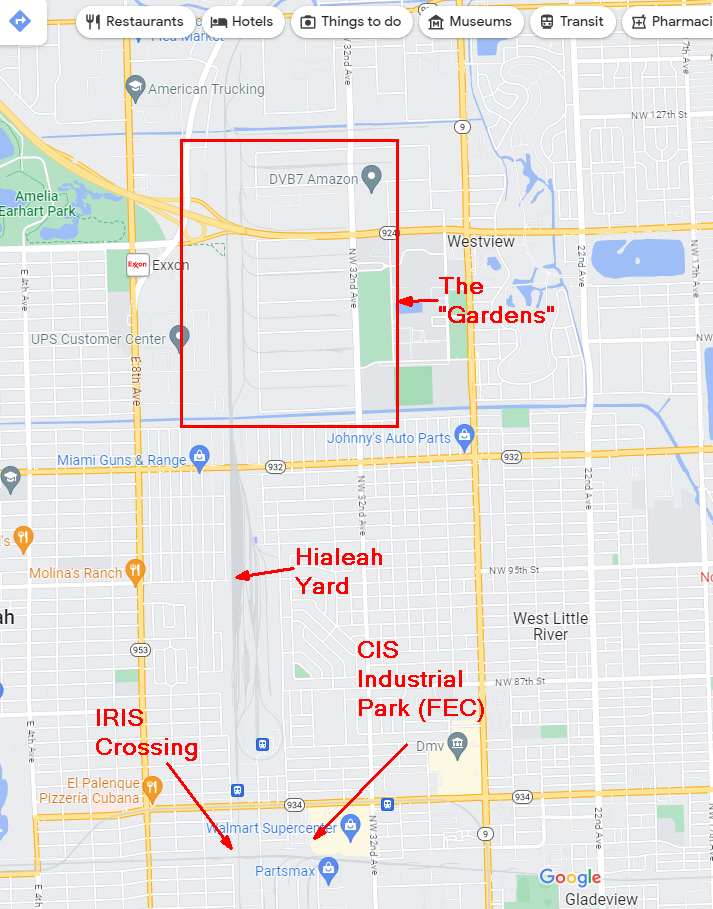
Both Cargo City and Commerce Park initially had ample rail access. It appeared the Seaboard Coast Line took advantage of Cargo City more, based on the orientation of the track switches to the several dockside industrial leads. However, in the late 1980s through the 1990s, the needs seemed to shift more towards plane-to-truck (and intermodal, for that matter), and the entire area was reconfigured to boast warehouses transloading straight from cargo plane to truck. No train, sadly. Commerce Park, served by the FEC, webbed out south and west of the initial juncture at NW 25th Street near NW 67th Avenue. A few lineside customers lined the Kendall Branch mainline, but the majority of leads swung into warehouse canyons developed in the 1970s in about a square mile of land, reaching as far west as the Palmetto Expressway. Despite an incredible scaleback, some portions of this development remain rail served, with the main apex really situated at the NW 25th Street crossing.
Naturally, the premise of this entry will be on the tangible, and still somewhat extant, FEC Commerce Park region.
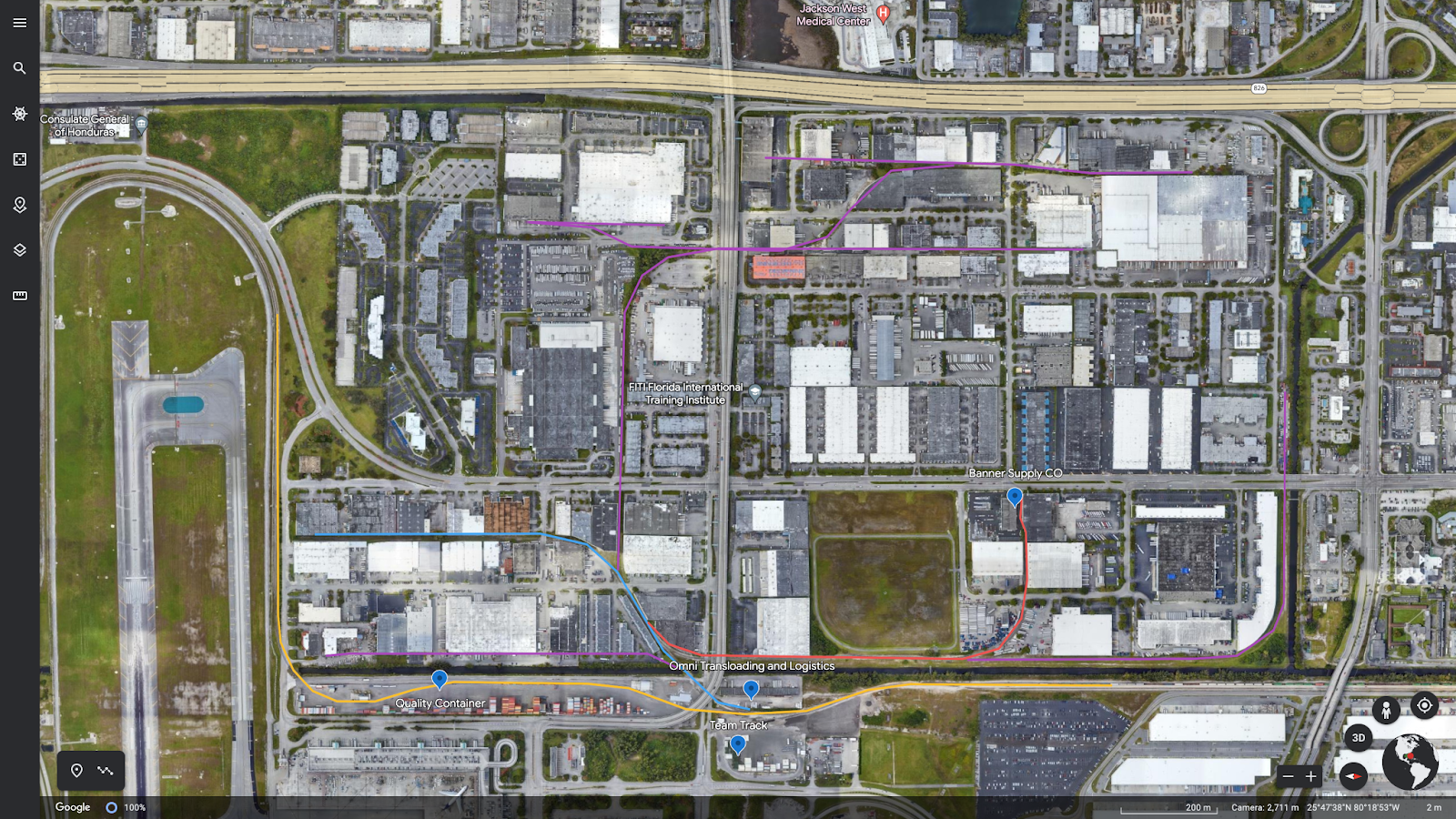
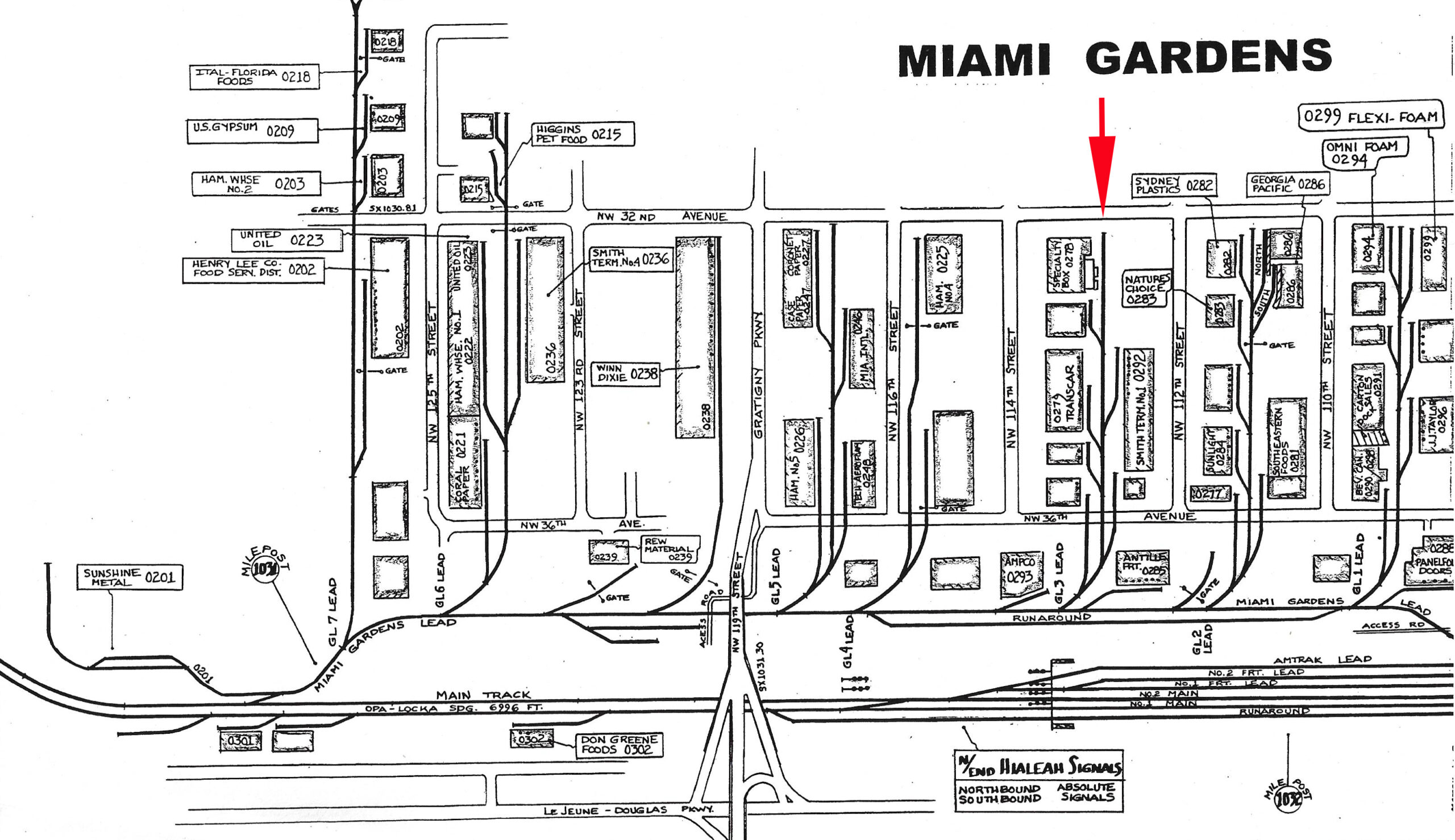
Caption 1: The map of the entire built-out Commerce Park district. Up to three switchback operations made for interesting switching. Sadly, two of those faded away in the 1990s, leaving just the one in the following image.
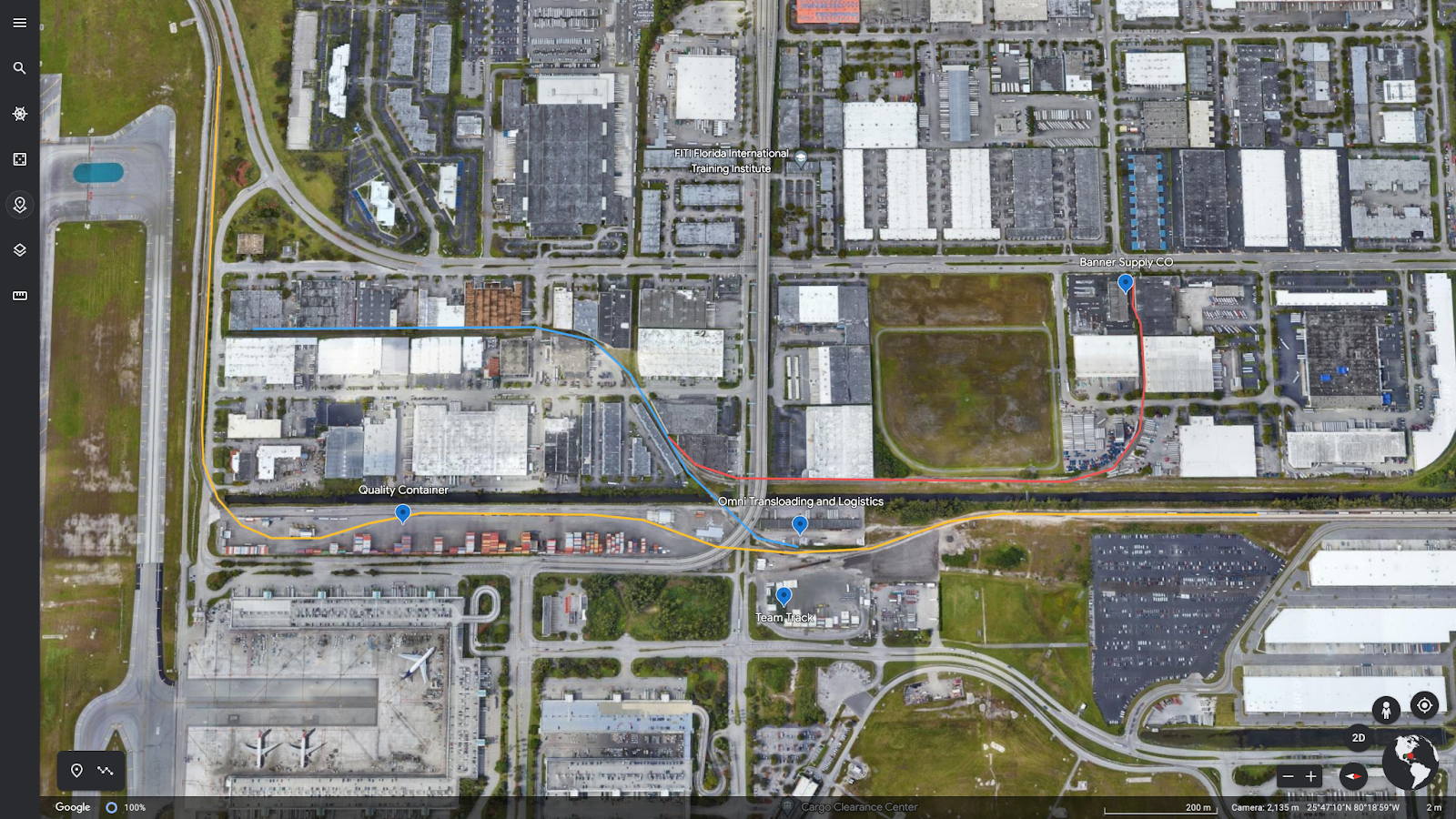
Caption 2: Rough estimate of present, somewhat serviceable track. The lead extending past the red curve still exists but was taken out of service.
Larry Burk sums it perfectly: “That used to be a really hot job. You needed a lot of seniority to hold it. On duty 7:30am with Sunday/Monday off. And it was a fun switch. Lots of one and two car spots.”
By the 2000s it seemed railcar service became marginal to almost nonexistent. As a trucking solution the park seemed to thrive. However, it seemed that nothing really west of Milam Dairy Road supported freight rail service, or FEC just didn’t want to go through the trouble of operating over all this circuitous trackage to serve them. They would park a GP9 or GP38-2 around the curve close to the 25th Street and Palmetto Expressway interchange, but that’s about it. Maybe there were a couple customers deep in the park which did get cars, but were out of view of the main artery. The park’s fate was sealed around 2006 when it was all pulled back to just shy of NW 72nd Ave, Milam Dairy Road.
Two line-side customers on the mainline south of 25th Street continued receiving cars until the mid 2010s. Amerigas had a sizable distribution facility at the crossing, viewable from the road. Airport Brick also had a spot about a quarter mile down. A team track frequently handled transloads at NW 16th Street before moving up to NW 25th Street, the present location. Both of these folded in the mid 2010s.
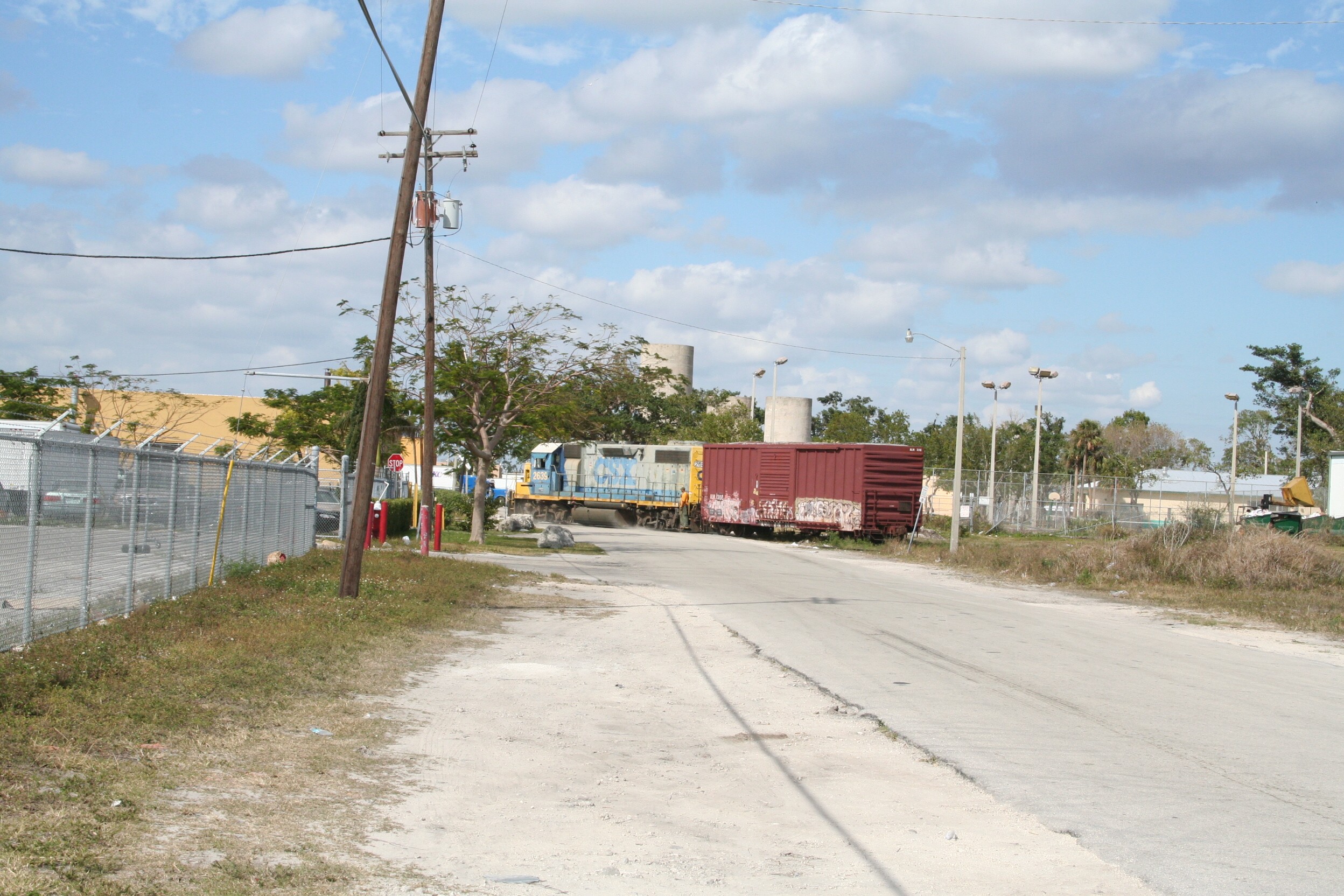
Alpinos Distribution for the longest time handled boxcar service in a lengthy warehouse by 25th Street. Banner Supply, still rail served, receives gypsum and building materials in centerbeam flats. Next to it was a warehouse which regularly received boxcars. Beer is my guess. However, when the owner changed in 2010, there went the rail service. It’s in the background in this January 2017 image of a rather unusual move….
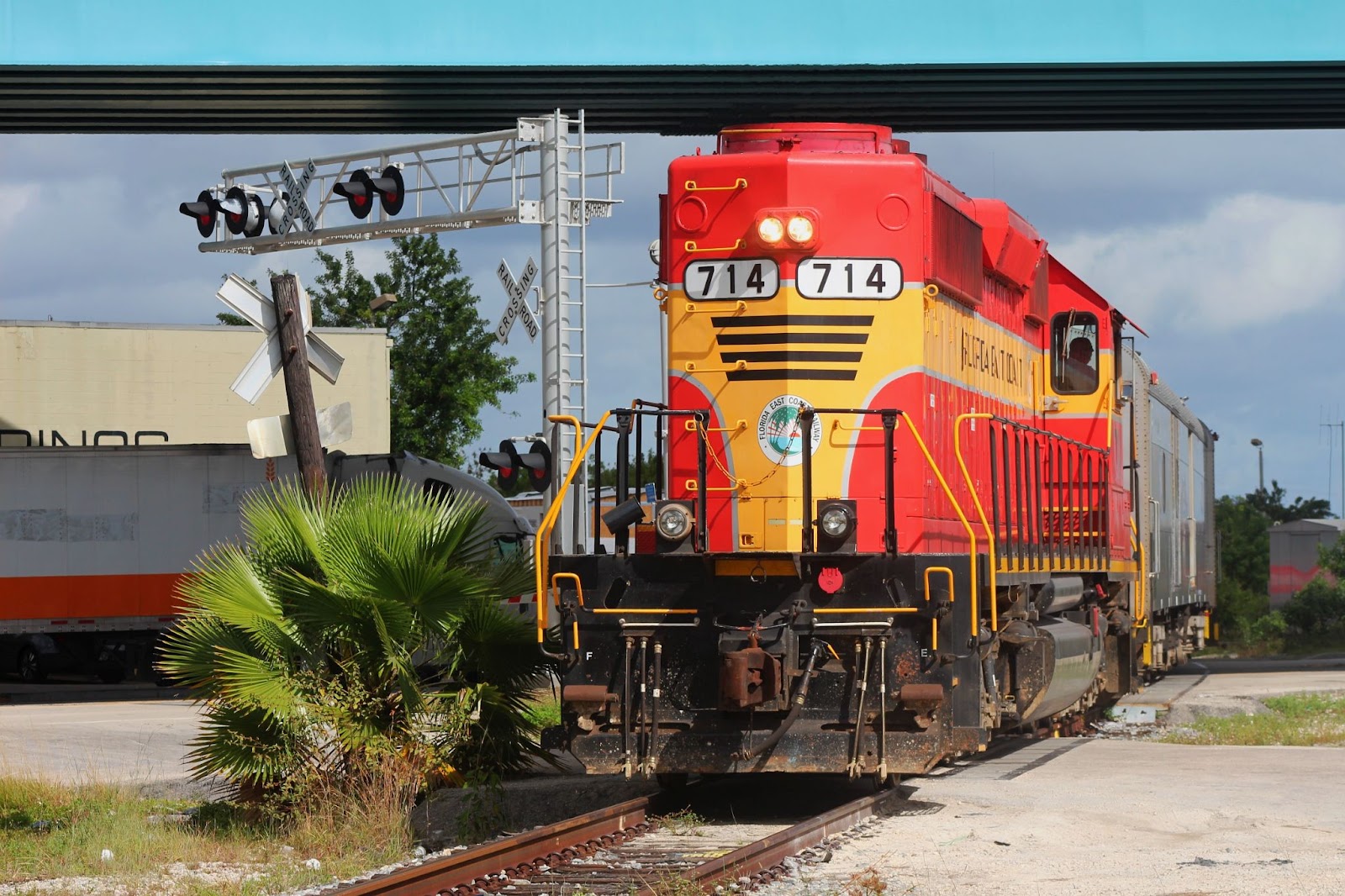
Unusual, but not as much as one may think. In recent years the Ringling Brothers Circus train used less active Commerce Park trackage to park their train. I had a field day catching the very scrappy last departure pull, which unfortunately came with a small derailment due to the erroneous choice to use an SD40-2 to pull it.
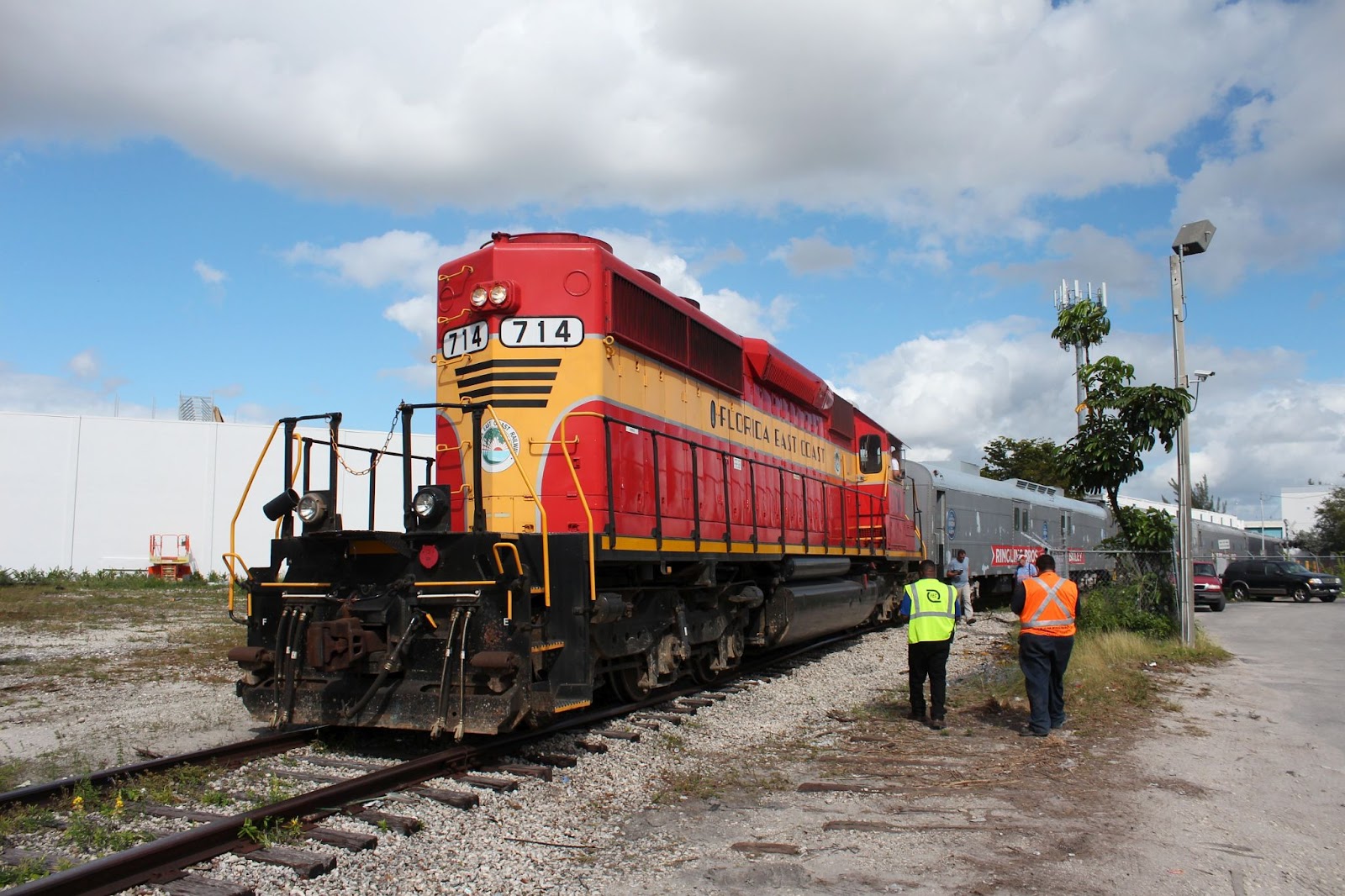
A more favorable move in less favorable weather…
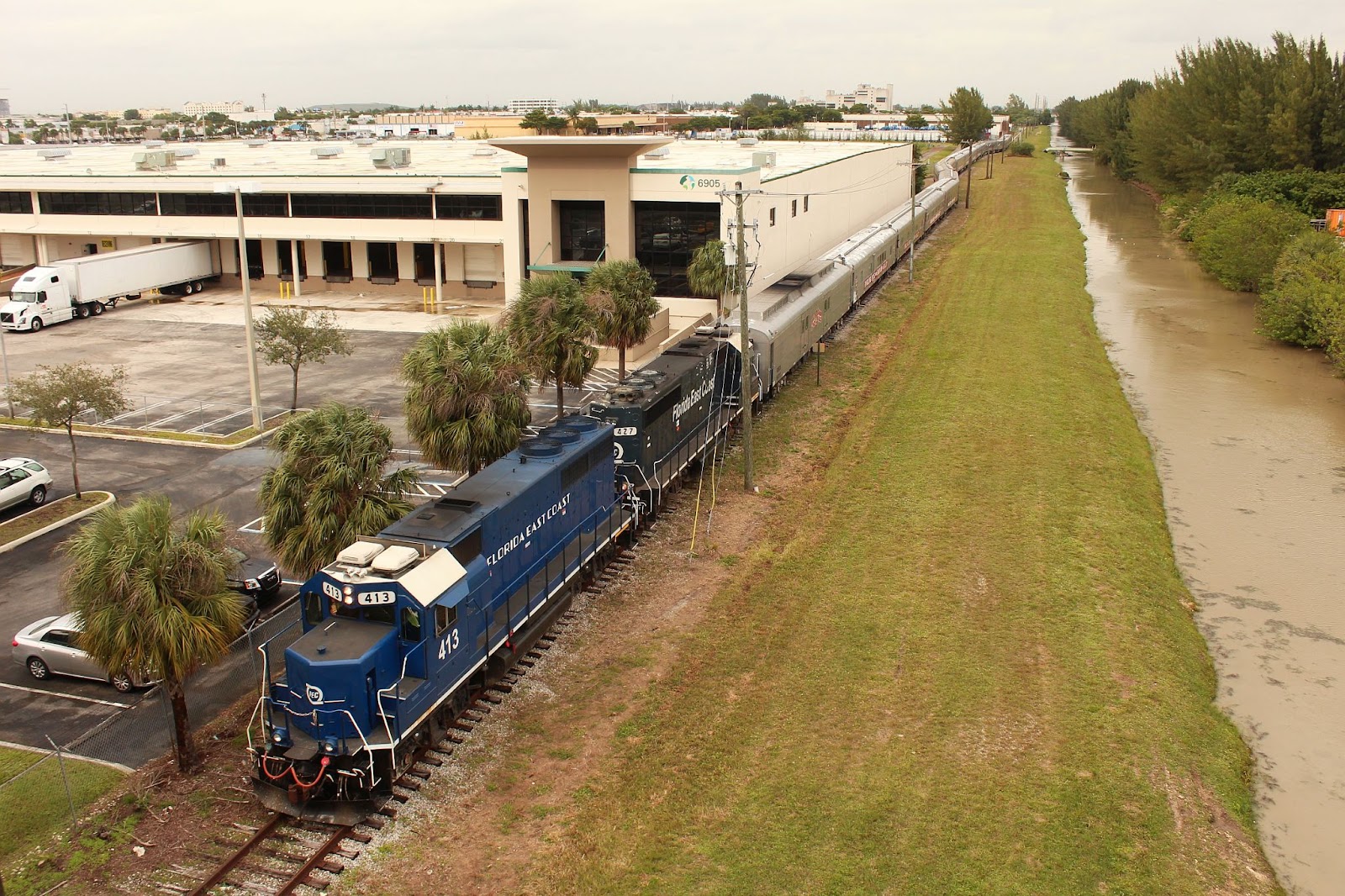
Caption: The 2016 Red Unit of the Ringling Brothers Circus Train spots the passenger portion on the “Jordan Marsh” lead, presumably named for the department store having a distribution facility here. It is always the original or old names that stick.
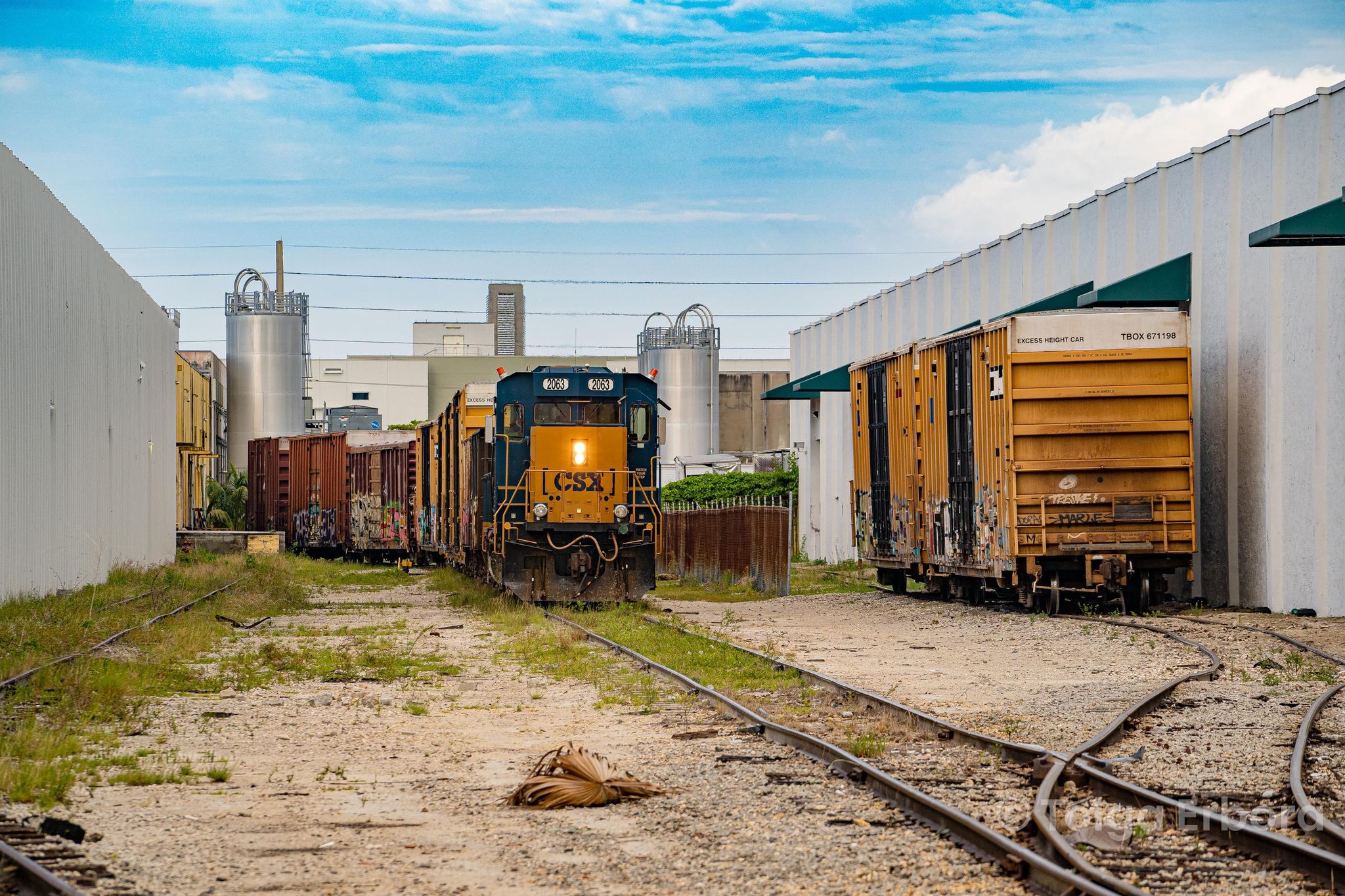
We hit the present day. Alpinos became the second location of Omni Transloading and Logistics, and is served almost daily. Banner Supply still gets cars a couple times a month. The team track serves a variety of clients which now include Ocean Lumber, FP&T (for NS), Associated Waste Services, and Raven Environmental.
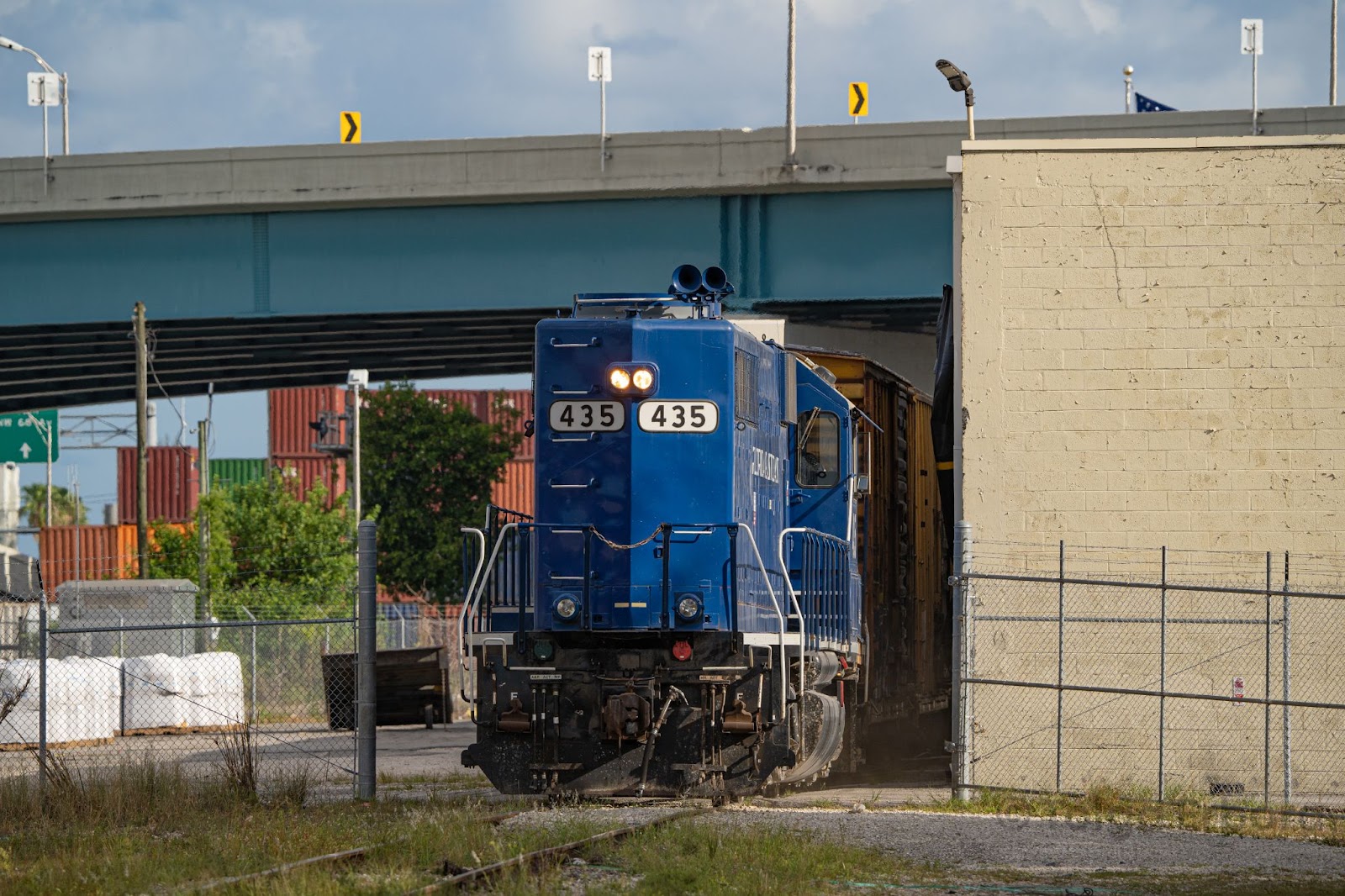
Caption: FEC job 10 (11:00 AM job) works Omni Transloading, which here receives beer in boxcars from Monterrey, Mexico. The contract sends the beer from Ferromex over the road on a nearly dedicated Union Pacific manifest and on to CSX and FEC. This industry also occasionally handles centerbeams, open flats, and reefers with potatoes.
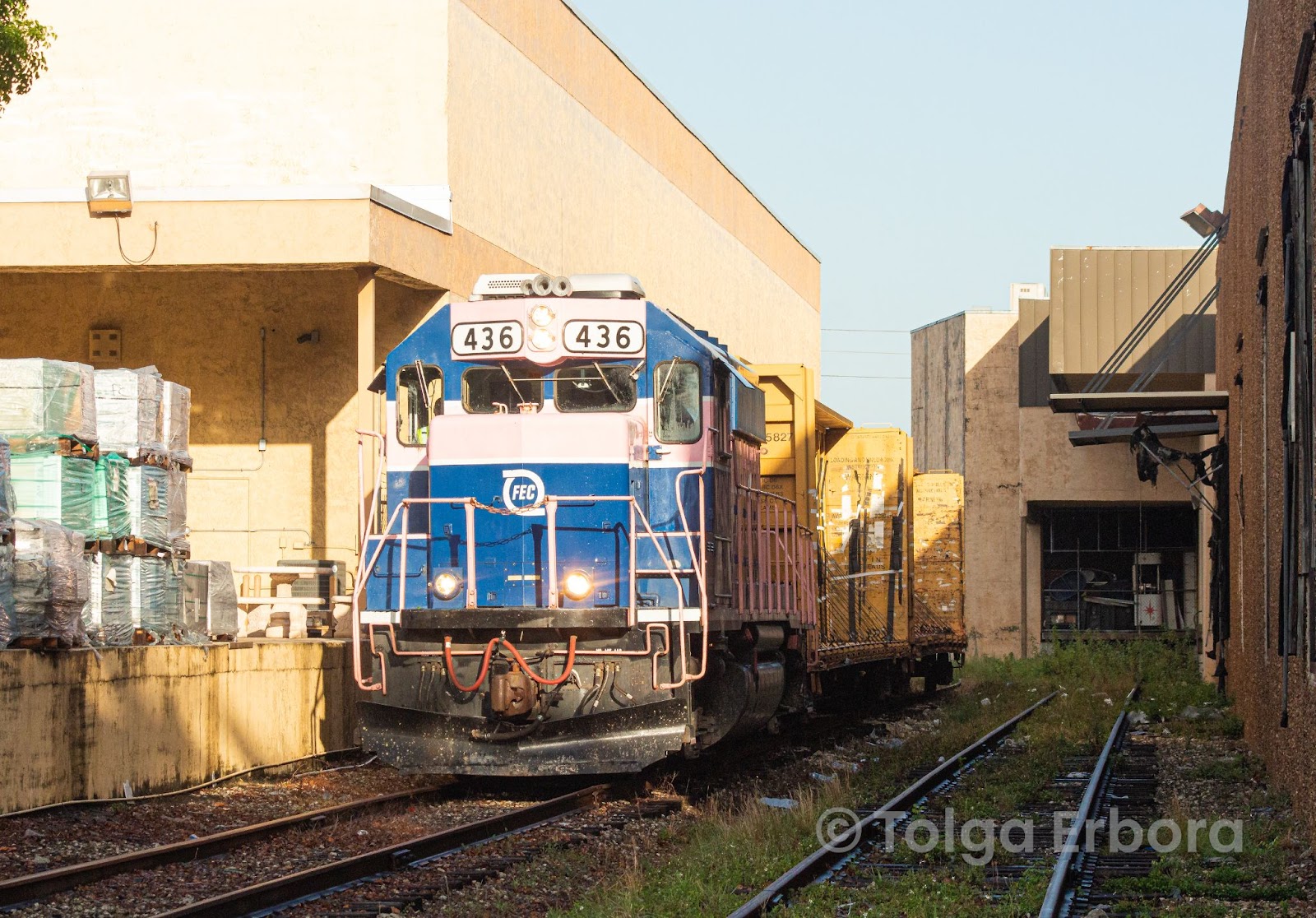
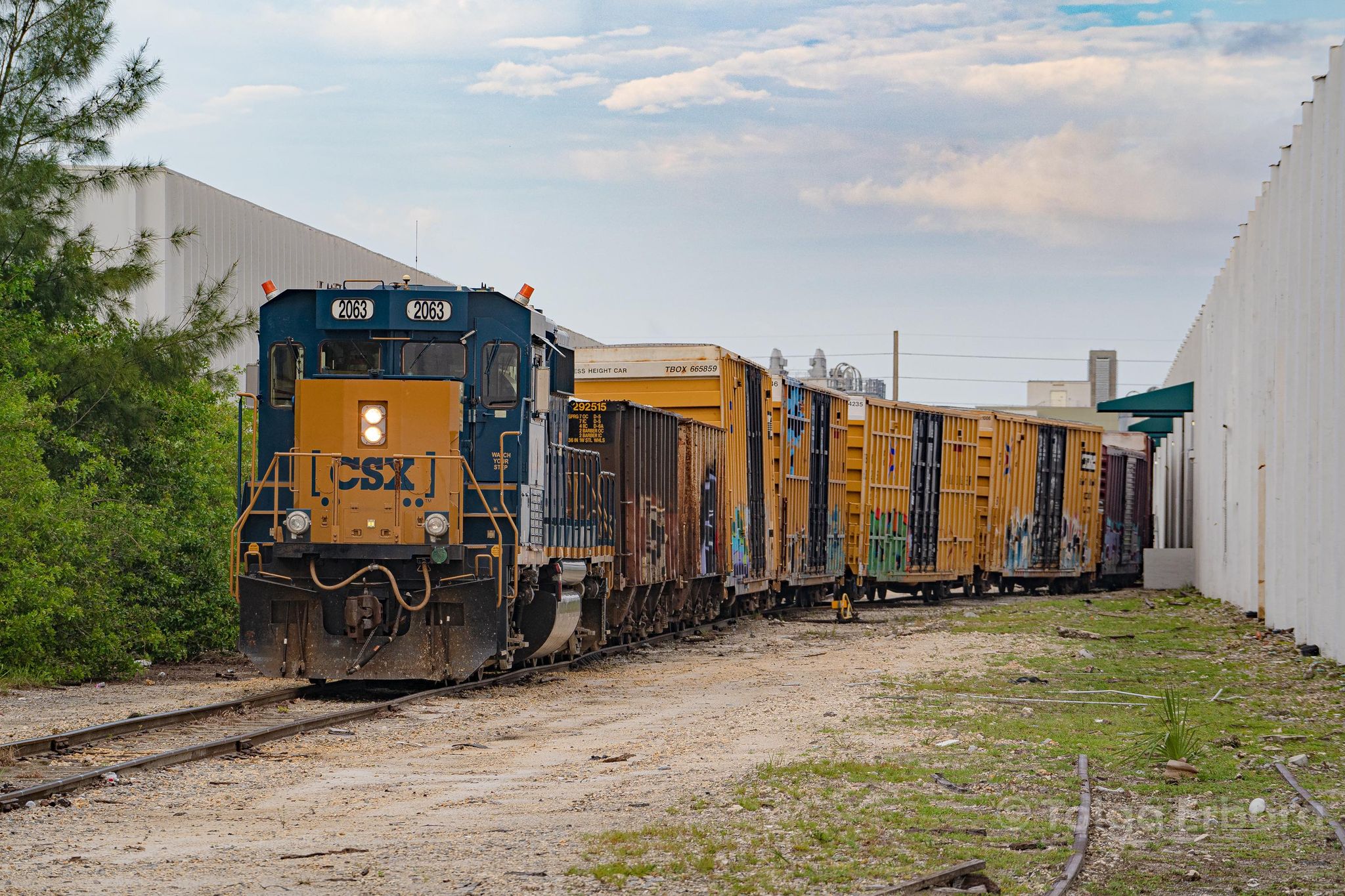
Caption: FEC’s 12:30 am yard job pulls two empty centerbeams from Banner Supply, which receives gypsum drywall by rail. Two potential customers sit in the immediate view of the shot, but do not ship by rail. The warehouse to the right was last served by FEC in 2009, but has not reeled in a tenant that needs their services ever since.
The latest and greatest addition to “The Park” is Quality Container. They have been a slowly looming presence in the area, a mini inland port if you will. They took up a lease of about 200,000 sf of land south of 25th Street and ramp intermodal. Most of it comes from and goes to PortMiami but there have been contracts with domestic destinations as well.
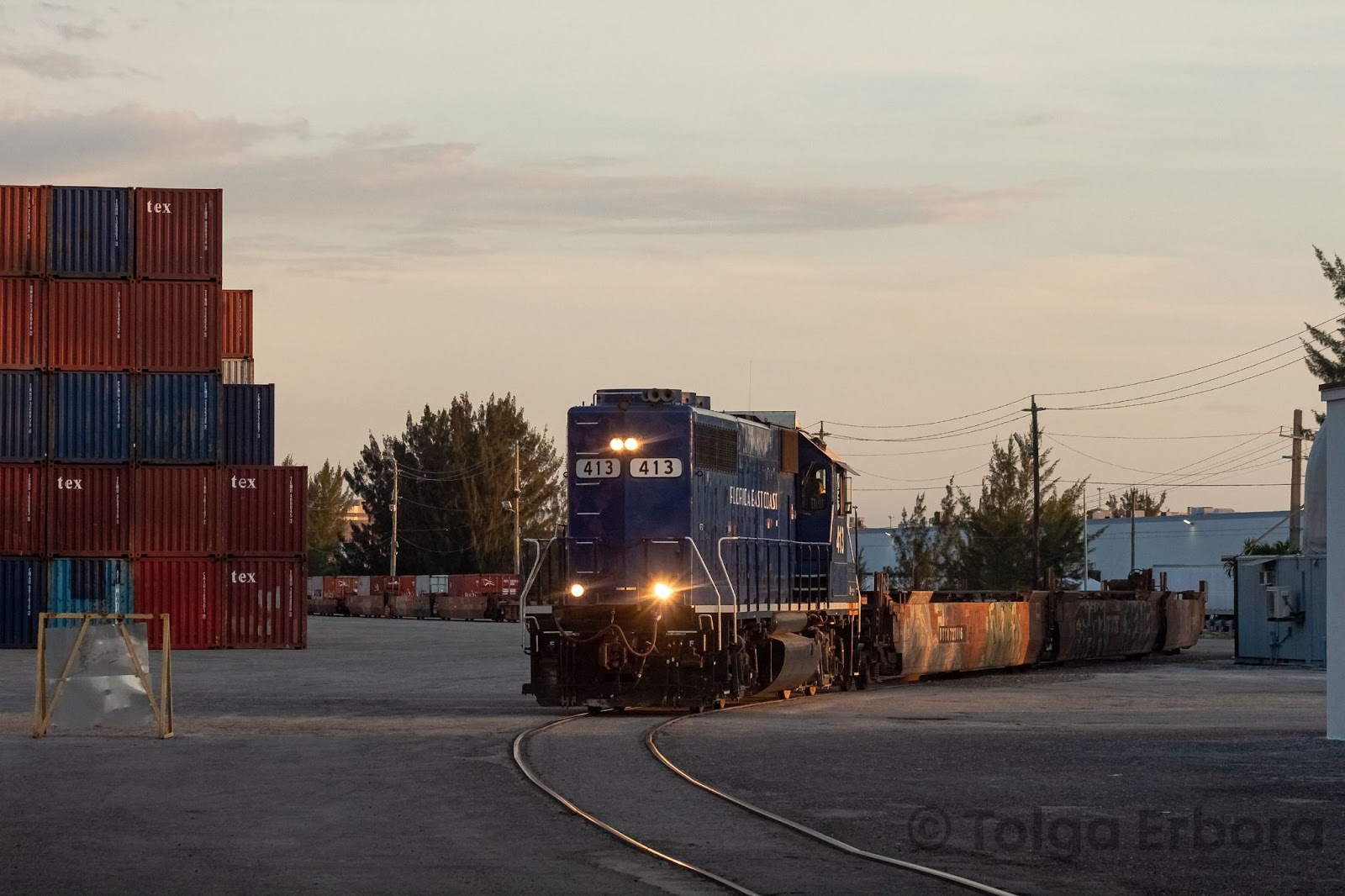
Caption: A Florida East Coast yard job pulls a cut of wells from Quality Container.
Quality Container uses land that once held the former south yard leads that would continue the line down to Florida City. Despite having a good carload base, it did not seem profitable enough for FEC to sustain it for much longer. FEC’s push towards more intermodal and rock service in the 1980s led them to sell the right of way to the County and truncate rail service to Bird Road, where three customers still remained south of Miami Int’l Airport. This line handled whatever carload business remained, whatever interchange they had with CSX at Oleander (just south of here) and swing moves for autoracks being switched at the old autoramp, which is now the South Florida Logistics Center. FEC would also store cars on the loop by the airport, a practice they do to this day. All of this activity faded away as time went on, with only storage moves and special interchange happening south of here.
This facilitated making Quality the primary use of this stretch of track, as well as realigning the track to serve their needs, an interesting operational move. It’s clear the track would have had to be more arrow-straight than in the picture above.
But the silver lining is a more visually appealing scene.
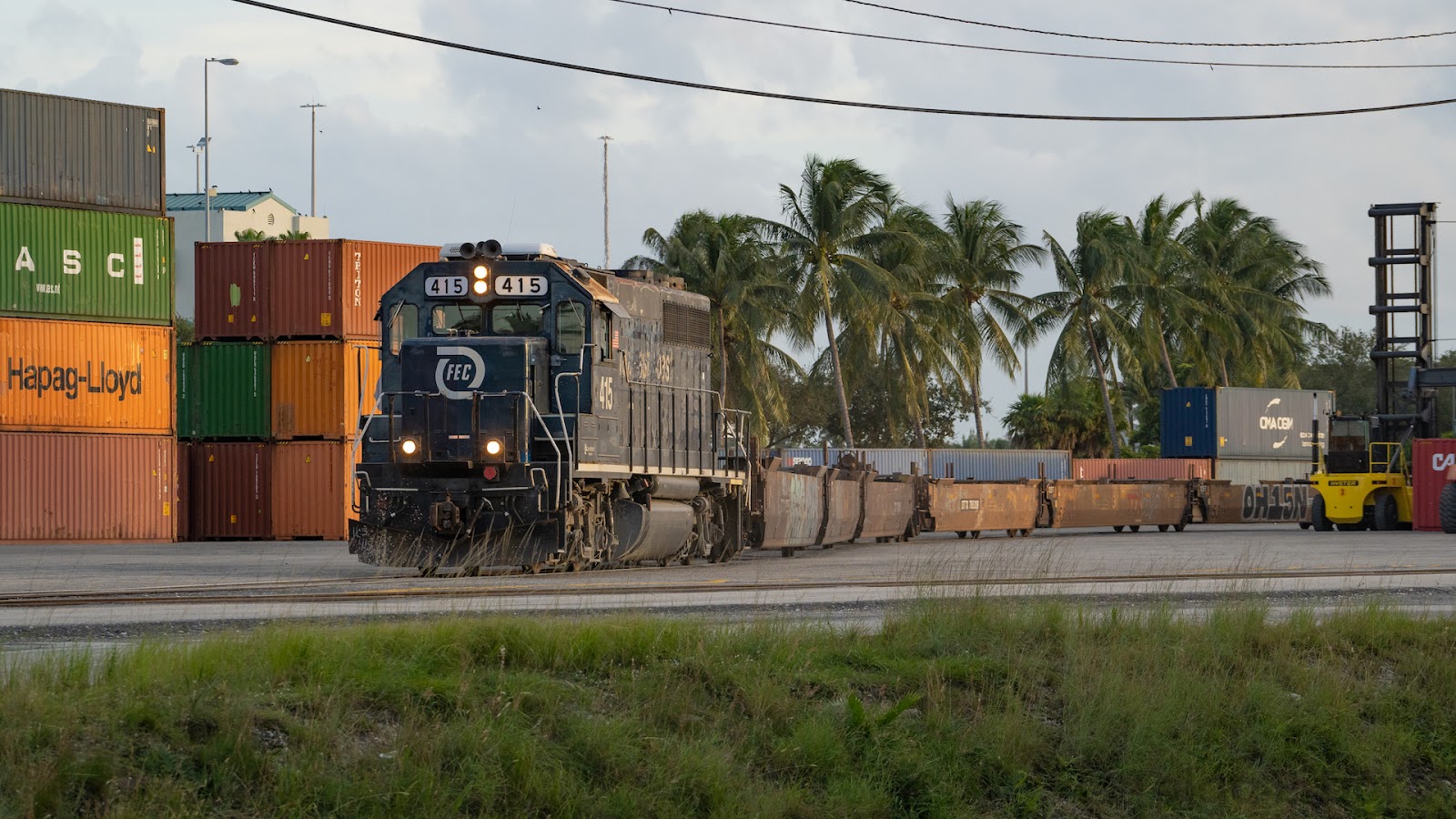
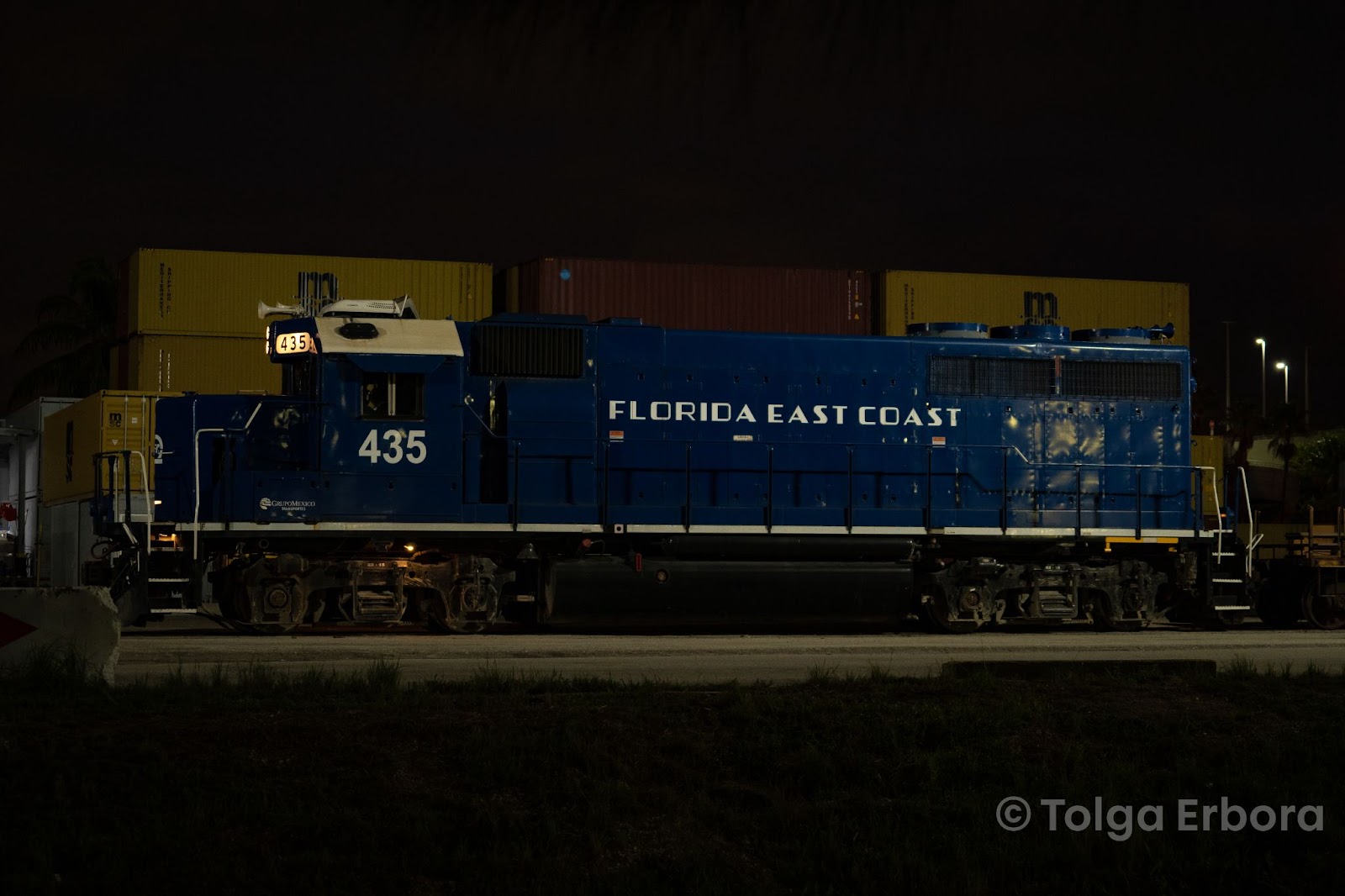
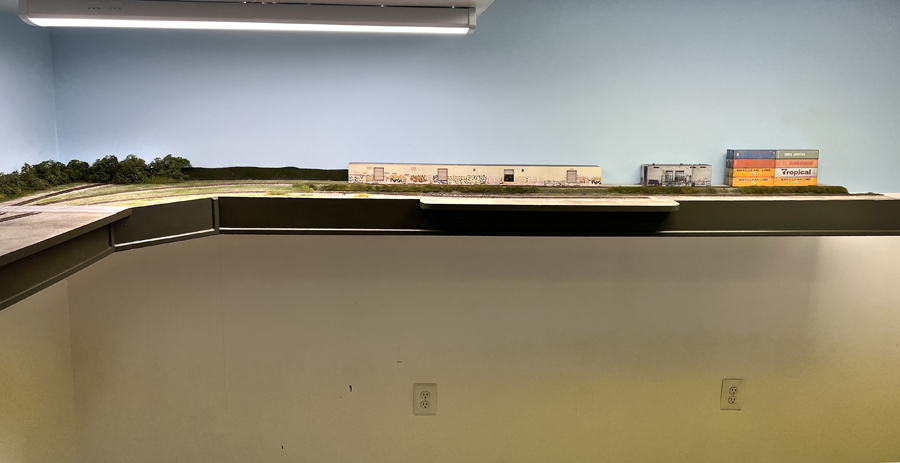
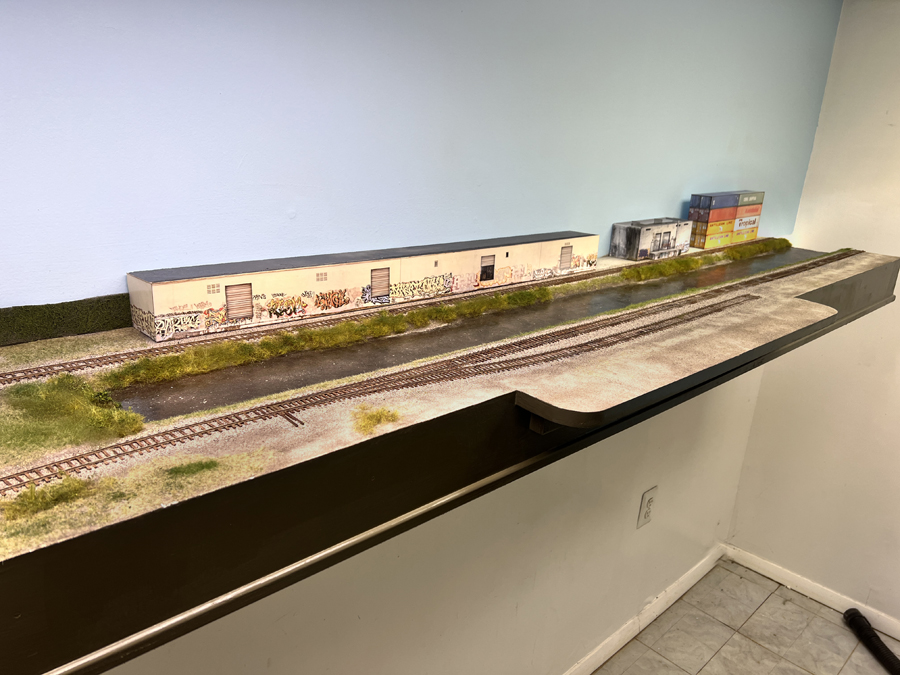
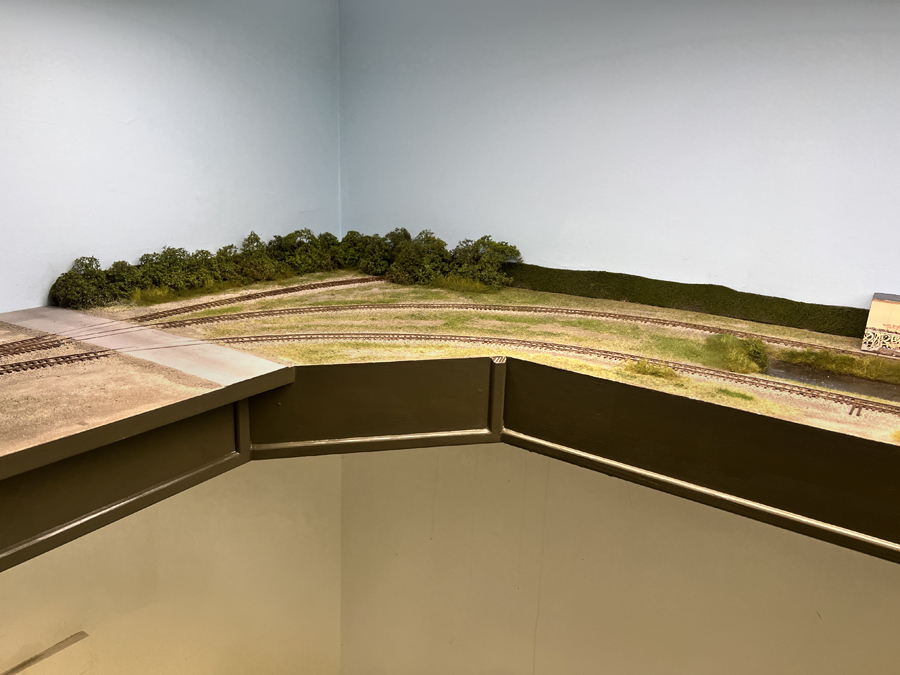
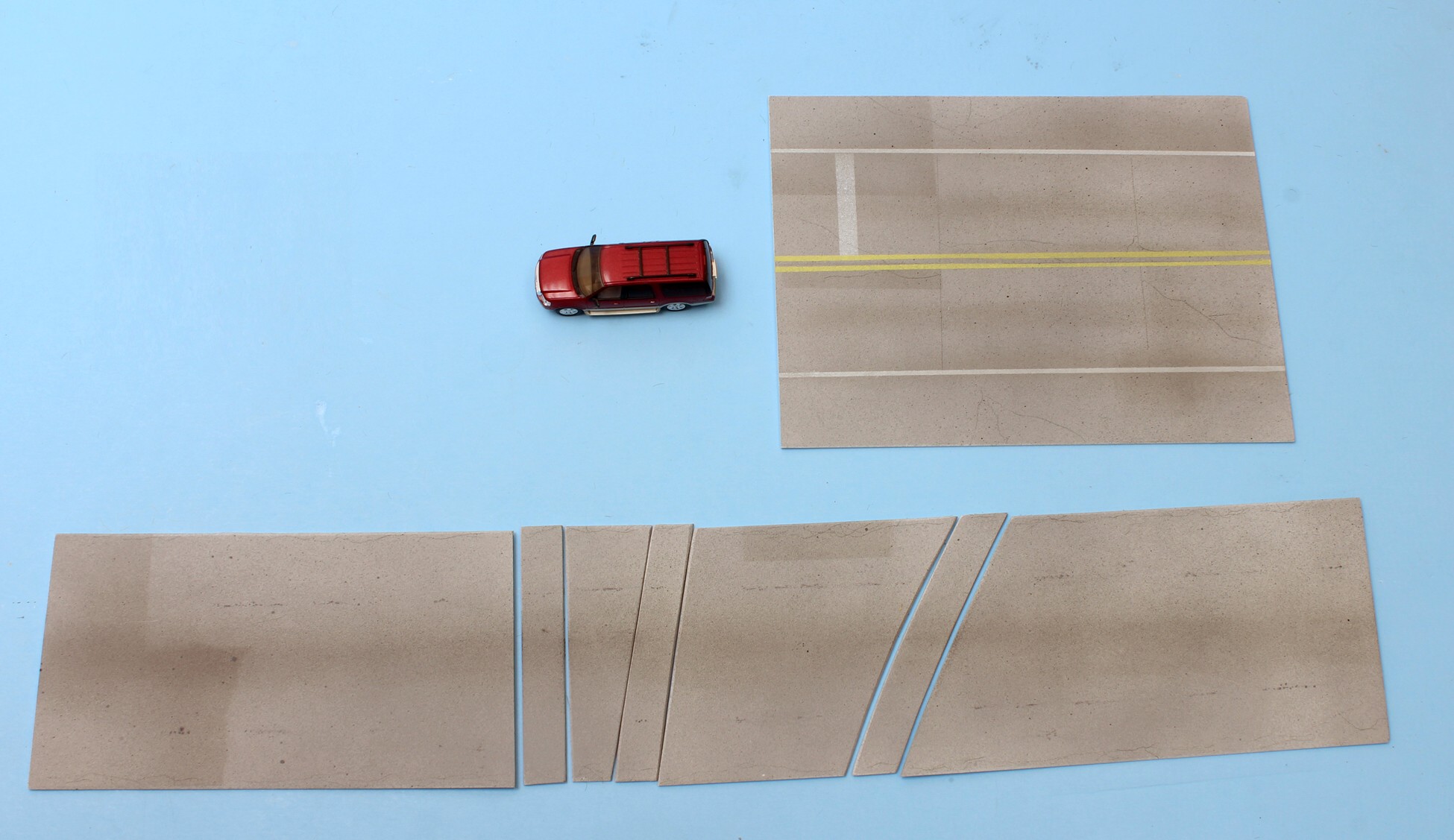
This storied history, the childhood memories of the old activity that I used to see, and the incredible similarity of these scenes to the impressions that Lance has laid out inspired a layout to be made. It is nowhere near presentable at the moment, but the video above does give the gist of what has been done so far. Unsurprisingly, it is a concrete and asphalt jungle, so the scenery process has to be done patiently. However, the process is quite enjoyable and encourages the relaxing pace that should be philosophized for layout building.