No, not THAT type of couple! I’m talking about coupling and uncoupling during operations. It’s the most fundamental of tasks. Even so, there are some things we can do to enhance the experience of operating our layouts.
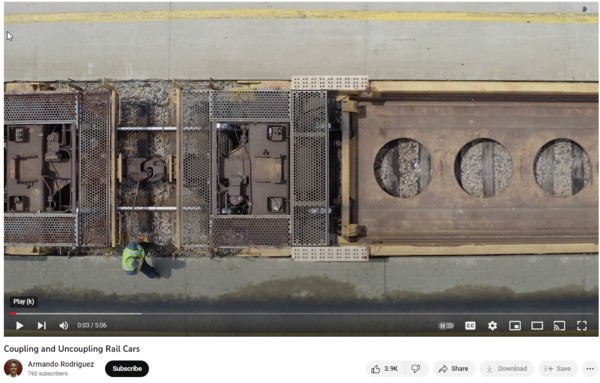
To start, here’s an excellent video explaining how the big boys do it. After watching it, here some takeaways.
-After making a couple, especially if the next move will be a shove, the prototype always pulls back slightly to make sure they actually did lock the couplers. It’s called “stretching” (00:50 mark in the video). If you listen to scanner traffic carefully, from time to time you’ll here the conductor say “Give me a stretch”. Not doing so in real life has resulted in some pretty serious accidents. They “think” they have the car and begin the shove. They get to the end and stop but….the car keeps rolling. Not good. I always incorporate this practice when operating solo.
-Note the red zone procedures in the video. When I operate solo I don’t “talk to myself” but I do pause a second to visualize them doing this.
-In the real world when a loco. couples to a car, it’s like hitting a brick wall. The car being grabbed barely moves, if at all. Capturing that dynamic with our much lighter models can be hard to replicate. Having a car skate an inch or two after the locomotive grabs it is like nails on a chalkboard for me but it’s hard to control. The solution? Just hit your throttle’s brake key the instant you make the couple. Doing so gives you the hard stop you’re looking for. Remember to release the brake.
-The section on coupler alignment in the video is interesting. I’ve actually seen crews do that. Now I don’t feel so guilty about my less than perfect Kadee maintenance. Just align them like they do in the field.
-Shelf couplers? Most tank cars have them these days and Kadee makes some nice ones. The problem? The Kadee’s are too prototypical and can be a real bear to unhook. I gave up and went back to standards on all of my cars.
-Trip pins. Unless you use uncoupling magnets, the trip pins on your couplers serve no purpose whatsoever. They don’t look so great and can snag things. If you don’t need them, snip them off.
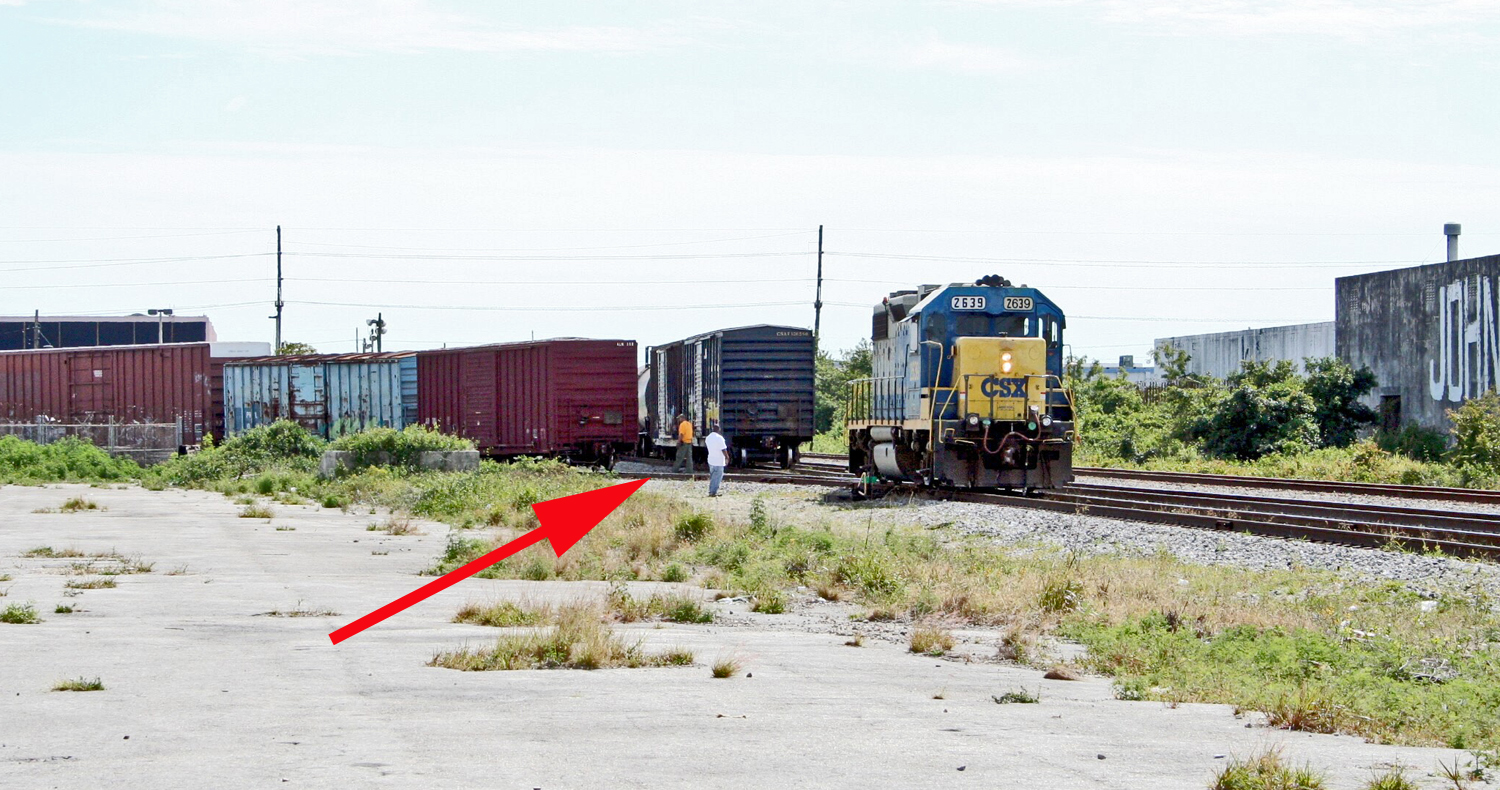
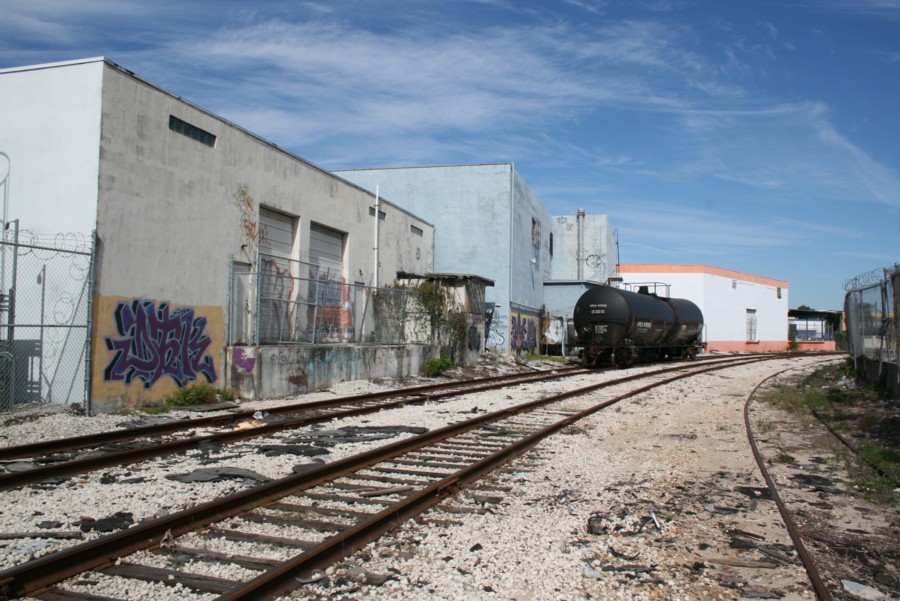
It’s 2006 at the East Rail Industrial park in Miami. The engineer has gotten out of the cab to talk strategy with the conductor about a plan of attack for handling an extremely complex switching situation. Pauses in the action like this are common in the real world.
Just because a comment is annoying and comes across as self-righteous, doesn’t mean there isn’t some truth to it. In fact, there may be a lot of truth it.
Case in point is the oft-repeated refrain, “It’s my model railroad and I’ll run it the way I want. If I want to have the Acela take a siding while my 1880’s logging train rolls by, that’s my business”.
True, it is his business. The annoying part about these self-righteous guys is that nobody ever told them otherwise and frankly nobody cares. Not only does nobody care what this dude does, they don’t give a rat’s ass what I do, or….sorry….what you do. They just don’t. Take that circus train, run it up to the coal mine, and pull those hoppers baby. God bless you. Have fun.
It’s pretty liberating when you think about it though, the concept of being totally selfish in how you run things. If you’re going to go that route, the selfish route, you may as well be good at it. That’s the problem, often we aren’t that good at being selfish, at developing a philosophy that maximizes the enjoyment we get from the hobby.
Case in point, the more you understand how an actual railroad operates, whether you chose to employ those practices or not, the more likely you are to enjoy running your layout. It’s the knowledge, not the implementation of prototype practices, that is the missing component.
Take the extreme of total ignorance when it comes to prototype operational and business practices. Designing a layout that will keep you entertained coming from that frame of reference is pretty damn expensive (and I’d be happy to build it for you!). It takes a LOT of track, a LOT of layout, a lot of industries, turnouts, rolling stock,…..a lot of “stuff” to keep you from getting bored. If your train rolls into town at 50mph, flat spots the wheels to stop on a dime, and does a quick car dump, your work at that industry will be done in seconds. Running things that way, if you want a thirty minute solo op. session, it may take twenty or more industries to fill that time. It takes a lot of money, and a lot of space, to build something that puts on that type of show. If that approach brings you enjoyment, then you don’t need me, or anybody else telling you the “right” way to do it. You don’t need other people telling you how to have fun. What matters is that you’ve gotten to that philosophy via a conscious decision not by default.
With just a little knowledge however, you might find you have even MORE fun at a lot less cost and with a lot less layout. As your knowledge of operations increases, the amount of layout needed to keep you entertained decreases. You don’t even need to employ most (or any) prototype practices to have more fun. Just knowing what would likely be happening in the real world as you go through the moves adds interest.
My friend Alex Bogaski was over for a visit recently and the discussion turned to using props to represent prototype practices, paperwork, etc. It can be taken too far… to the point of absurdity. Marching a 1:87 conductor down your layout for five minutes at scale walking speeds is getting a little out there. Alex made a great point, stating “I just visualize in my mind what they’d actually be doing as I go through switching moves. I don’t really use props”. That’s a really good middle ground.
You probably don’t need that many operational props. Just take frequent pauses as you operate the layout to represent setting brake wheels, throwing turnouts, walking, talking to customers, etc. Drink that beer. Sip that coffee. Think about what would actually be happening on the prototype as you take those breaks. How long should the pauses be? Whatever length keeps it fun.
Where do you get the knowledge? For me it’s watching YouTube videos, talking to more knowledgeable friends, rail fanning, and talking to actual railroaders. On YouTube just put in a search term along the lines of “Railroad Industrial Switching” and you’ll get plenty of clips. Here’s one example.
Knowledge isn’t limited solely to operational practices, business practices factors in also. Modelers, through their ignorance of how railroads work, skip a lot. This takes them back to the same swamp of needing more elements to keep them entertained. Common examples include spotting loads off spot and then re-spotting them when space frees up, team tracks, car storage, etc.
If you don’t presently have a layout, and are planning one, at least be aware of the ramifications of the two philosophical approaches to operations. If you come from a place of total ignorance as to how things are done in the field, you may need three or four hundred feet of layout and fifty turnouts to keep you entertained for a half hour. With at least some knowledge it may only take a hundred square feet and a half dozen turnouts PLUS you would likely enjoy the session more. Why? Because with that knowledge, as you run your models, the experience is enhanced by a background movie of actual practices playing out in your mind.
I’m not saying you should operate prototypically. For many, it just isn’t that interesting. I get it. What I am saying is that you owe it to yourself to understand both approaches, their ramifications, and consciously come up with a philosophy that maximizes your enjoyment. Don’t end up there be default, by benign ignorance. Be a selfish prick….like I am.
Have fun.
If this subject interests you, check out my book on switching operations HERE.
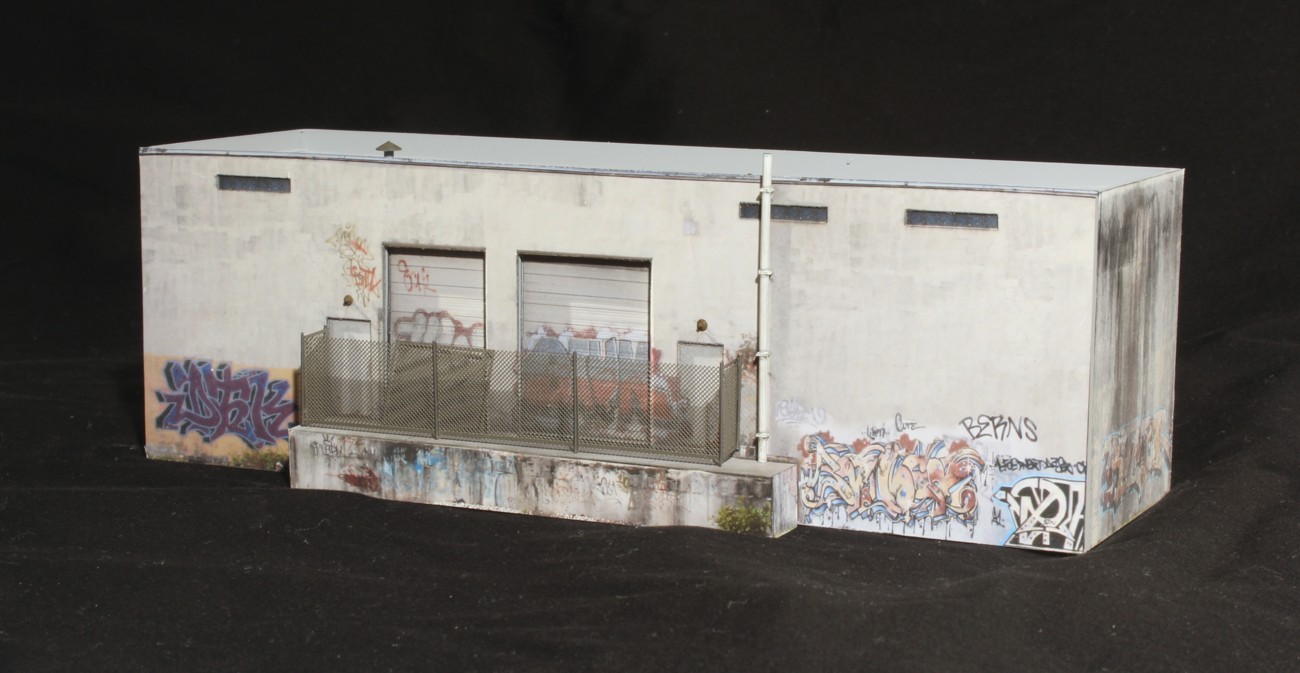
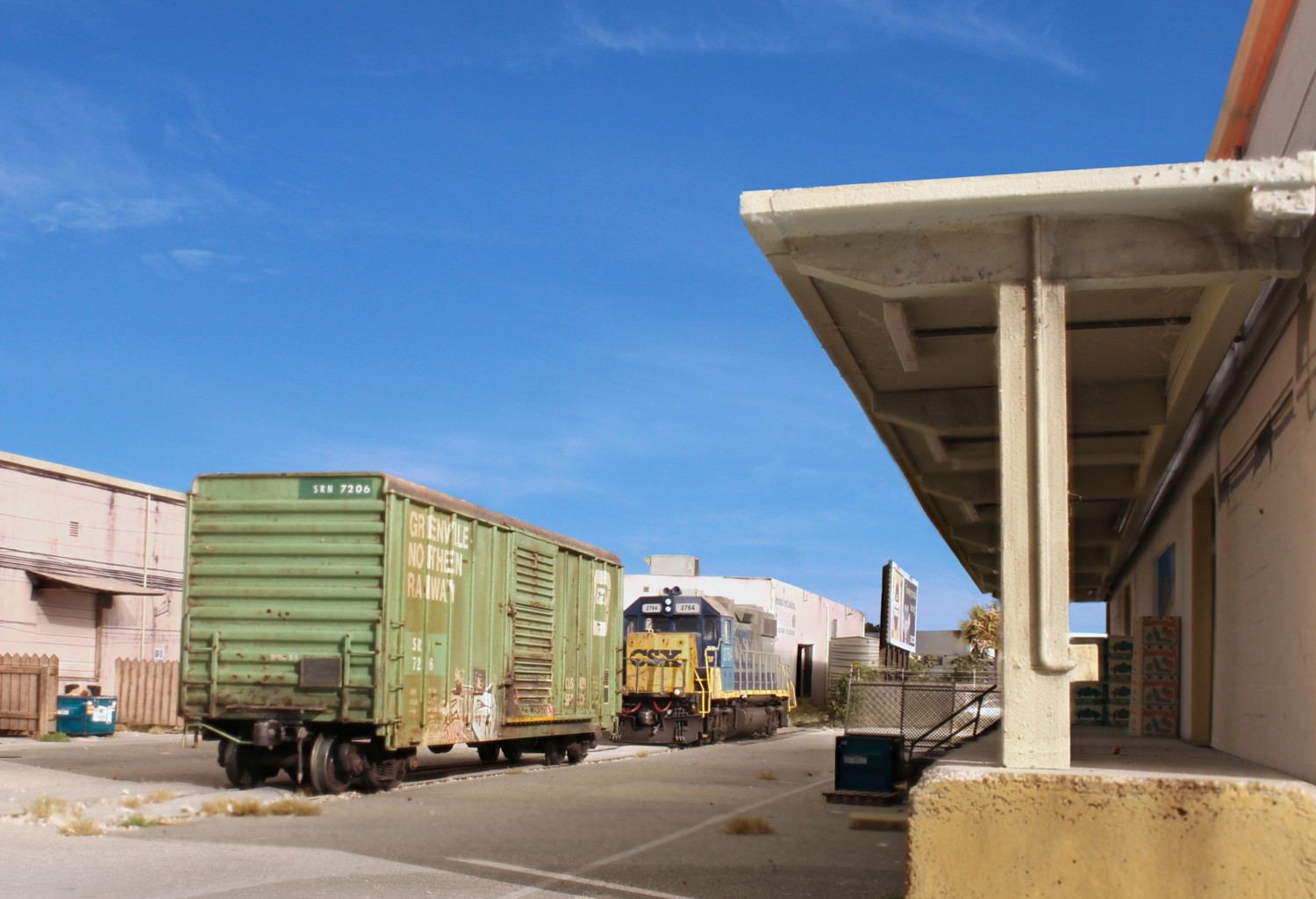
The first structure for the new East Rail layout is now a wrap. Photo above. In Miami there is a fairly broad range among industries in terms of how often they receive cars. The LPG companies, logistics warehouses, and scrap metal industries are worked frequently. Others only see a car or two a year. This structure falls into the “seldom if ever gets cars” category.
The inspiration for the project came from a structure on FEC’s CIS lead (Page 80 of my new book). For those that want to try your hand at photo wallpaper I’ve placed the image in the Photo Wallpaper section of the How To tab (scroll to the bottom).
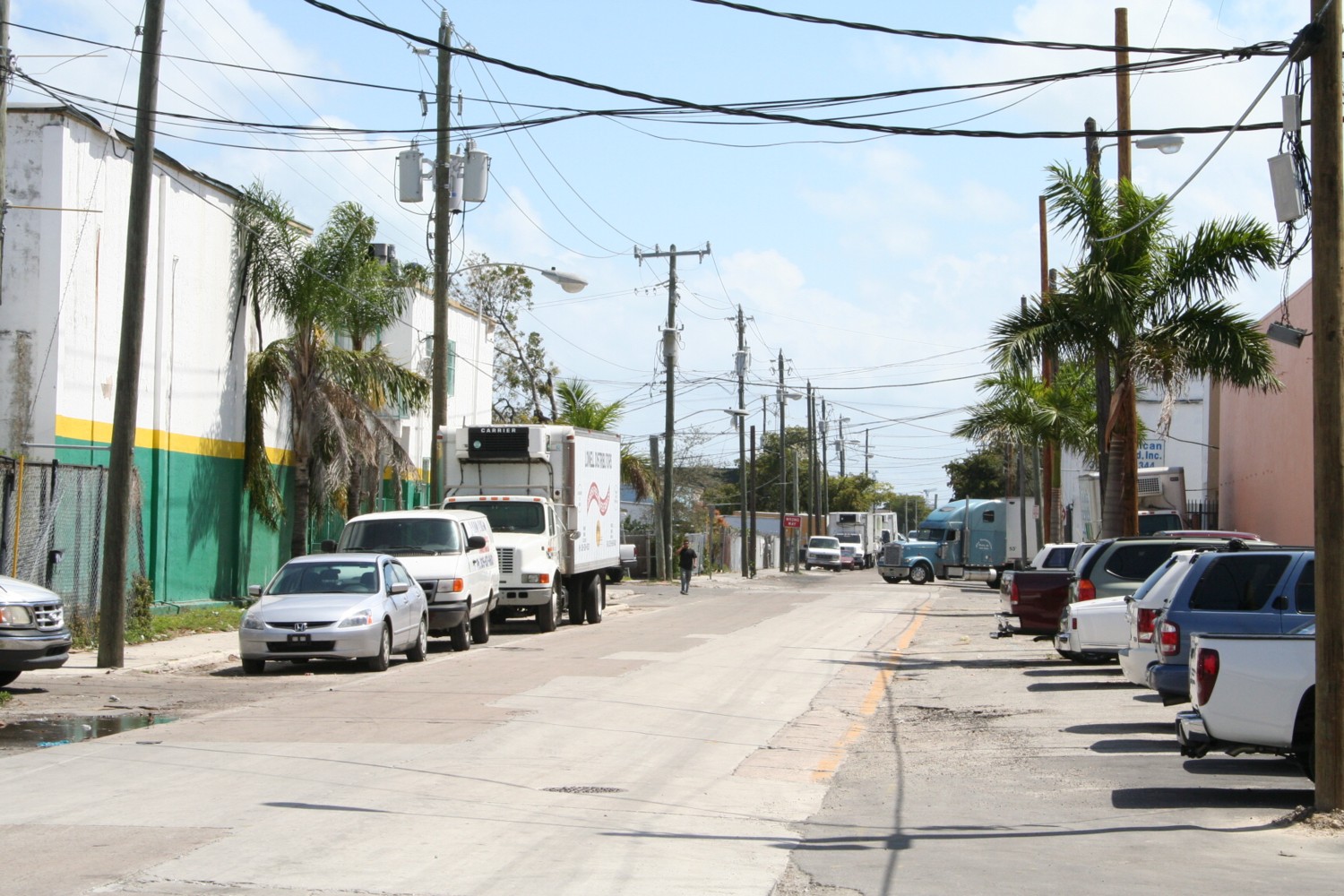
Visiting your site in person creates a mental link between you and your subject that you simply can’t get from looking at photos online or in a book. This shot was taken looking east down Miami’s 23rd Street in 2007. I was taking in the sound of the aircraft flying out of MIA, the humidity, the sun, the sights, sounds, and smells. I think of all of that when I walk into my layout room.
Visiting the location we’re modeling adds an entirely new and positive dimension to how we experience our hobby. It took me until recently to understand why. I used to think of the goal of the visits as being solely one of documentation. That’s certainly a big part of it…..but not the biggest.
What is really happening when we are at ground zero, in person, is we’re making a strong, positive, mental connection between an actual “place”, a “world”, and our model. Without the visit, it’s impossible to make that same link. When you’re there on the ground, soaking it all in, the location never, ever looks the same as it does in photos. It’s better. Far better. Looking back on my rail fan and site visits, I can confidently say they have been some of my most enjoyable days on earth. The exploring, the discovery, the excitement of having what we’ve previously only seen books now being right in front of us. The sun, the heat, the sights, the people, the sounds, the smells, you can’t get that from a computer screen.
Will having visited the site make the resulting model look different to others? Who knows. Will it look different to you? Emphatically yes. Having made the trip, every time you walk into the layout room your mind will roll back to the day, or days, you visited the inspiration of your model.
Having laid that groundwork here are some things to consider, in no particular order. There are likely dozens of rail fan “art shots” out there on the web already so you don’t really need those. Rolling stock photos can be easily had with the click of a mouse. Take lots of structure photos but do so at a fully square, ninety degree angle orientation. Get the structure sides too. You’ll need those for modeling. Take plenty of detail shots. Take down-the-street and panorama shots that give an overall view of the area. We are no longer in the film age. When in doubt, photograph it. Never assume a building will always be there, or be there in the paint scheme you like. If you have an SLR, make sure you have it on the right settings and check your shots after each one to make sure “got them”. I have some ugly stories about not having done that. Ouch. Make sure you have extra batteries. Make sure the camera is set to auto focus and not on manual (another ugly story). I generally bring a camera and my phone as back up.
Do some aerial recon. before the trip so you know where things are and don’t waste time searching when you’re there in person. Make a rough list of the things you want to photo and put them on a map printout. My readers are primarily industrial switching enthusiasts. Your typical industrial area or long spur can usually be well documented in a few hours. They aren’t that big and you won’t need a huge amount of time, certainly not days.
Mental blocks. I used to associate going from city A to city B as being a “trip”. A trip being something that is expensive, time consuming, takes a lot of planning, and in other words, a big “deal”. If you think it through logically, that doesn’t need to be the case. I only need three or four hours on site. There is no reason to stay overnight. Let’s look at an example. I live in the Washington, DC area. Railfan “heaven”, railroad heaven is Los Angeles, the opposite coast. You would think getting there is a big and expensive deal. It’s not at all. Let’s look at the numbers. Oddly, with a little advanced planning you can get coast to coast, non-stop, DC to LA airfares for three hundred bucks, even less sometimes. Then you can play the time difference to your advantage. It sounds crazy but you can get a 9am flight out of DC and be in LA at lunchtime (Their time. Remember the time difference). Pick up a rental car for forty bucks and make the short drive over to Vernon to take your shots. Get a 7pm flight home and it’s mission accomplished. Cheap, simple, and FUN! If you go during business hours you’re likely to see more rail action. If you want quiet, go on the weekends but you probably won’t see trains. Monday through Wednesday flights tend to be the cheapest.
Finally a note on safety. Actually it’s a commentary on how terrible your typical middle class American is at risk assessment, often assuming danger where there is…absolutely….none….ZERO. I routinely ask my friends why they don’t visit the sites. The answer is always the same. “I saw some graffiti in a photo. I’m afraid I’m going to get mugged”. It’s the prevailing concern. You are NOT going to get mugged. Your car is not going to get stolen. These areas are business locations not residential “hoods”. (Actually, the chance of being mugged in “the hood” is pretty much zero too but that’s a subject for another day). Further, most of these places have a Starbucks and Whole Foods within a few blocks. By being completely over the top in assigning risk where, realistically there is none at all, you miss out on one of life’s great experiences.
So, go on Expedia, check the rates, look at the maps, plan your trip and have fun!
The local runs down the switchback to pick up an empty at the Miami Produce Center on my Downtown Spur layout. This was a tricky move for the crews because they had to cross 12th Avenue to do so. “Twelfth” is a busy, four lane, boulevard through the heart of town. For whatever reason, there are no crossing flashers and sight lines are blocked by buildings on all sides. The crew would stop short of the street, put out fusee’s, stop traffic by hand, and scoot across to the Produce Center’s courtyard.
To simulate the move on the layout, I’ve installed working fusees from Logic Rail Technologies. I did an article awhile back on this in MR but can’t remember the specific issue.