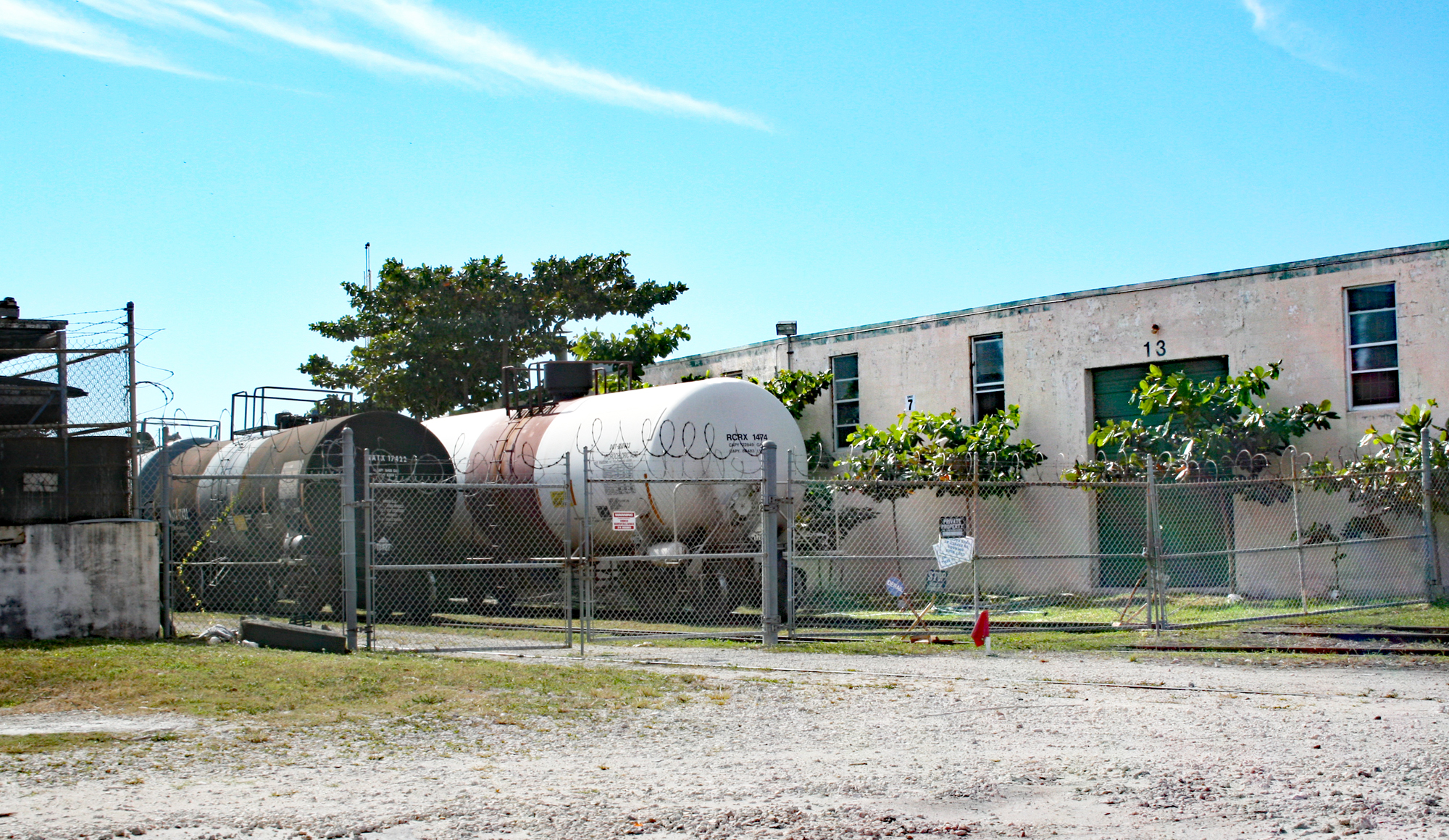
Sentry Industries in Miami makes water treatment products. Don’t be misled by its diminutive size; it processes an enormous number of cars. The black tanker contains sodium hydroxide. The white car on the right is loaded with hydrochloric acid.
In some cases, we can create a high-value, sophisticated industry without doing much of anything. Free money, if you will. A simple label change on a track plan and “suggesting” the industry’s structures just beyond the layout’s boundaries is all it takes. That’s what came to mind this week while operating the East Rail layout.
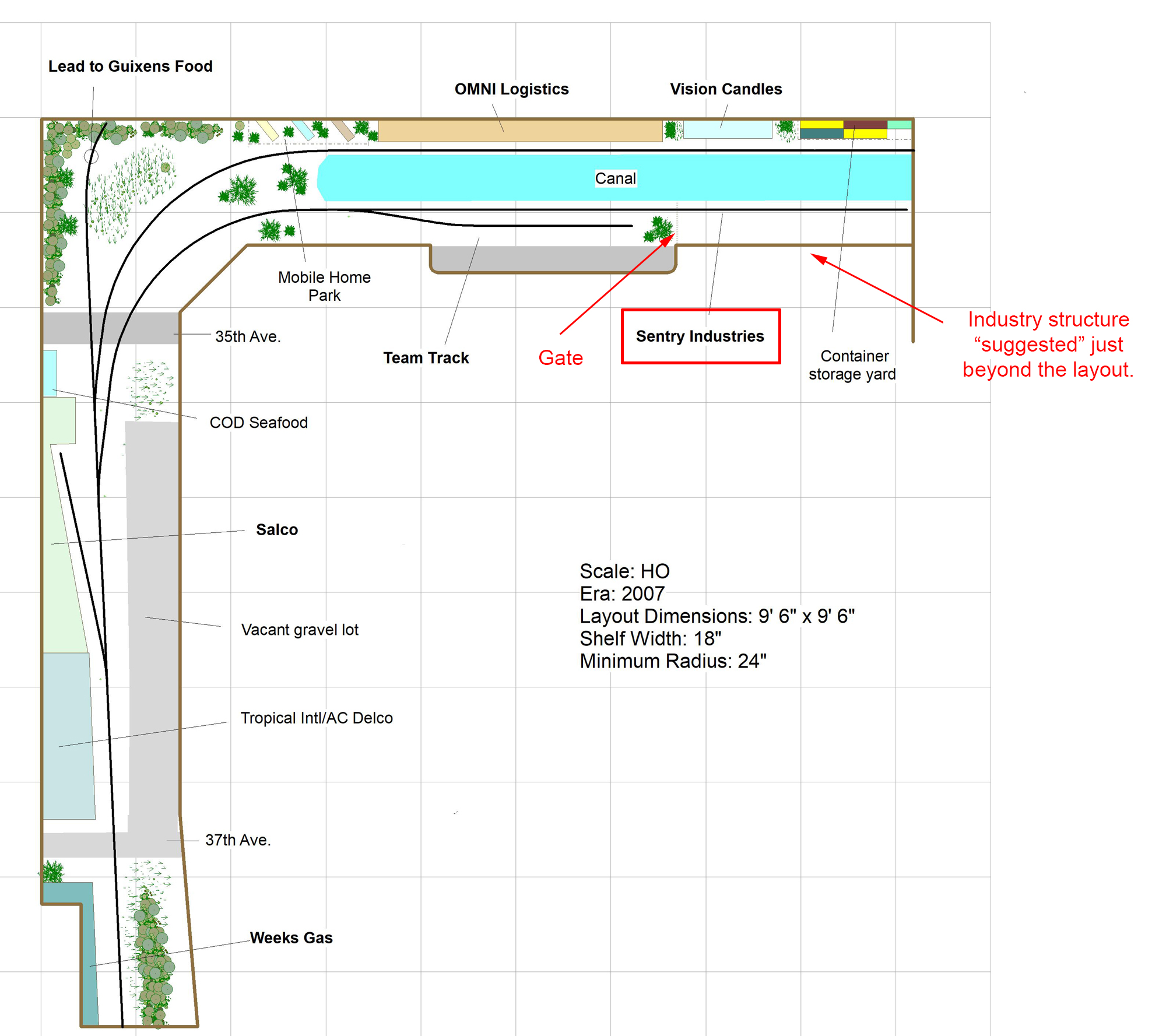
Running parallel to the canal, on the fascia side of the layout, was a long lead that I had loosely labeled as a “possible” lead to a scrap yard. I’d never really used it. A simple change of perspective, one that entailed very little work, resulted in repurposing it as a plausible centerpiece industry: Sentry Industries.
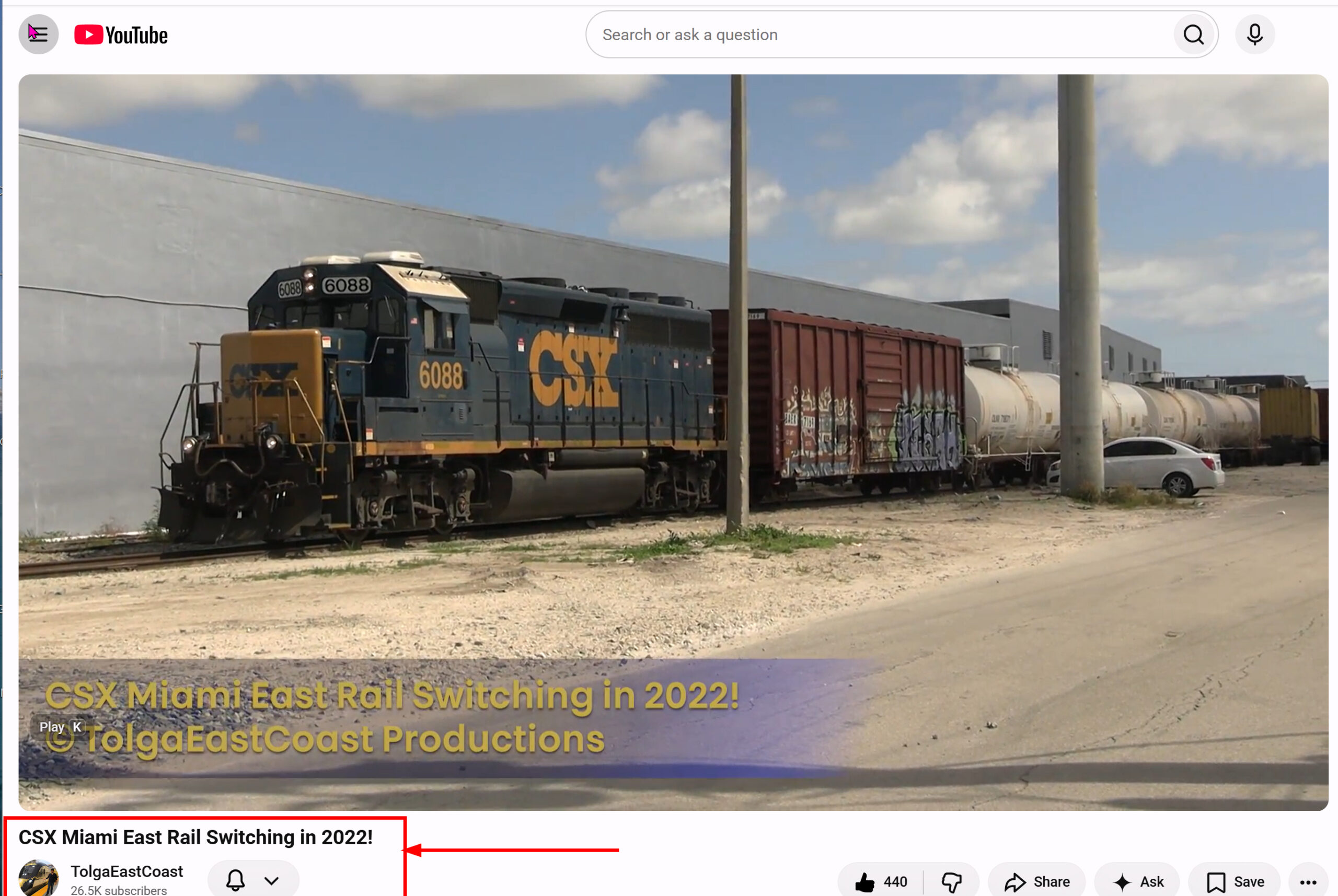
The idea started while I was scrolling through Tolga’s East Rail videos. I came across one where he did a deep dive into work East Rail’s largest customer, Sentry Industries, a water treatment facility. (he has at least two others on Sentry). Link to their company website HERE.
Then it hit me. With very little work, I could make that little used lead represent Sentry. I added a gate and some unloading hoses and changed the label on the track plan. The structure, a surprisingly innocuous one-story affair, is assumed to exist just off the layout.
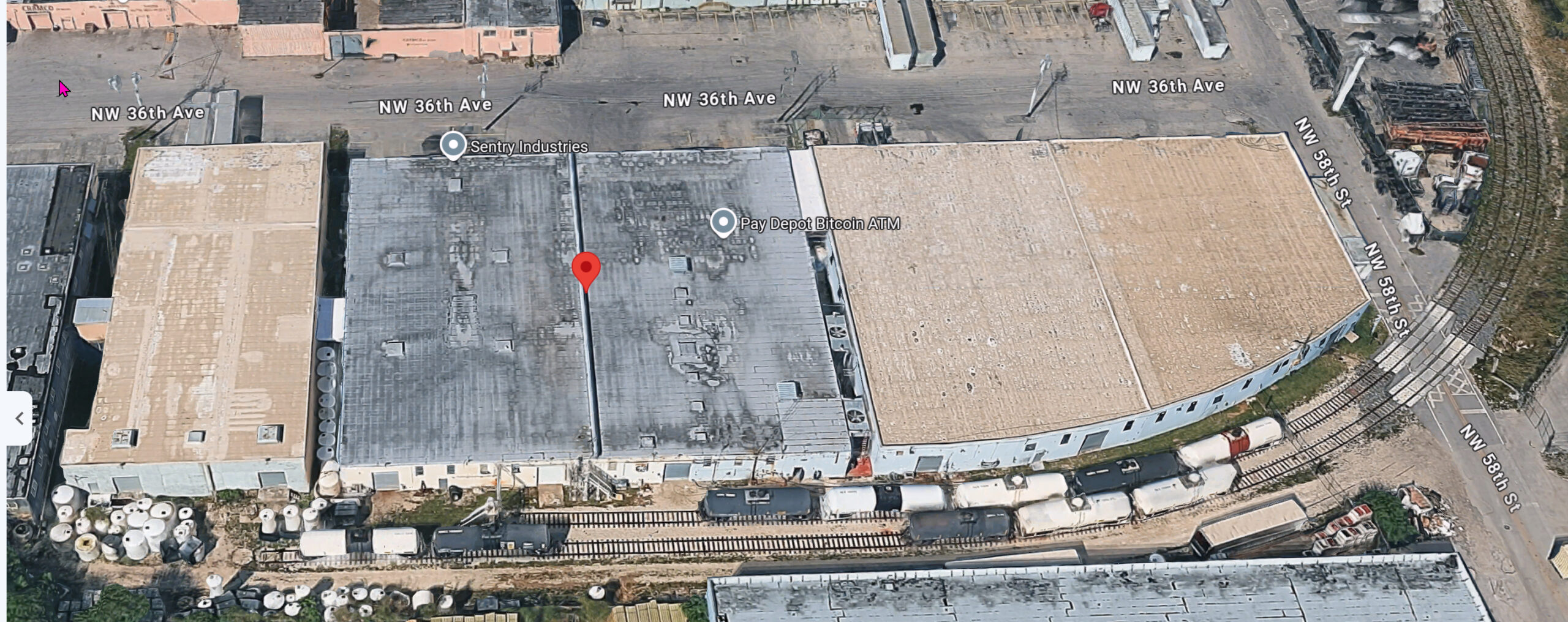
An aerial view of Sentry, facing west, on a slow day. It’s a fairly simple, unpretentious, and “not-huge” buidling.
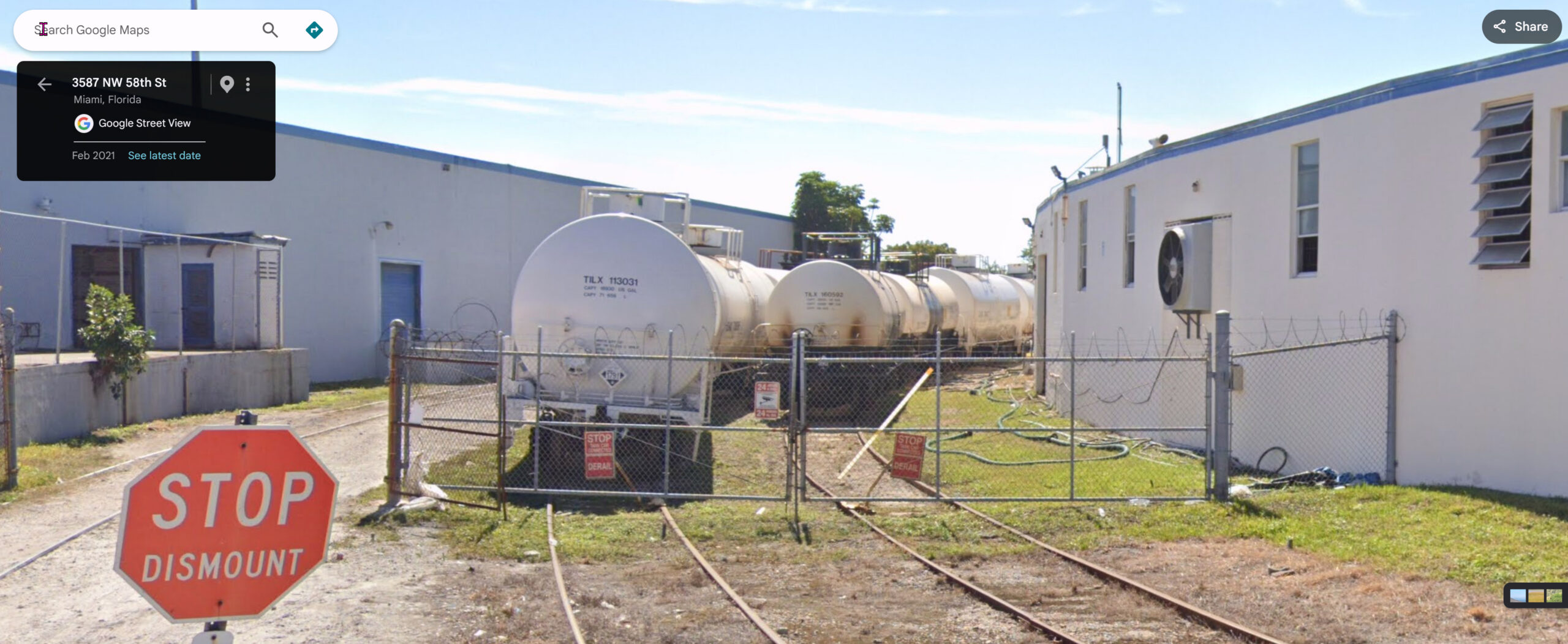
What surprises me when I look at photos of Sentry is the lack of clearly visible unloading apparatus. Apparently, they do it all with hoses that connect to tanks inside (see the company video). You can see numerous unloading hoses on the ground under the large fan.
Rolling Stock
From what I’ve gathered so far there are four incoming chemicals, all in tanks:
-Chlorine (Atlas makes these cars)
-Hydrochloric acid. White with a red oxide band. (Atheran Genesis.)
-Sodium Hypochlorite. Usually, but not always, all white cars.
-Sodium Hydroxide. Usually (but not alway) white with a black band.
Placards
1791: Hypochlorite Solution
1824: Sodium Hydroxide
1017: Chlorine
1789: Hydrochloric Acid
Operations
From what I can tell, they don’t block the cars in any particular order when placing them within the gate. They appear to be in a totally random order.
Often, but not always, a buffer car is used. Maybe that depends on what chemicals are in any given train’s manifest?
Fusee’s are often put out when crossing 58th street.
It seems pretty common that they don’t have room within the gates for all the incoming cars, so they are temporarily placed “offspot” in front of SALCO or just outside the gate.
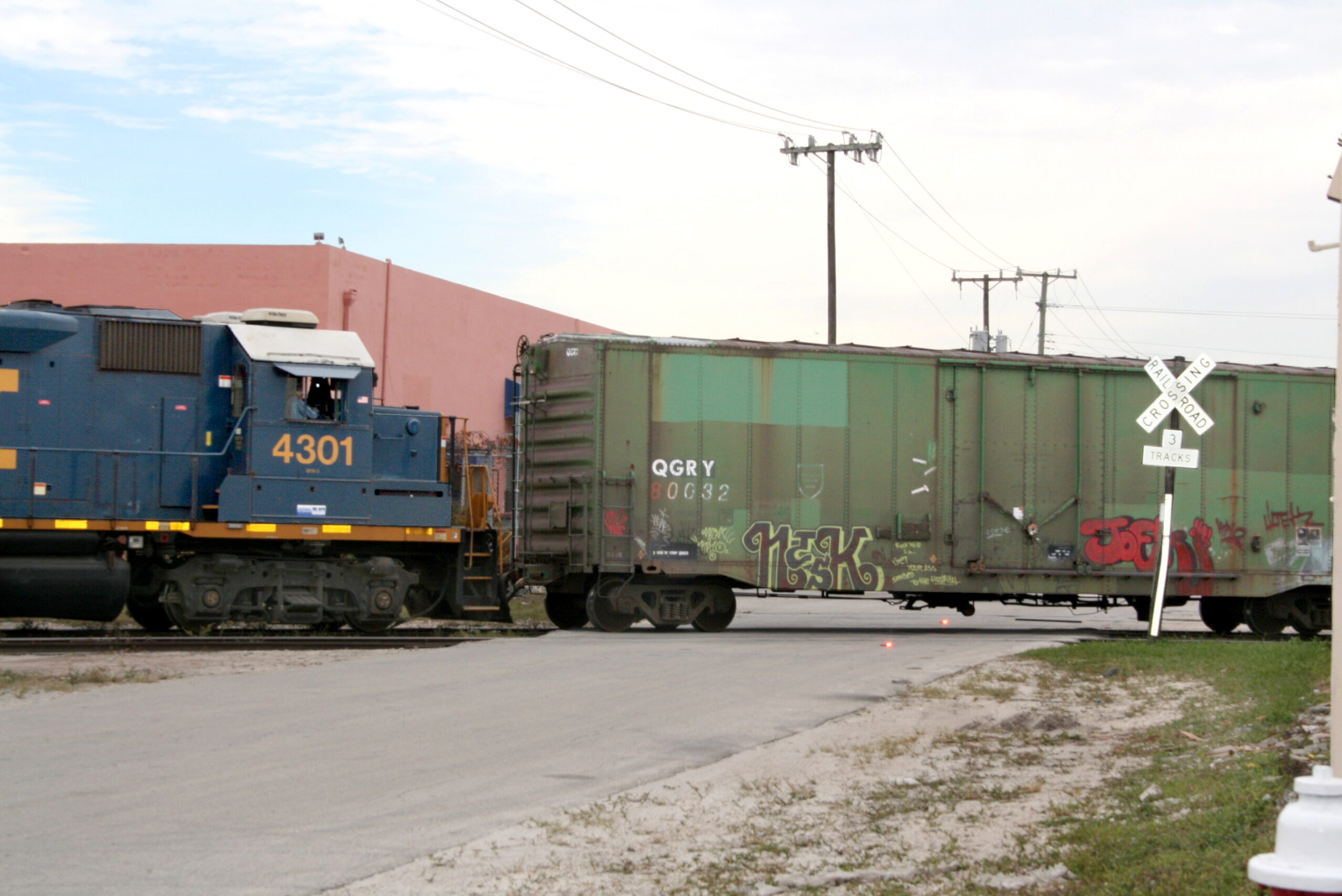
Shoving loads across 58th Street into the gate. Note the buffer car and fusees.
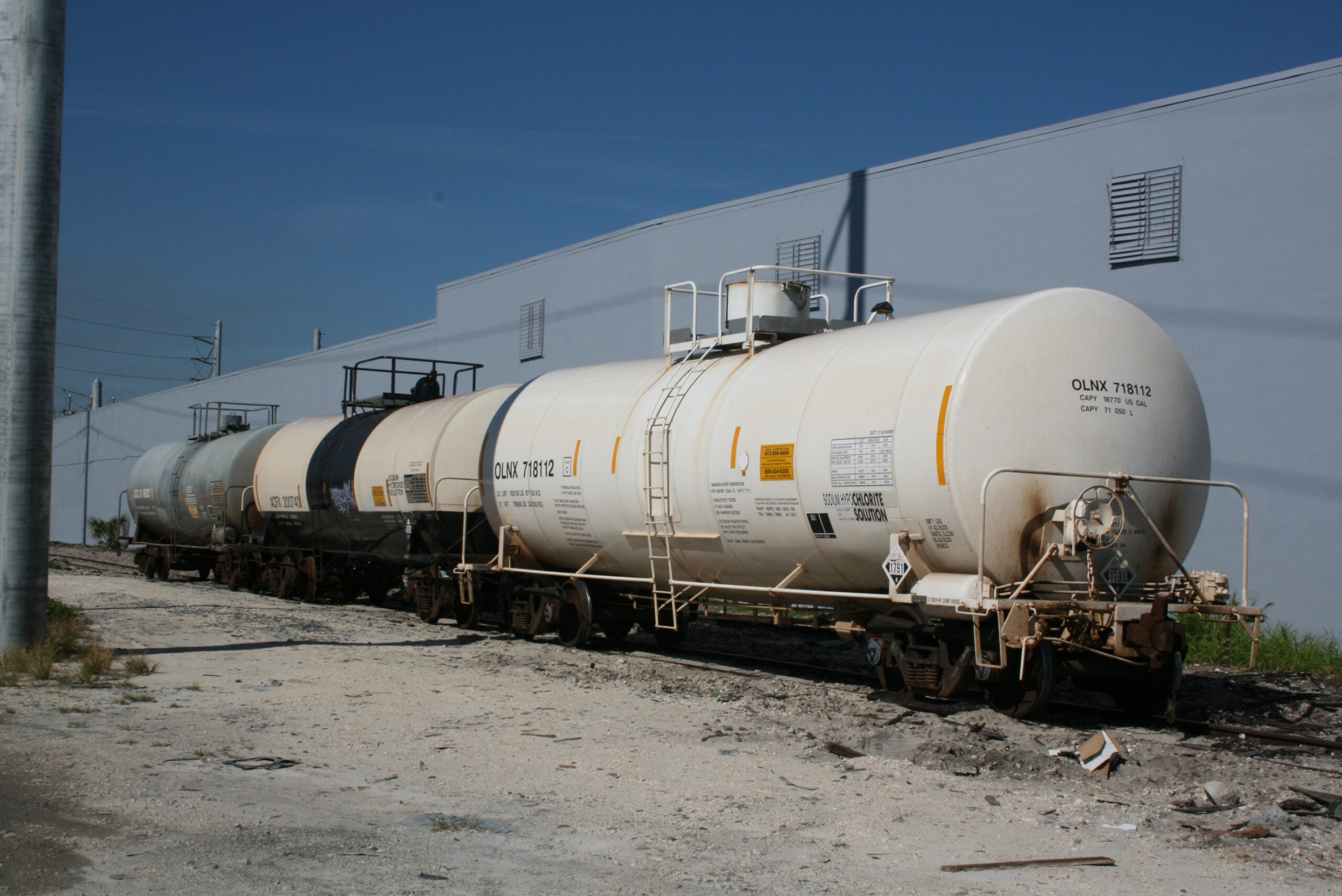
Loaded cars placed offspot in front of SALCO. Front to back I “think” we have: hypochlorite solution, sodium hydroxide, chlorine.
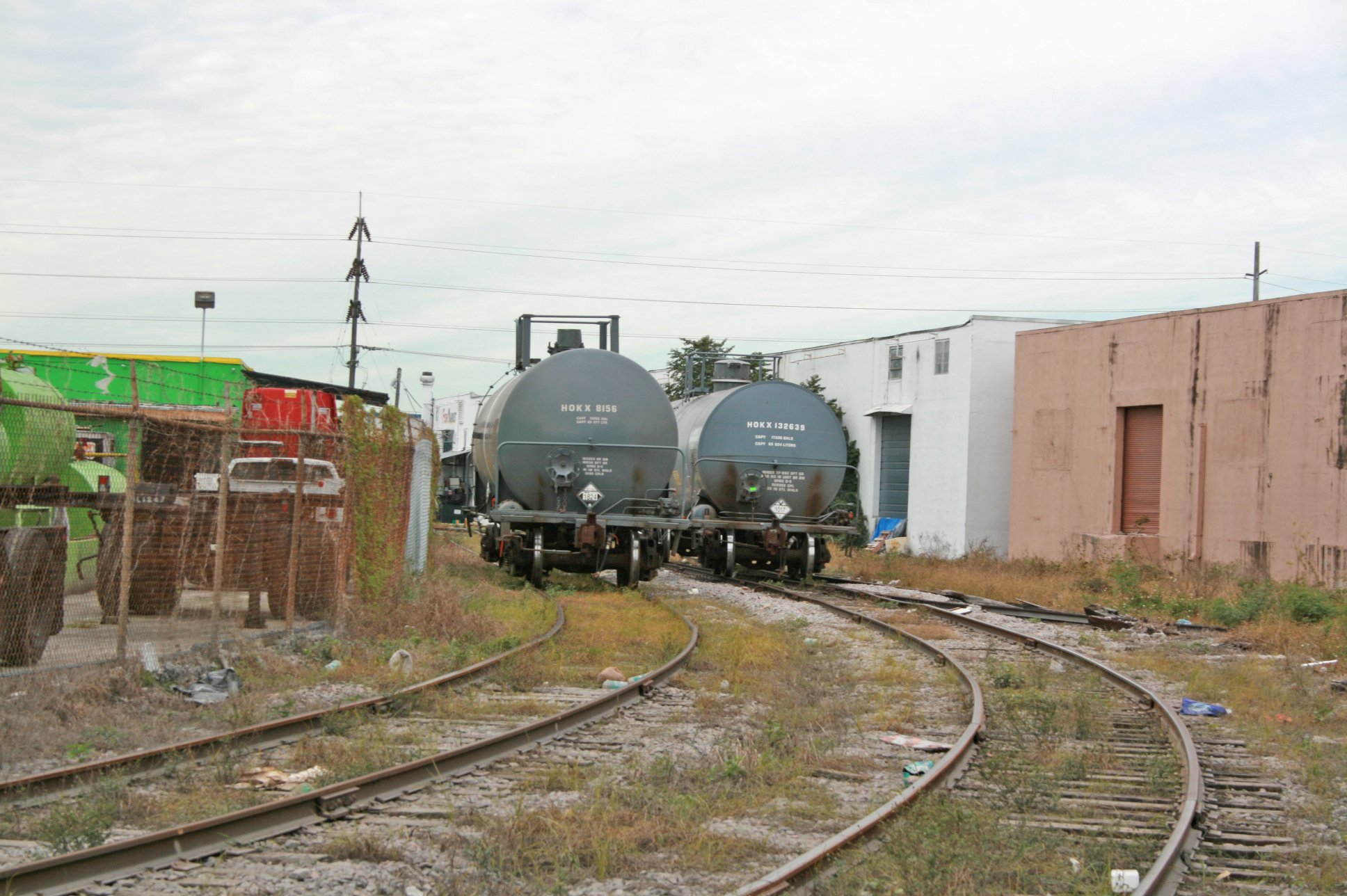
This photo, taken on a different day, shows more off-spots. Sodium hydroxide on the left, chlorine on the right. The gate to Sentry and 58th Street is just behind me.
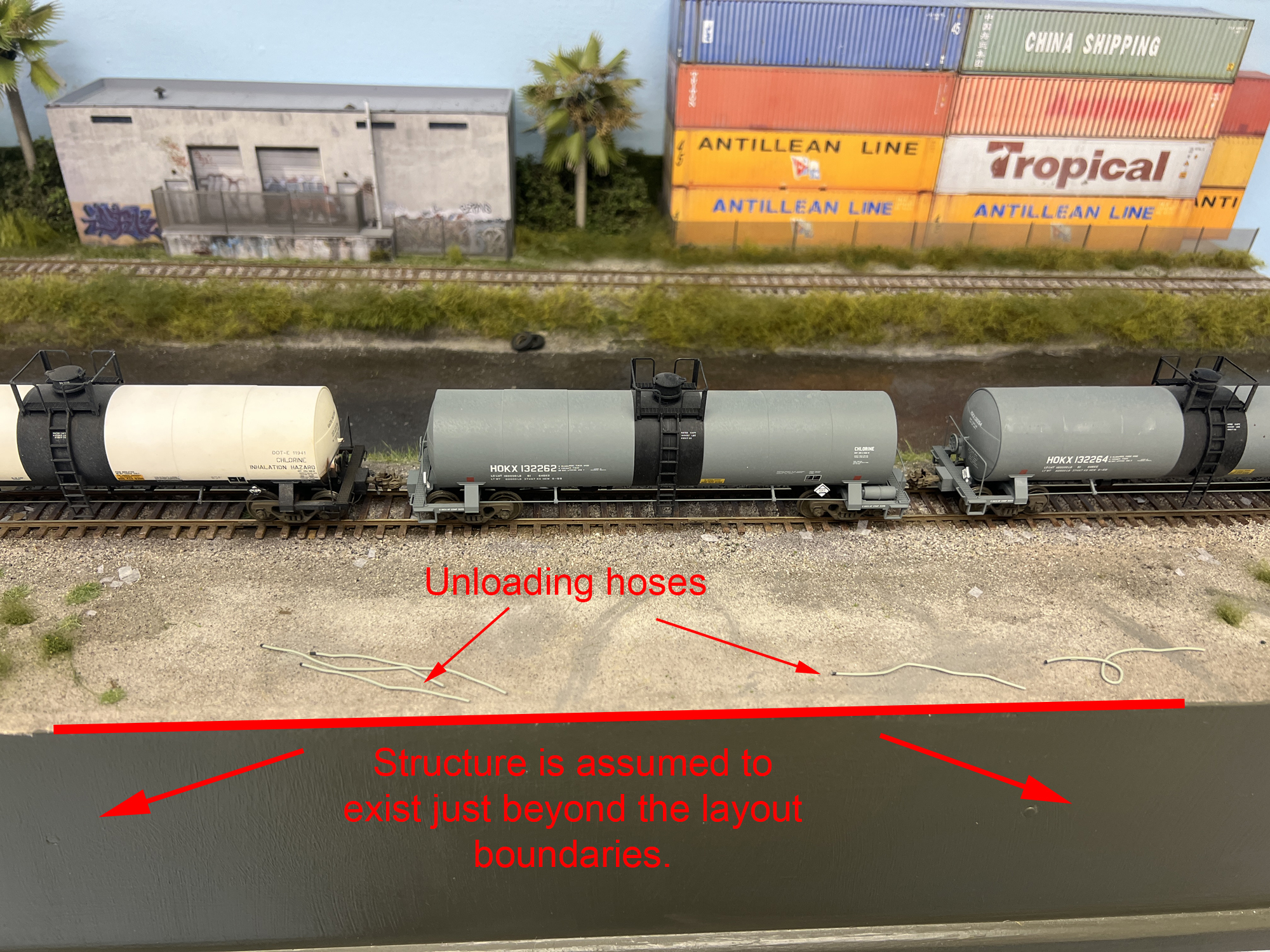
The Sentry structure is “implied” just beyond the layout’s boundaries. Further evidence that there is an industry being served is the trackside unloading hoses made from .032″ solder.
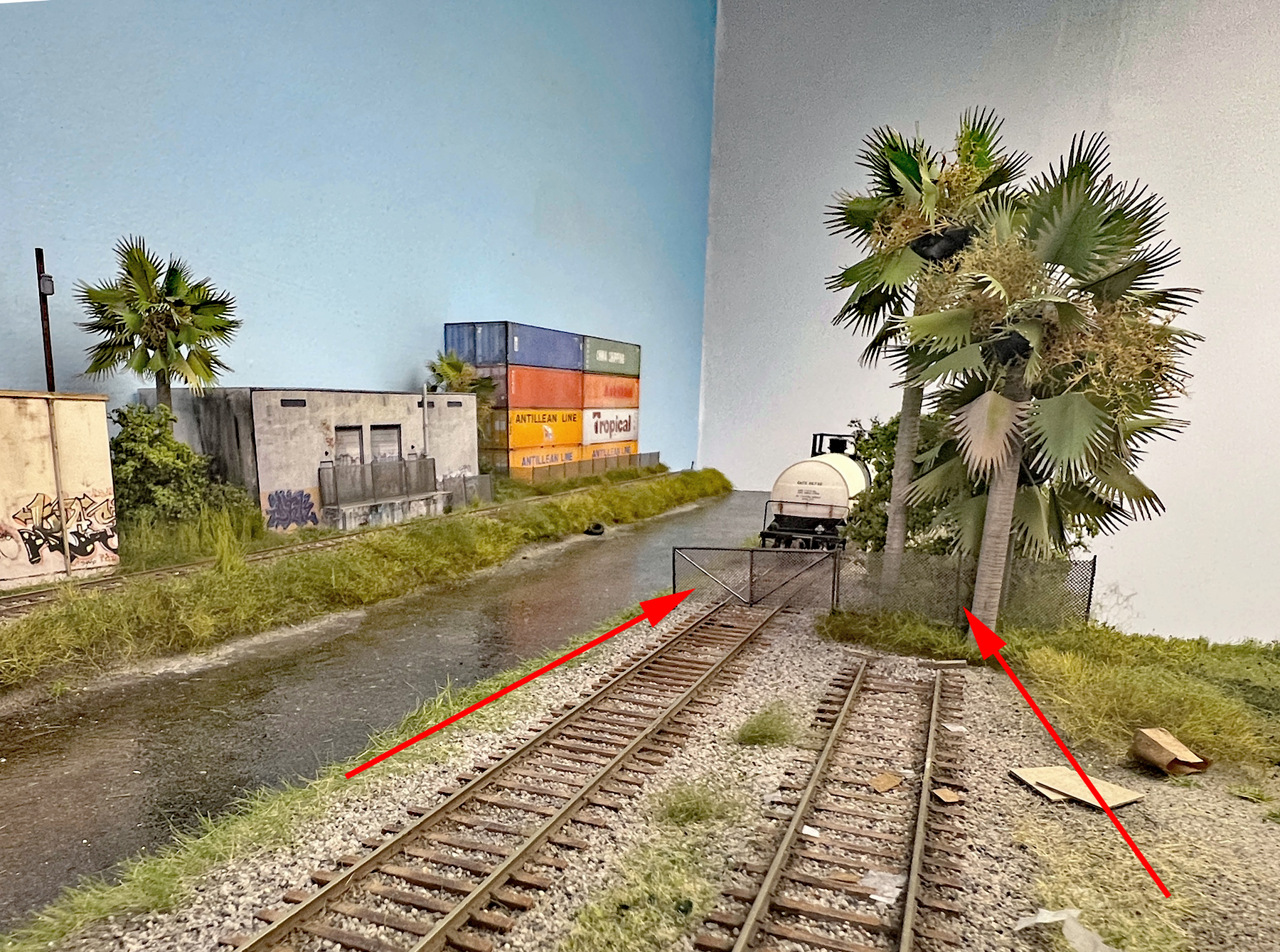
Gates and fencing were added to further highlight the industry’s boundaries.
The takeaway is that a simple change in labeling and perspective creates more interesting and meaningful operating sessions, an opportunity to research and learn more about hazmat tanks, and the opportunity to model the different cars.
If discussions like this interest you, check out my book “Industry Planning for Modern Era Switching Layouts”.