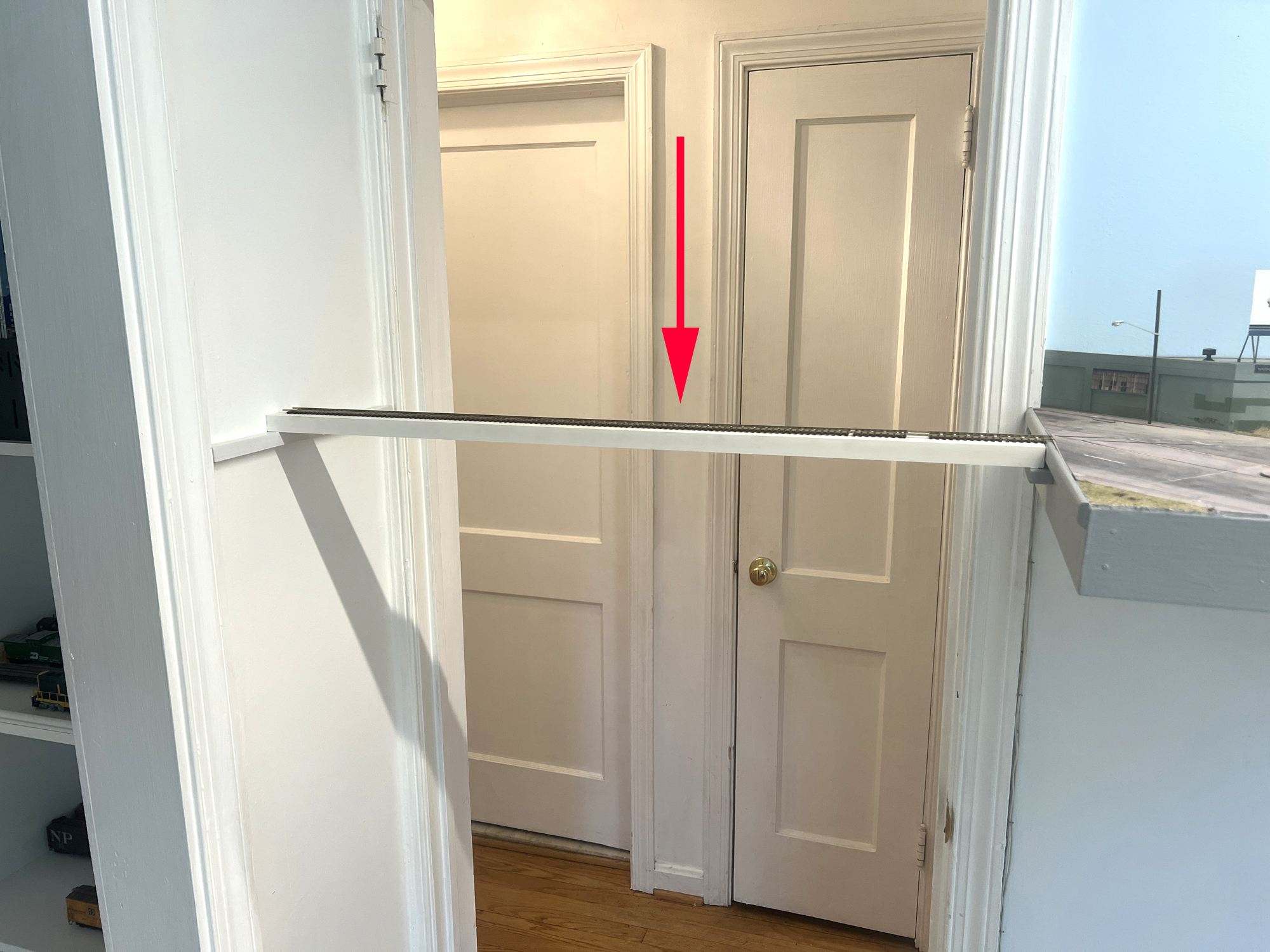
The new removable extension bridge on the LAJ. Wow, that’s a long drop to the floor if things go sideways!
Over the past year, I’ve become more aware of what I call “long handle” car spotting. By that, I mean when the switch job is spotting a car, but there is a long “handle” of other cars between it and the locomotive. It’s a practice that might make for an interesting scenario on the LAJ. The problem is that the layout is relatively small and doesn’t lend itself that well to long strings of cars.
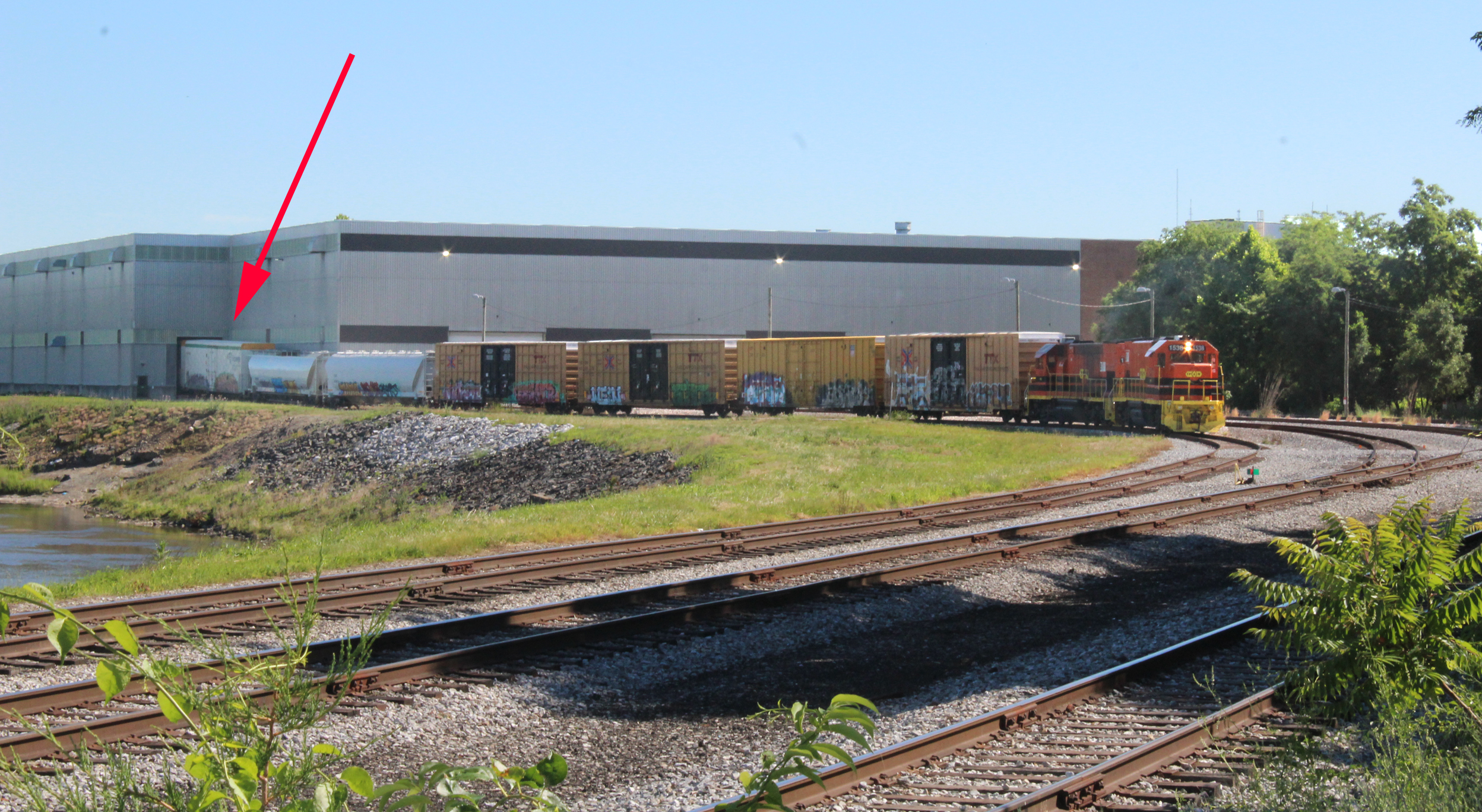
Here we see York Rail spotting a reefer inside a logistics warehouse. It has a “handle” of six cars between the engines and the car. That’s almost a full football field in length.
For some time I’ve toyed with the idea of running a removable bridge across the doorway of the room to add three feet of run length to work with. The idea is simple enough. The challenge was coming up with a support system that would be pretty innocuous. The bridge would rarely be in place, and I didn’t want to be looking at clunky support brackets every time I walked into the room. Eventually I figured something out.
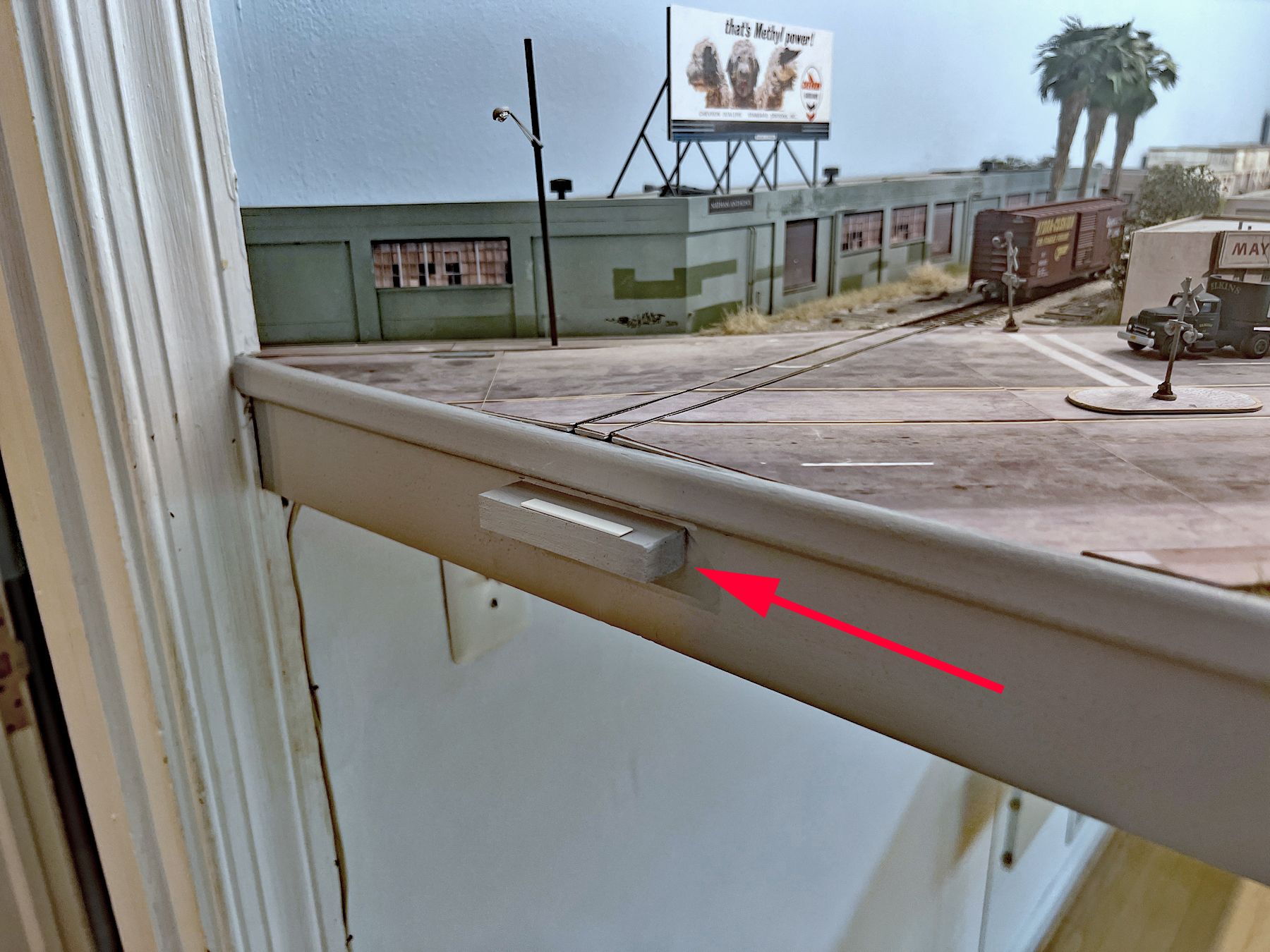
Here’s the pad on the layout side. It’s a 1/2″ x 3/4″ block that the bridge rests on. You have to pay attention to your plan of attack with “bottom support” methods such as this. If the pad location puts the bridge just a hair too high, it’s impossible to adjust, and the rail heads won’t align vertically. However, if it’s a bit low, adjustment is simple via a shim. I intentionally mounted the block a little low and then shimmed it upward with the strip of .040″ styrene you see on top.
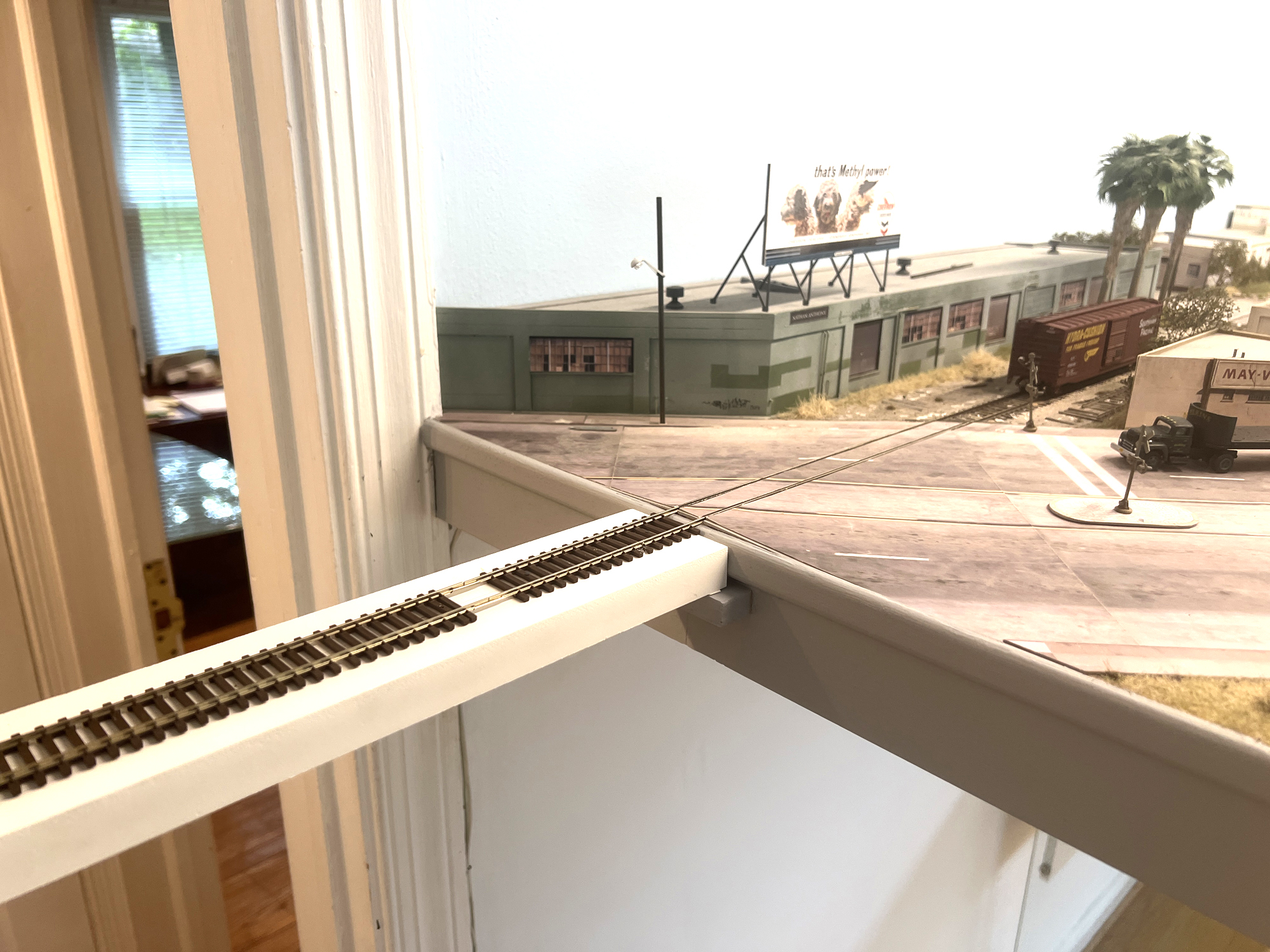
A view with the bridge extension in place.
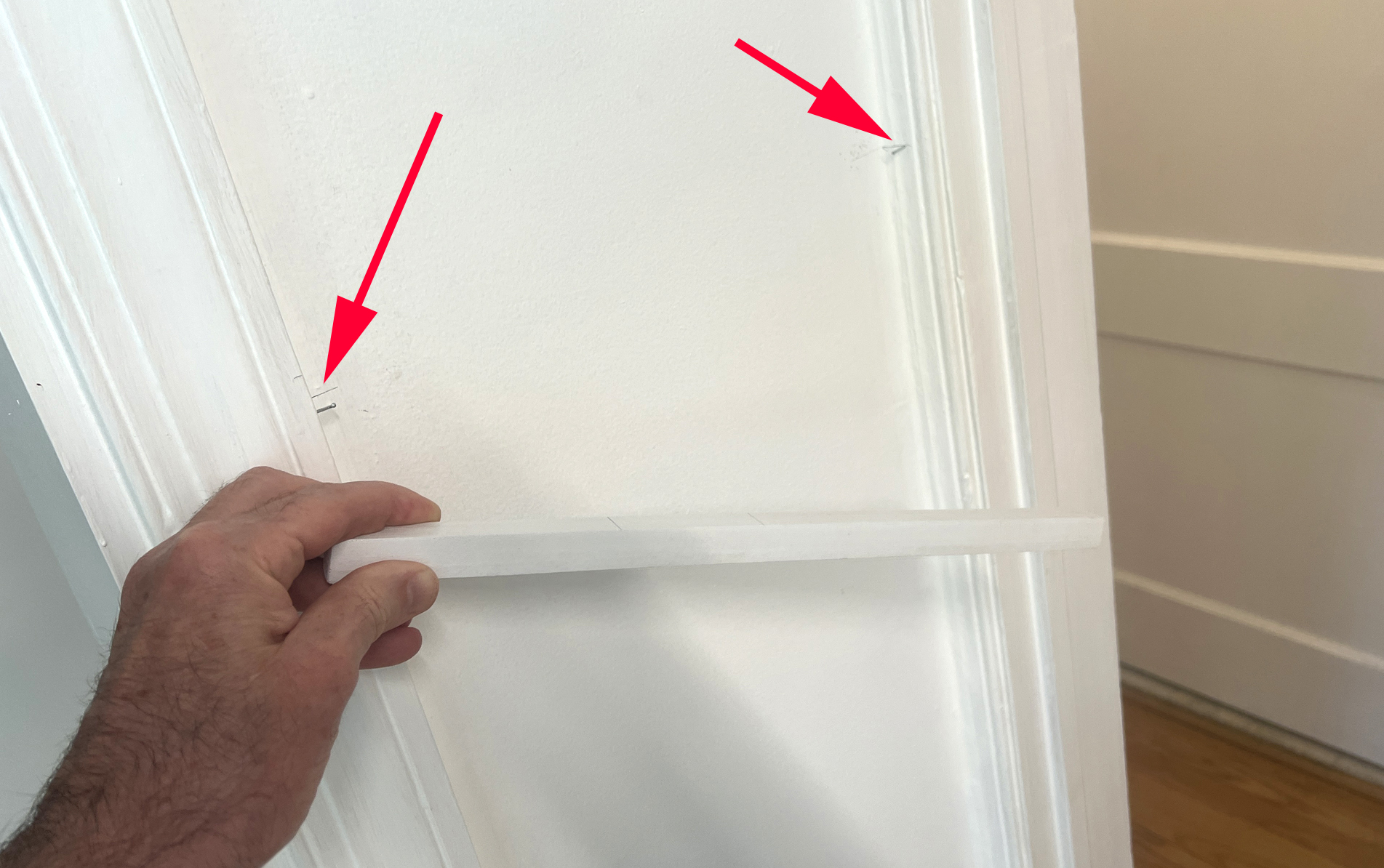
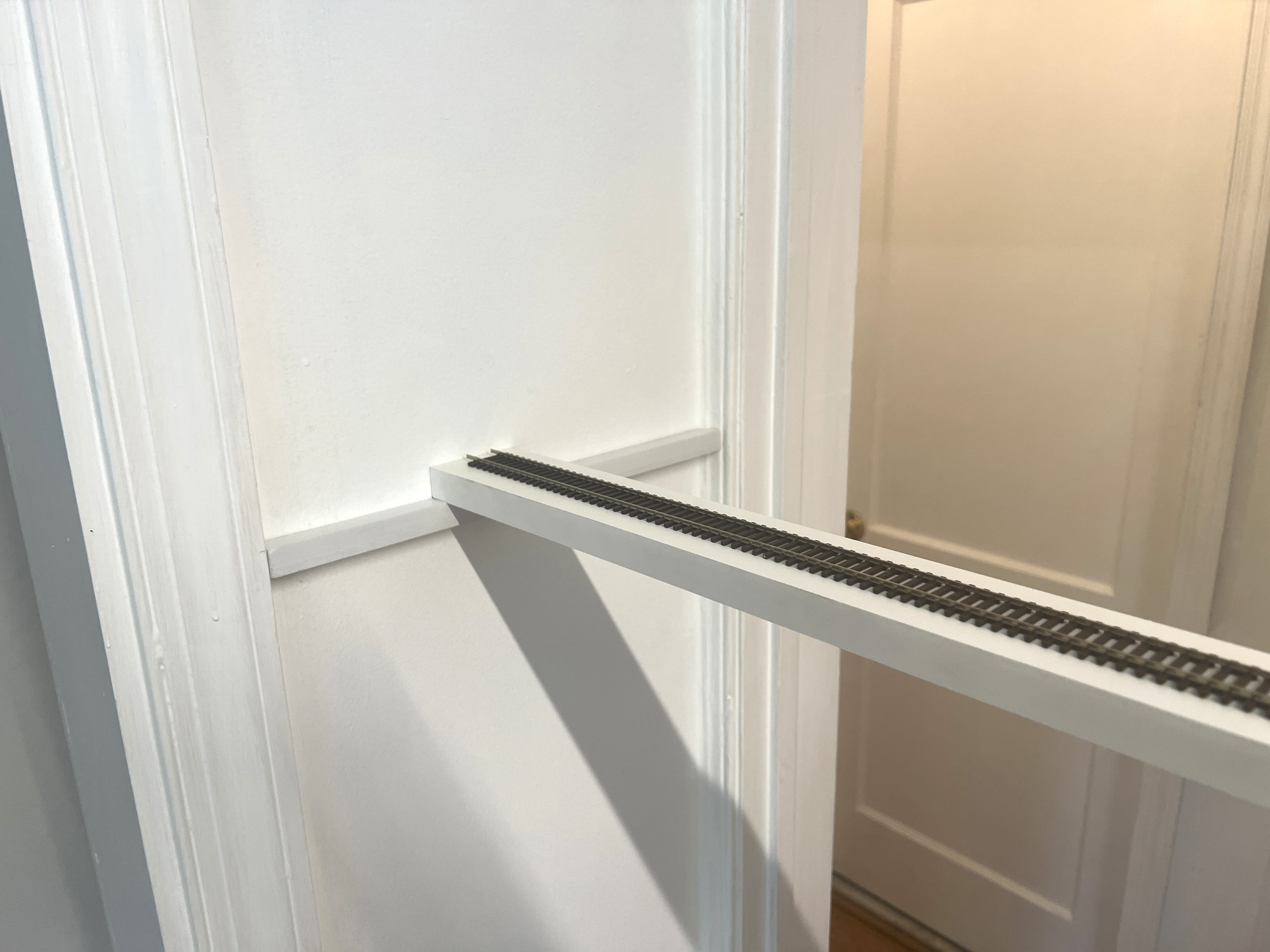
The wall side of the support was where I struggled with coming up with a method that was virtually invisible when not in use. I drove two pins on the side and then fabricated a small, popout lateral beam that sits on the pins. When the bridge isn’t in place, which is 99 percent of the time, the beam is removed and the pins are barely noticeable.
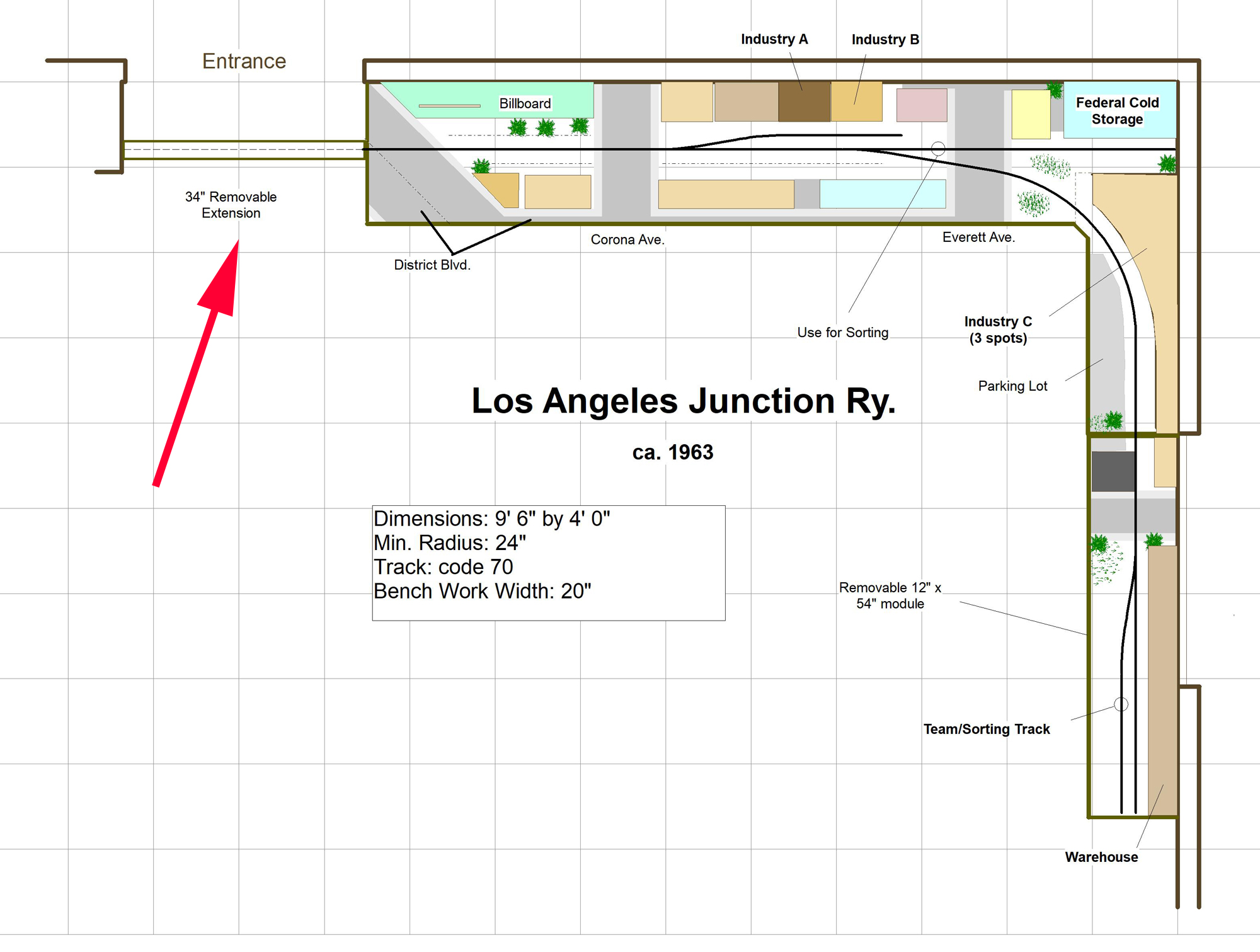
Here’s an updated track plan to put things in context.