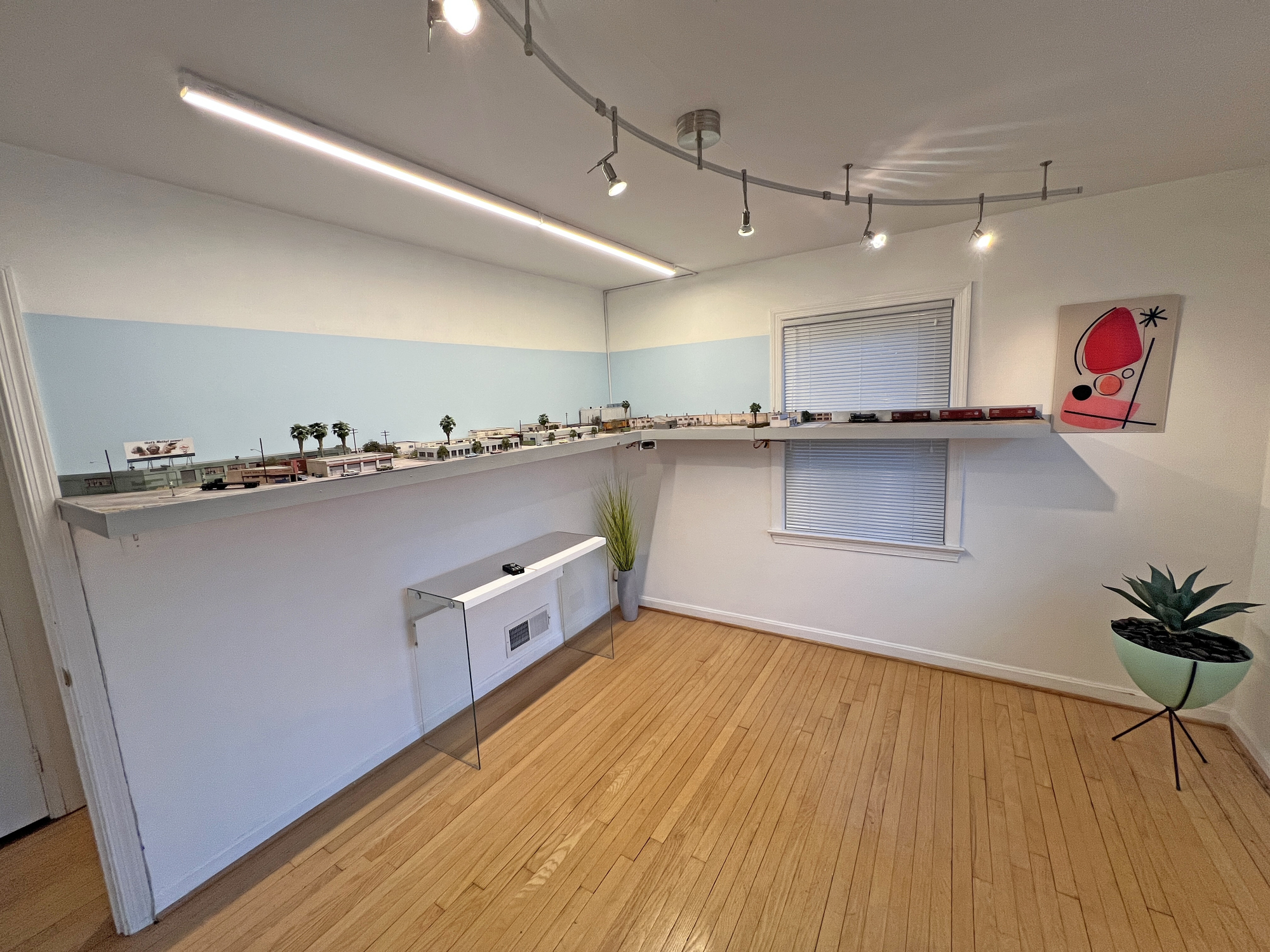
A view of the LAJ layout room. The new extension module is on the far right. I didn’t realize until after the fact how much of a role ergonomics plays in my enjoyment of the railroad. Having an open, cleanly finished presentation on the main floor of the house is very inviting and contributes to my running more often.
Some of the more significant planning issues can be hidden in plain sight. Not seeing them ahead of time can lead to unexpected but necessary periods of reassessing our approach to the hobby. Tony Koester wrote a particularly thought-provoking piece in the April issue of MR.
His point in the column was that, despite what we “think” we know about ourselves, most of us are driven by the satisfaction of building stuff (as opposed to having a finished model railroad used solely for operations). Most of us don’t look ahead to what happens when we finish our railroads, and there are no more projects. I certainly didn’t. Logically, we know that’s out there, but it really doesn’t sink in.
If a layout is even medium-large, that “stick-a-fork-in-it/completely finished” date seems so far in the future. It can sneak up on you, though, because if you are consistent with your building, that day will come. Then what? In his editorial, Tony gives numerous examples of folks who don’t miss a beat. They seamlessly transition to the next layout. Out with the old, in with the new. On to the next adventure! Sometimes that makes sense, sometimes it doesn’t, even for the same person.
A problem arises when you enjoy the building process, finish the layout, but are still just as captivated by your theme as when you started. That happened with East Rail 2, The Downtown Spur, and LAJ layouts. It was a “now what, didn’t see that coming” moment that I wasn’t prepared for.
I did consider tearing down one of the other layouts and starting a new one, but just couldn’t do it. There were too many fond memories, and I still really liked what I had in front of me. I have the space above my shop for a fairly large fourth layout and was seriously considering that. I ran it by close friend Tom Klimoski, who gave the unfiltered feedback of “Are you nuts? That’s a terrible idea! It’s just too much”. I came to my senses on that and abandoned the idea….for now.
The solution came to me slowly and entailed an entirely different approach to the hobby than anything I’d done before. I’ve had to shift from being so go, go, go, goal-oriented to enjoying the ride, enjoying the process. The objective is no longer one of checking a box off on a “to-do” list and moving on to the next task. That shift takes some major, major getting used to!
Now it’s not about getting things done but savoring the experience. Experience being defined as small projects, research, operations, and simply looking at the layout and feeling transported. How long even the smallest task takes me is meaningless. I’ll say it again, that’s been a mental shift for me that has taken some serious adjusting to.
So far, it’s working. Lately, I find myself spending far more time actively engaged with my layout. I’ve also been getting far, far less done! As crazy as that sounds, as counterintuitive as it feels to me, the slow progress is intentional. If I want to spend an evening or weekend putting new trucks and couplers on a car, so what? The process is relaxing. If I go back to my old ways, I’ll simply work myself out of a job.
As part of this adjustment process, here are some things I’ve done:
-I built a short extension module on the LAJ layout to expand operations and give me more things to build on a layout which, previously, I’d considered totally done.
-I switched era’s to the early 1960s as it was a period with more active industries and intense operations.
-I find myself spending more time on research.
-I’m more focused on rolling stock. Since I don’t need that many cars, I have the luxury of spending more time on each one singularly.
-Try to do better work. The “good enough approach” championed by Tony is entirely pragmatic and applies to a ton of situations. For smaller layouts, you have the luxury of spending a lot more time on upper-tier craftsmanship and more scenery layers.
-More details. They have to be intelligently chosen details that fit your scene and enhance it, not “detail dumping” a ton of crude cast metal soap carvings. My buddy Tom Johnson is a master of this, and I follow his Cass County Facebook page closely not so much for the details themselves but his strategy for stretching hobby time and enjoying the ride.
-I spend more time researching, selecting and detailing automobiles. What color and type existed in my era and in what percentage? What types of license plates?
-Part of the research I’ve been doing relates to how the prototype did things operationally during that era. Retired rails on the forums have been very generous in that regard.
I do have one caveat. This “stop and smell the roses” approach works better if you do have at least a portion of your layout done. You do need some critical mass. It’s like a jet on takeoff, you go like hell to launch and then throttle back when you hit cruising attitude.
All of this falls into the category of a first-world problem. It’s an approach that I find satisfying for now. If I eventually tire of the existing layouts, I can always start something new if and when that day comes.
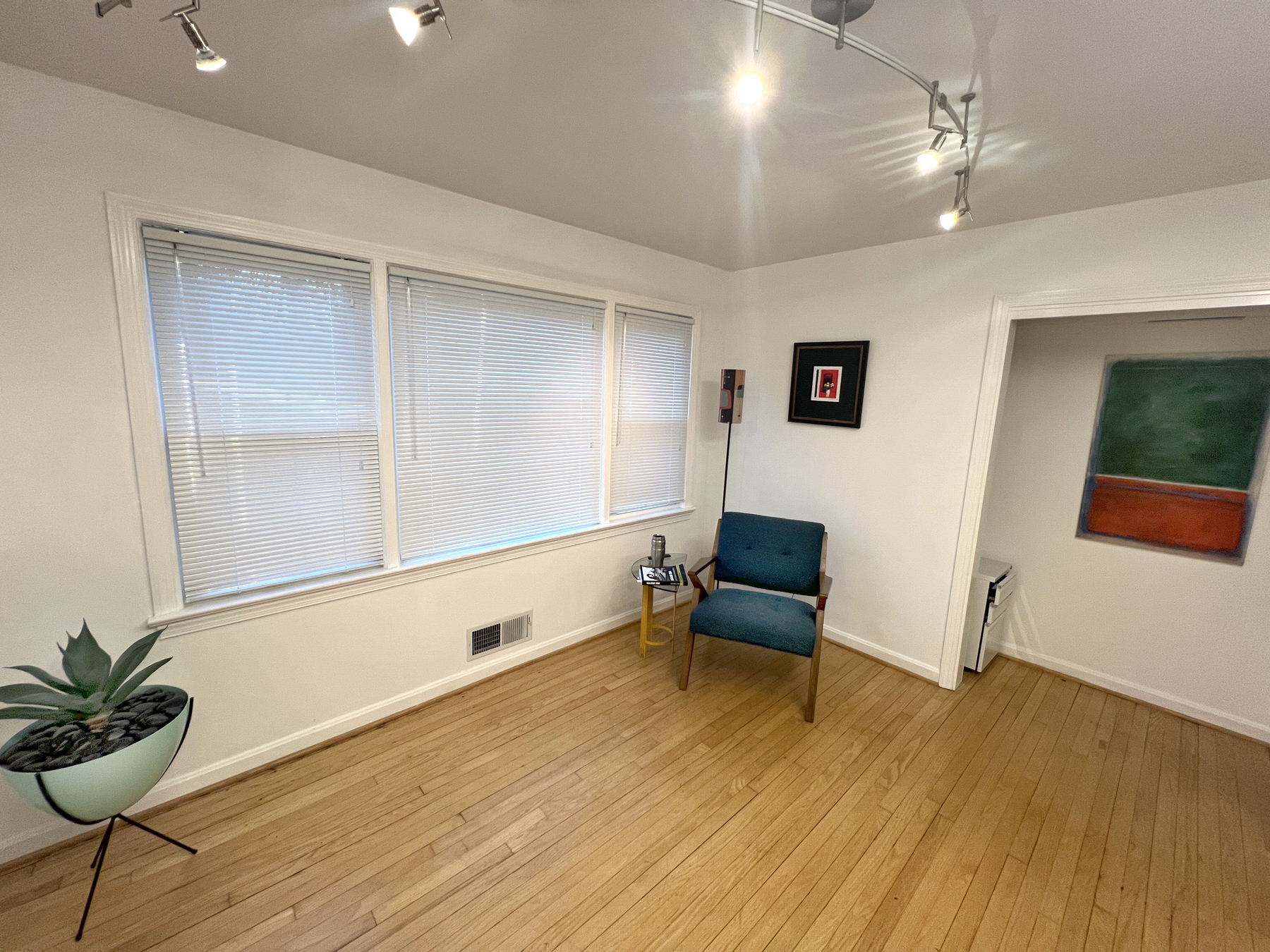
A view of the LAJ layout room facing the other direction, with the layout to my back. The alcove holds a small library of books and reference magazines I refer to most frequently. I have more shelves in the basement for the remainder of my resources. I like spending time in the room and just enjoying the experience of having the the 1960s LA scene wrap around me.