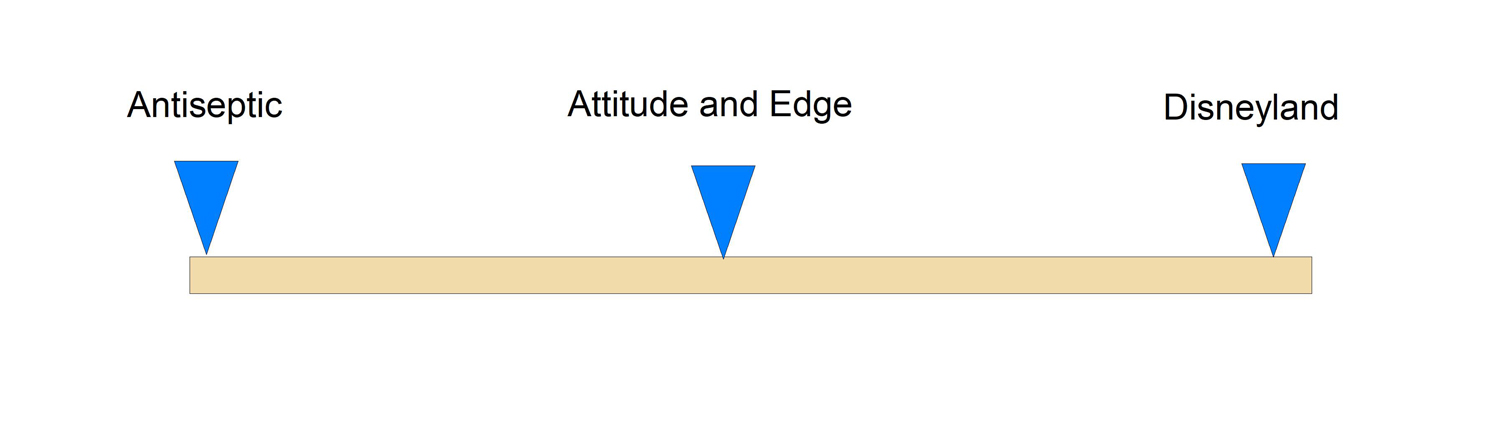
The atmosphere of model railroads spans a spectrum of styles. On one extreme, we have what I call the “Disneyland” look. Particularly popular among the casual recreationalists, it’s characterized by amplified features, vibrant colors, caricatures, and an emphasis on the extraordinary. On the other side, we have what I call the “architectural model look”. Neat, tidy, perfectly executed, every rivet is cleanly represented…..and yet something is missing. There is a hard-to-articulate lack of visual interest. It can come across as antiseptic and devoid of character. The middle-ground visual “bullseye” can be hard to define, but I’ll call it “Attitude and Edge”.
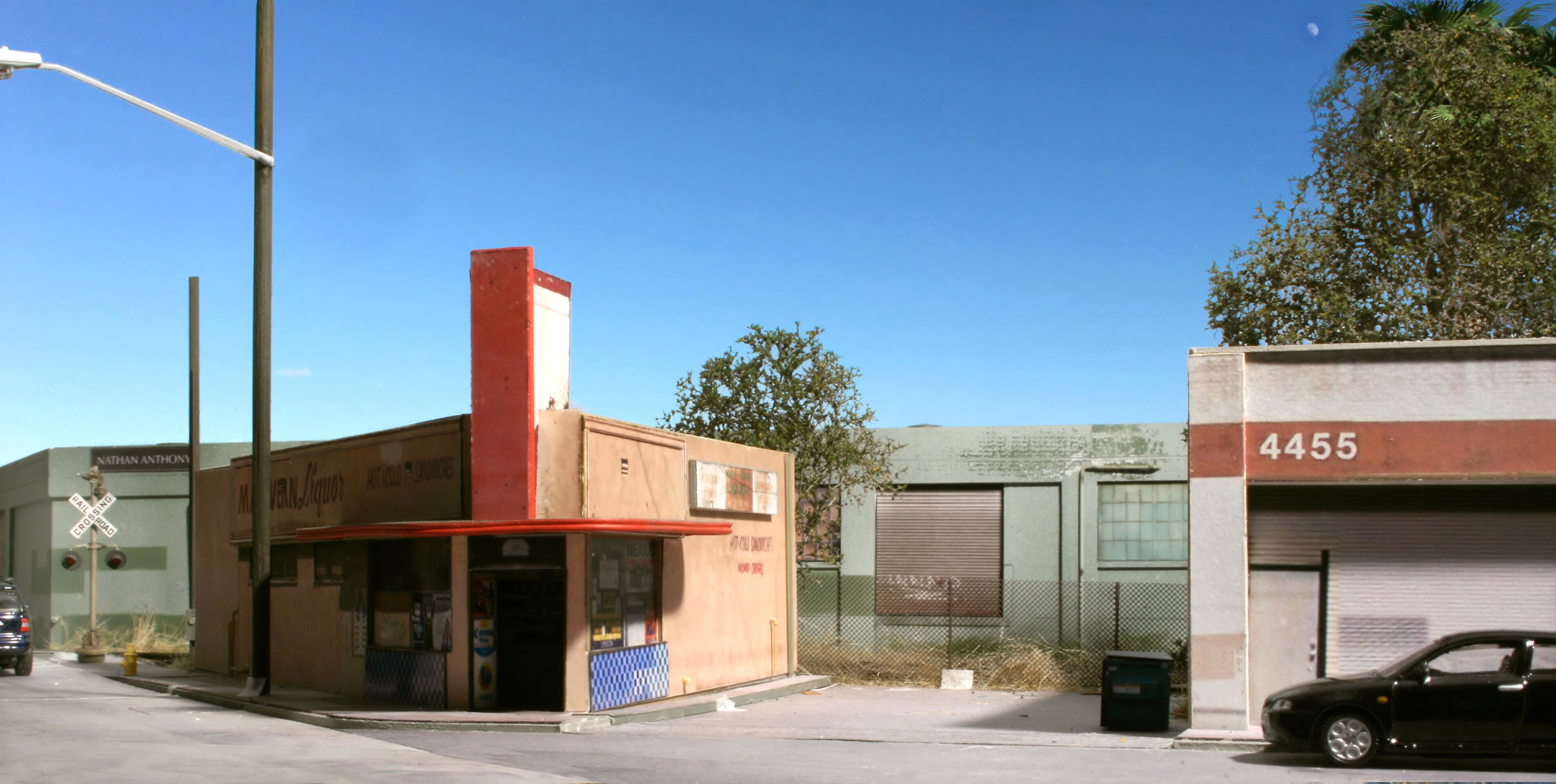
In this scene on my LAJ layout, the goal was to lay down a thin veil of visual texture while carefully avoiding anything that would come across as caricature. All of the structures exist on the prototype. Colors are slightly subdued.
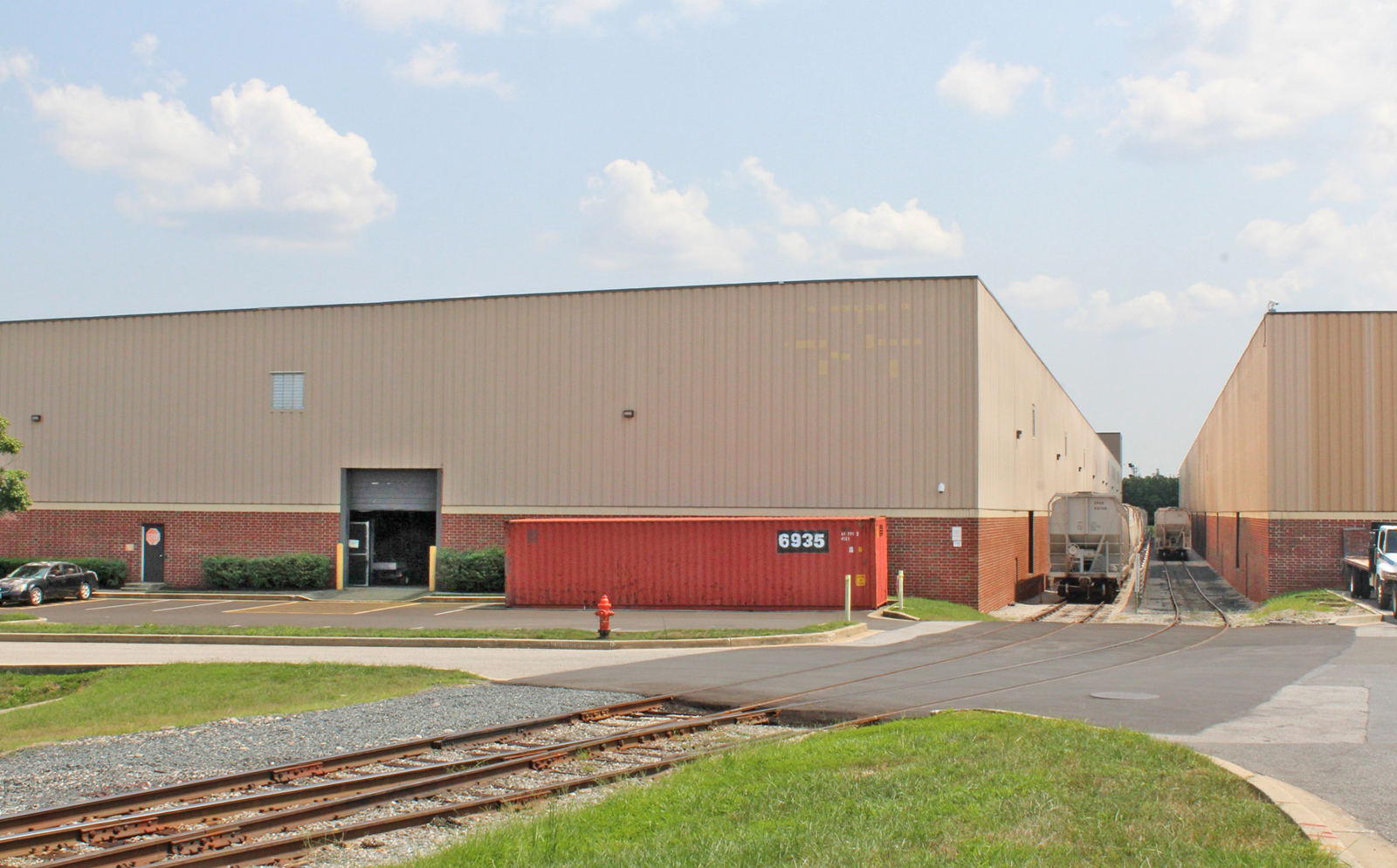
Neat, tidy, a great neighbor in the community and…..the visual interest of a manila folder.
Staying away from the extremes entails overlaying thoughtfully selected elements and color selection, along with applying subtle layers of visual texture to your work. The operative word being subtle. It can be really, really easy to slip into caricature. Examples of pushing things too far include overly weathered structures, structures that look like they’re on the point of being condemned, staged Skid Row scenes, etc.
The challenge is overlaying this textured look is that it’s not the easiest thing to do. Strategies include:
-More subdued colors
-Dullcote on everything
-Weathering on all structures, but keep it subtle
-More color and texture layers with your scenery. The layers should be subtly blended.
-Carefully study and copy the prototype. The key is to look for scenes that are typical, not over the top.
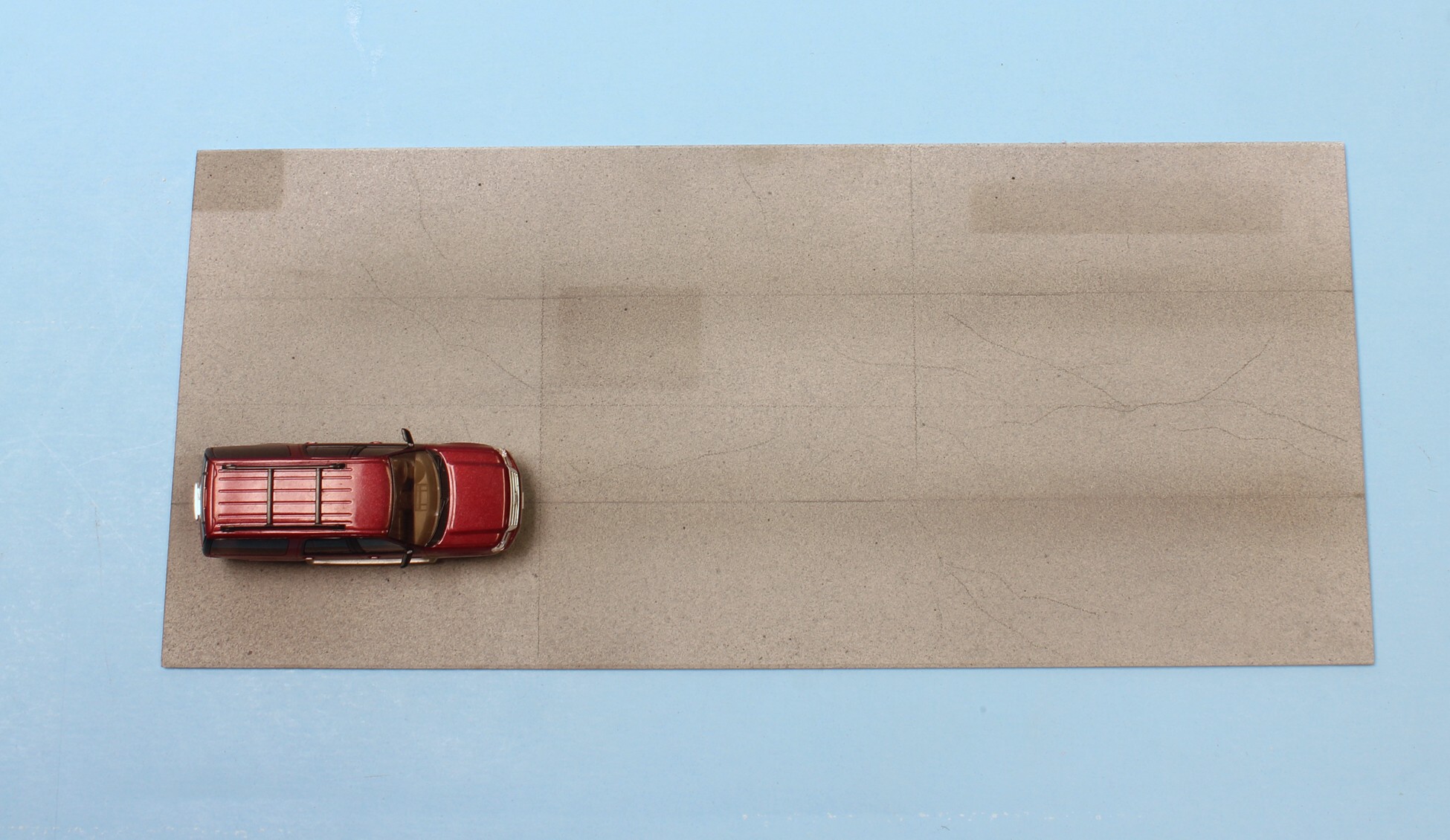
This road sample illustrates the use of multiple color layers, all very close together on the spectrum. I explain how I did this in my scenery book.
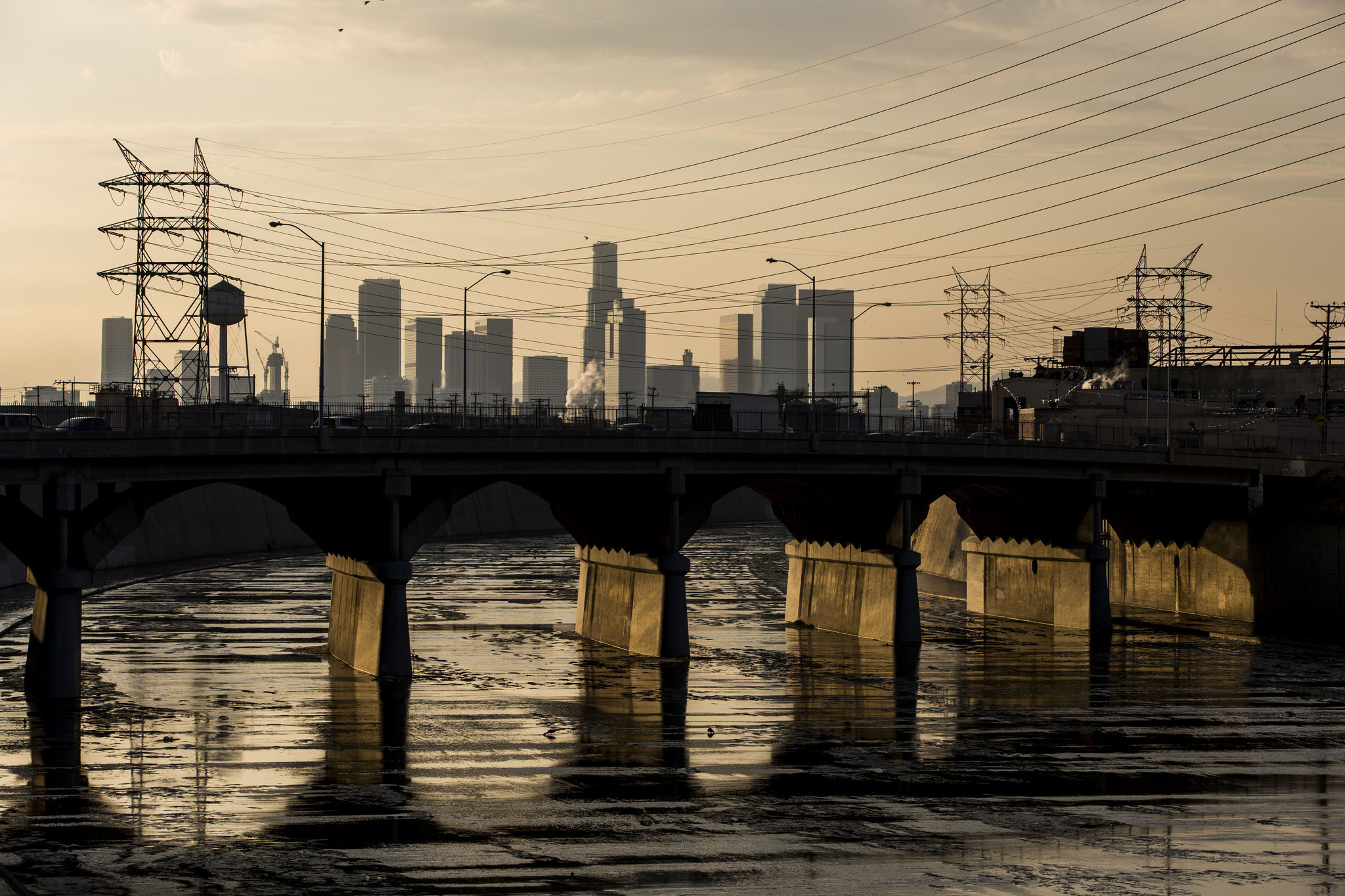
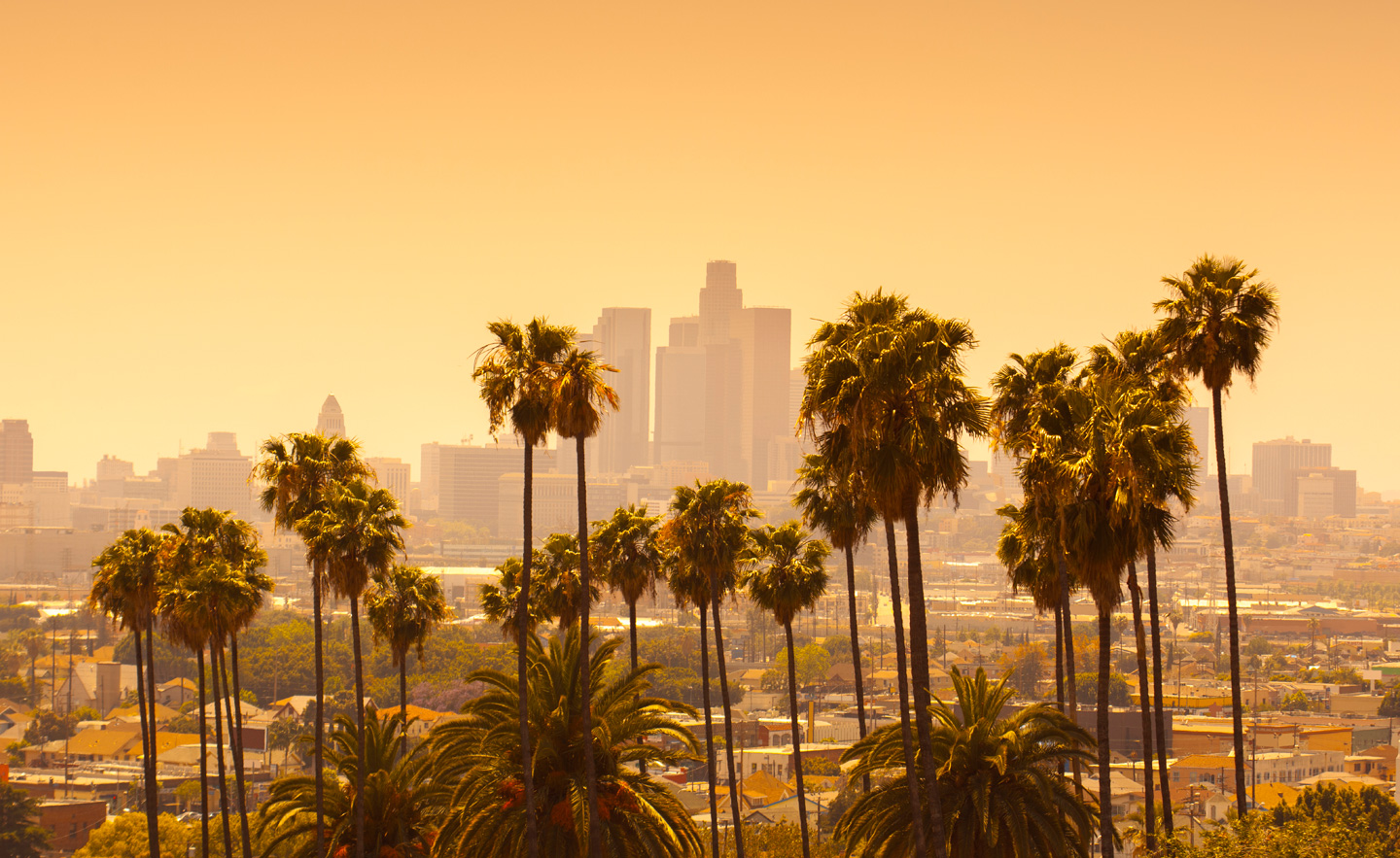
A view of the LA skyline from The Central Manufacturing District.
A lot of my inspiration for this visual style comes from the film industry. Specifically, shows noteworthy for their exceptional cinematography, lighting, and location selection. Examples include Miami Vice, The Wire, The Mayor of Kingstown, True Detective, and Sean Baker’s work.
If you’d like to dig deeper into this subject check out my books Student to Master and Model Railroading As Art.